


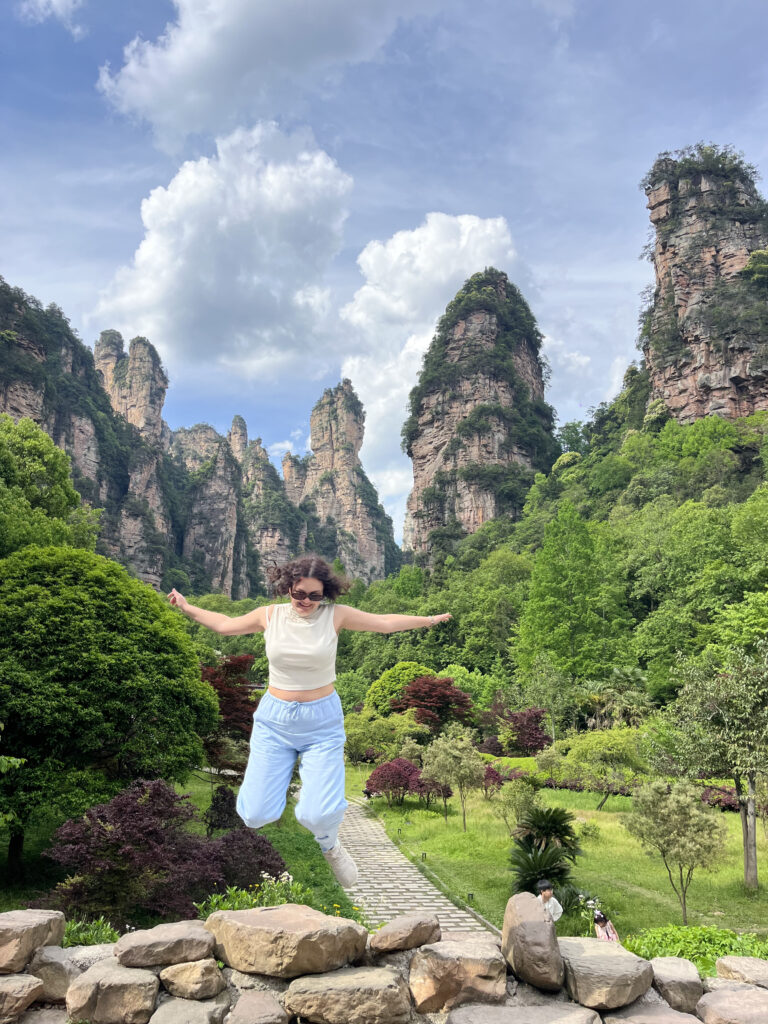
Zhangjiajie National Park (Avatar Mountains) and the
Glass Bridge in the Grand Canyon
In the middle of the Chinese holiday season, we decided to escape Shanghai and head to Hunan Province to see the Avatar Mountains. It took us quite a while to figure out all the logistics and locations, so in this article I’ll share our experience of spending two days exploring Zhangjiajie. First, let’s get the basics straight: Zhangjiajie National Park (the Avatar Mountains), the Glass Bridge in the Grand Canyon, and Tianmen Mountain are THREE DIFFERENT locations, quite far from one another, and they require THREE DIFFERENT entrance tickets! For some reason, in our innocent simplicity, we thought they were all in the same place. In our defence, the map of these locations is incredibly confusing.
One thing I can say for sure: visiting all three in one day is highly unlikely, but two to three days is perfectly doable. For our trip, we decided to skip Tianmen Mountain because it was quite far from our town, required a separate ticket, and didn’t seem particularly interesting to us: basically, a staircase leading to a hole in a mountain. As Kyrgyzstan people, we are not exactly easy to impress with mountains, and there are cable cars in Zhangjiajie National Park anyway.
Book your tickets in advance – check out ticket combos on trip.com. We got lazy and didn’t buy ours, thinking we would have enough time, and ended up with inconvenient time slots and inconvenient park entrances on Trip.com. Here’s a little hack: you can buy tickets through your hotel. The conditions and prices are usually no worse, although there is always a chance that they will run out of tickets too.
Our hotel had tickets for 10 a.m. entry to Zhangjiajie National Park, with access for three days, including all the cable cars and the Bailong Elevator inside the mountains. We also bought our Glass Bridge tickets there. But let’s take it one step at a time.
Wulingyuan (Wǔlíngyuán)
When visiting the park, it is recommended to stay in either Wulingyuan or Zhangjiajie. Wulingyuan feels more historic and is located next to one of the park entrances — there are four in total.
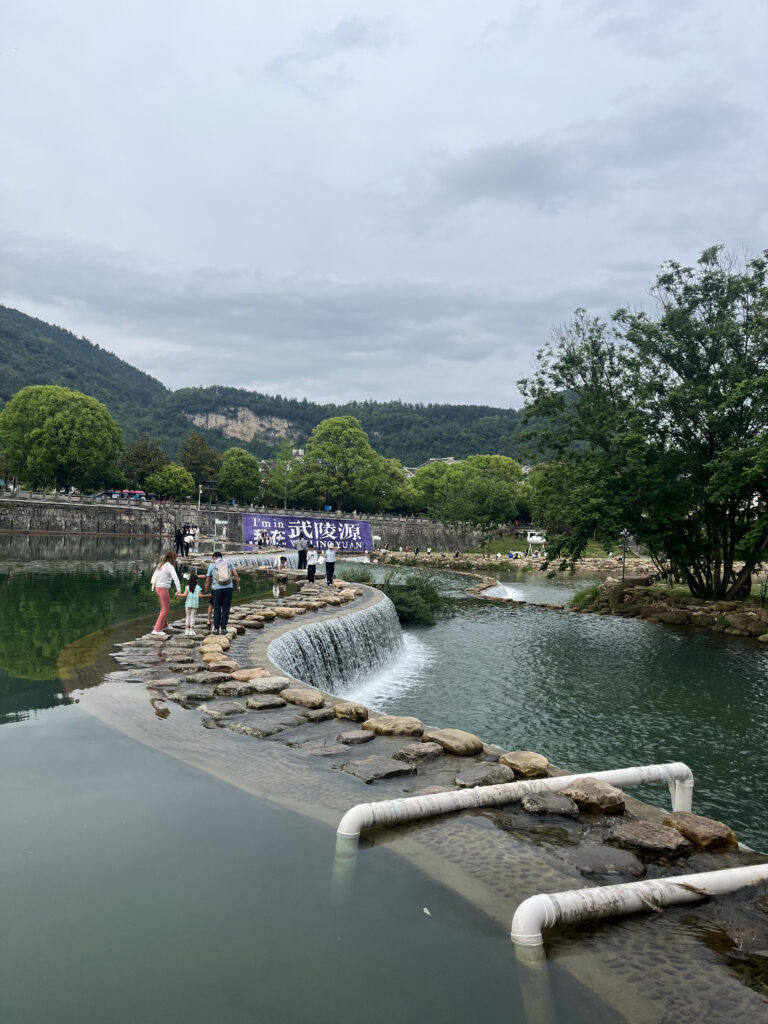
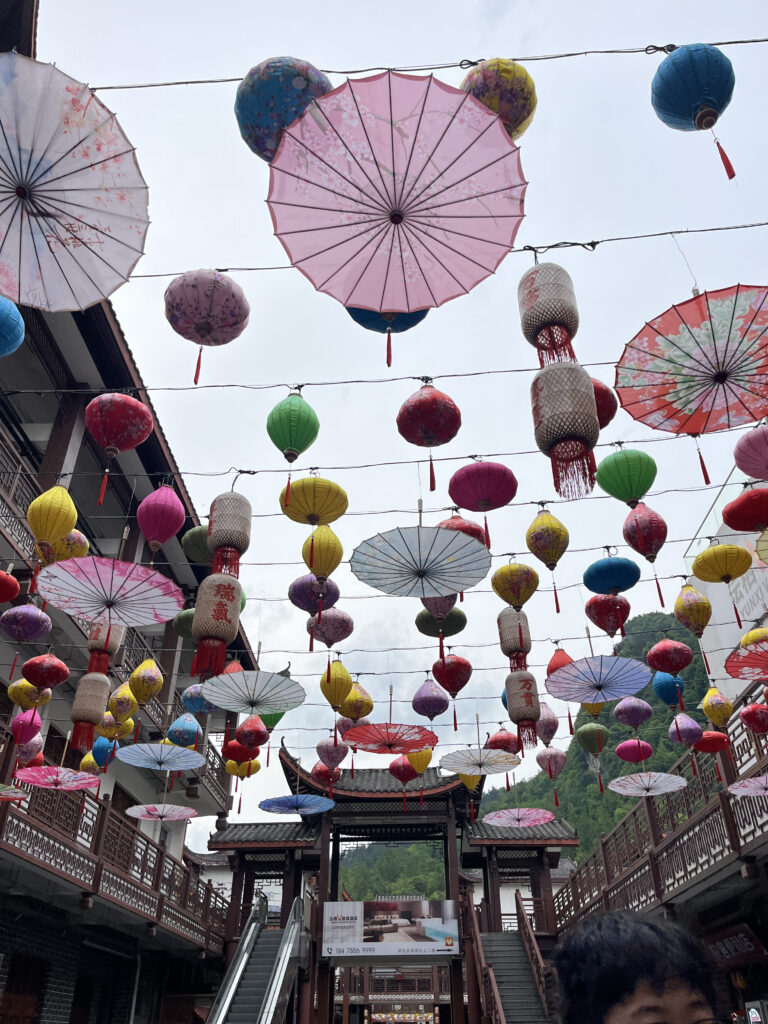
We arrived from Shanghai at Zhangjiajie Railway Station and took a bus directly to Wulingyuan. The town is surrounded by green, forested mountains, with a river and a beautiful promenade running through it. After spending an entire day in the Avatar Mountains, walking around a place like this is pure pleasure — it feels almost like an Alpine village.
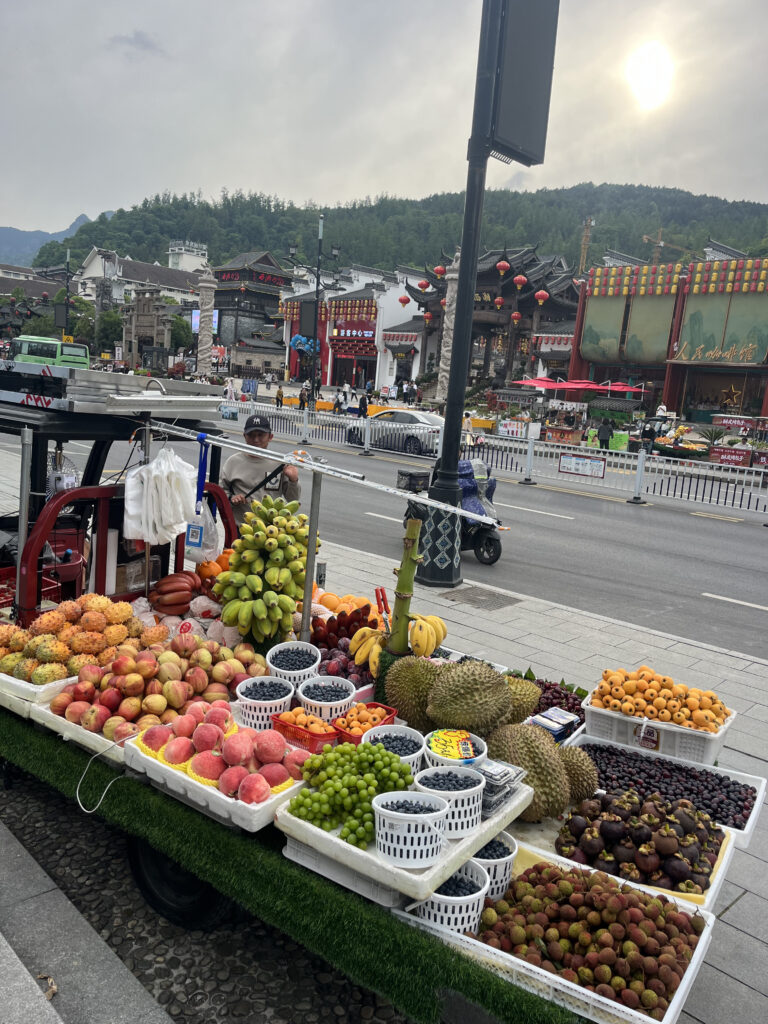
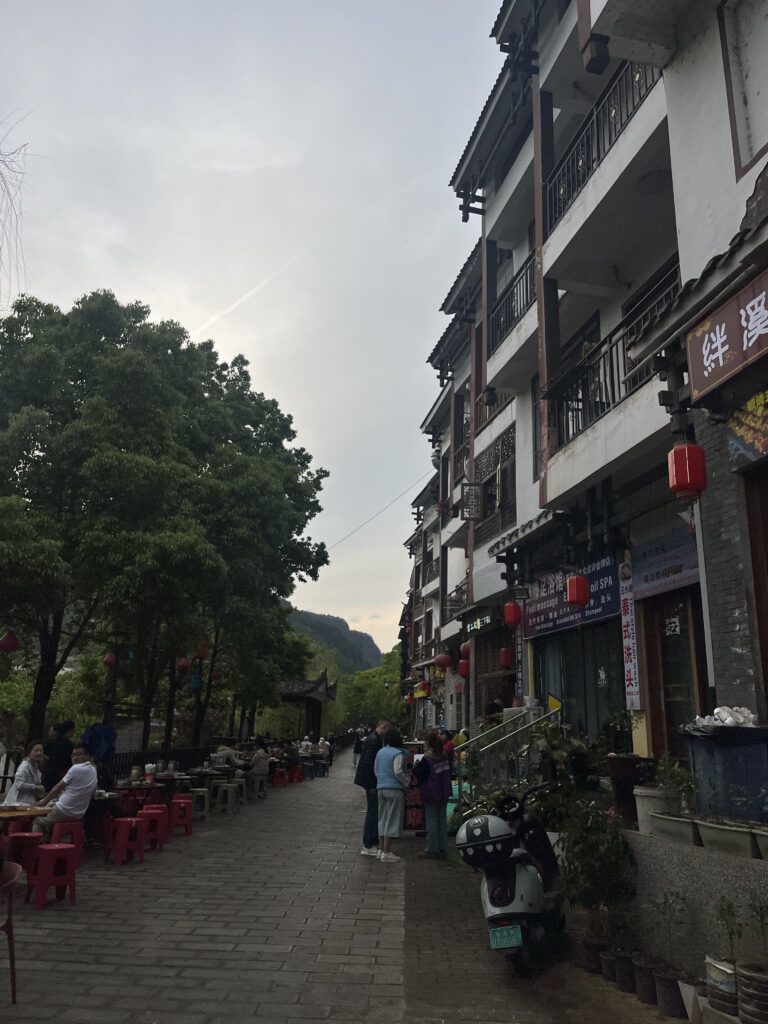
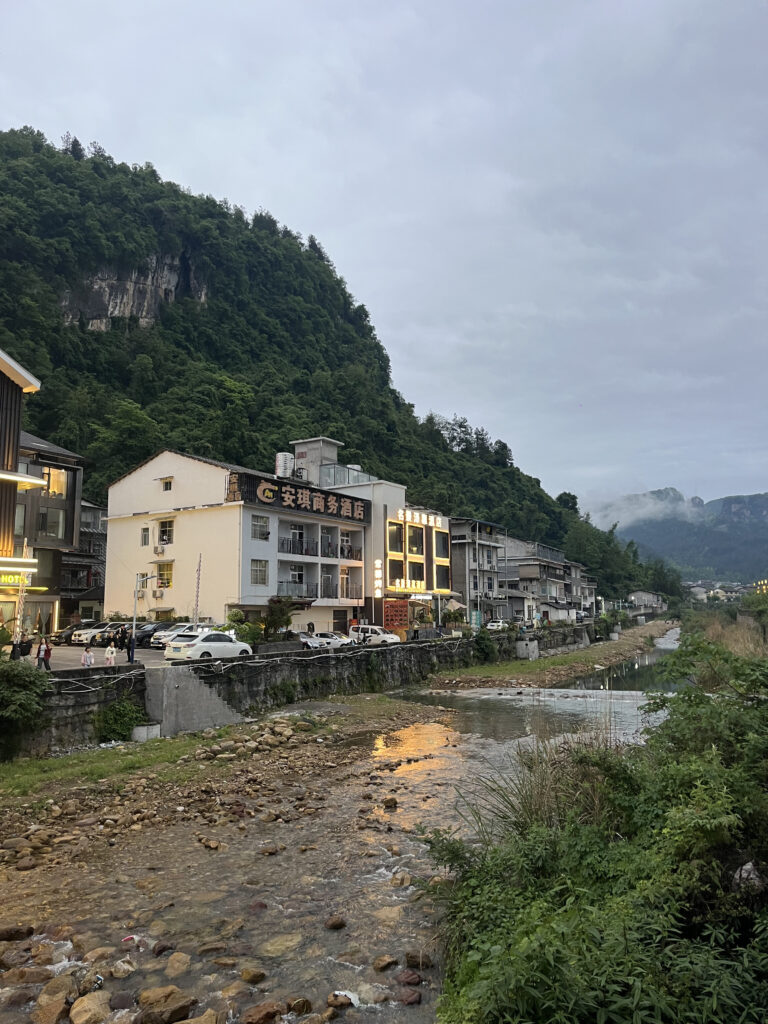
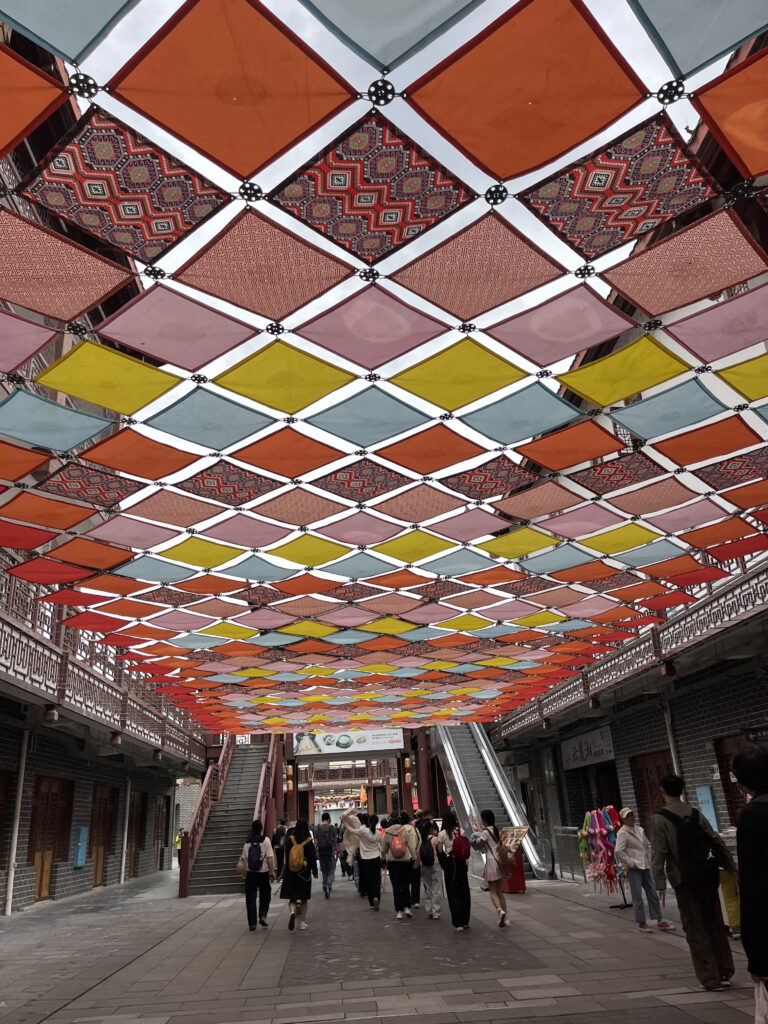
In the evening, you can go to one of the grand shows about historical love stories — you’ll find flyers for them in pretty much every hotel. The reviews were mixed, though, so we skipped it and simply walked around and enjoyed the scenery.
Zhangjiajie National Park – the Avatar Mountains
Bring a hat and a raincoat. We were lucky with the weather, but that doesn’t mean you will be — mountain weather is unpredictable.
Our entrance to the park on the first day was, I think, the eastern entrance. Our hotel provided a free shuttle to the entrance. And although we were given a bunch of maps, figuring everything out was still quite challenging.
Here’s the basic information about the park: there are four cable cars, and we managed to ride all of them, as well as numerous viewpoints overlooking the mountains and panoramic landscapes. There are free toilets and food stands everywhere. Signs point you towards bus stops and the main attractions. The buses help you cover the enormous distances inside the park, taking you from one stop to another — and they are free. Try to ride all cable cars and enjoy Pandora-style scenery.
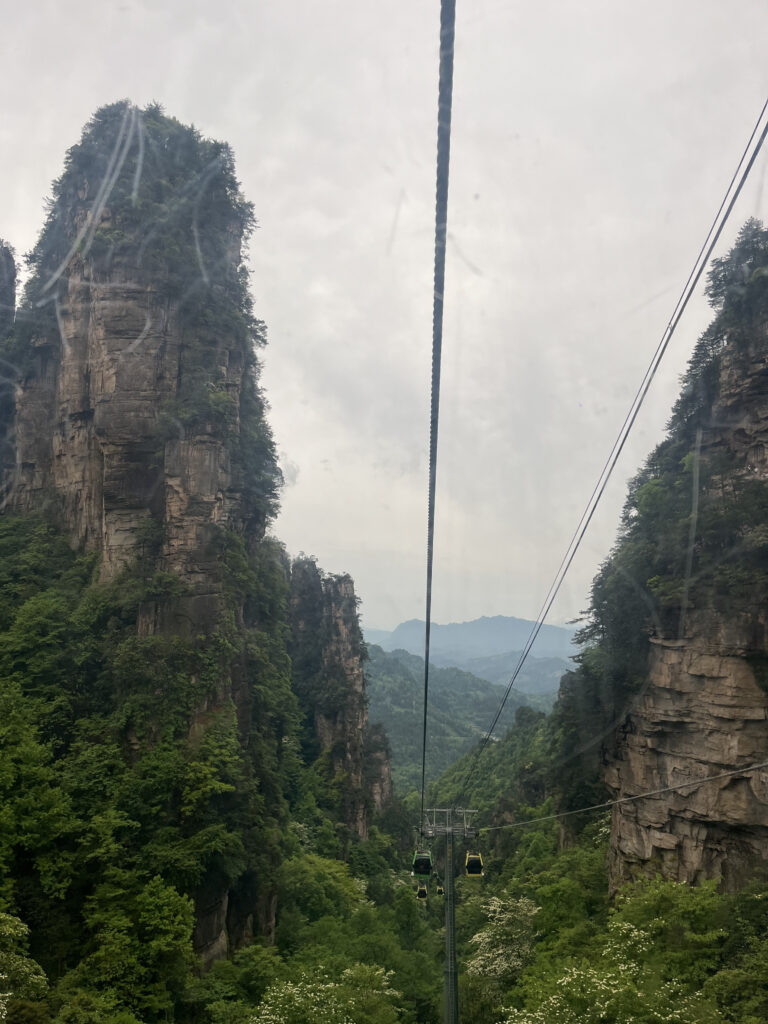
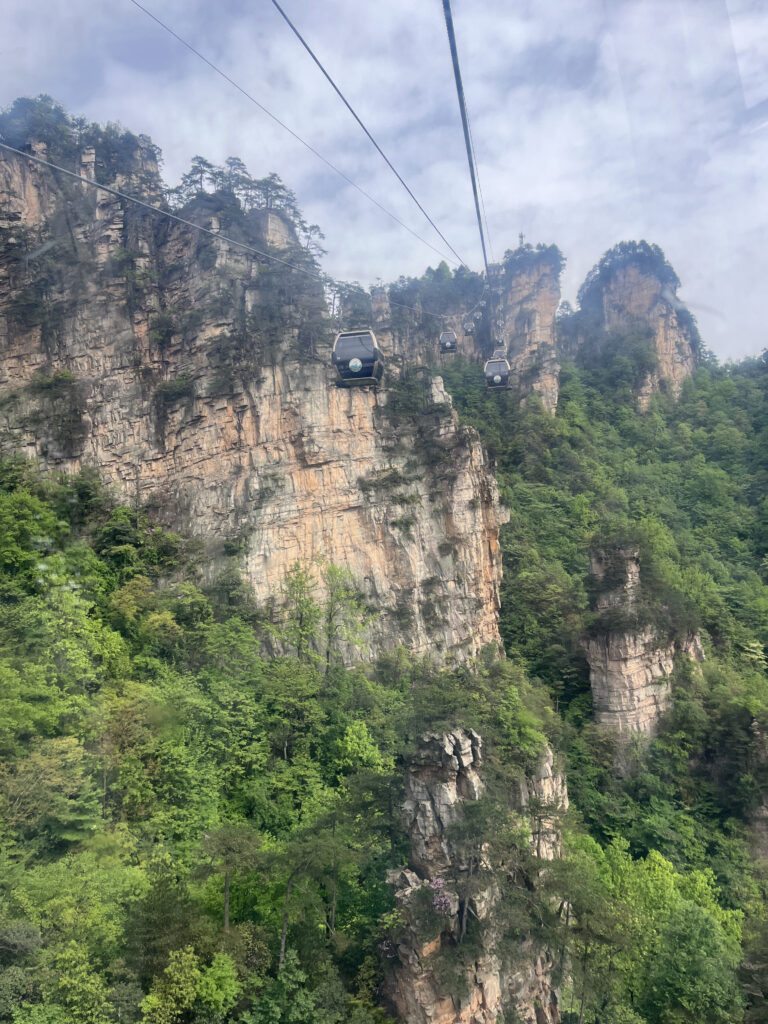
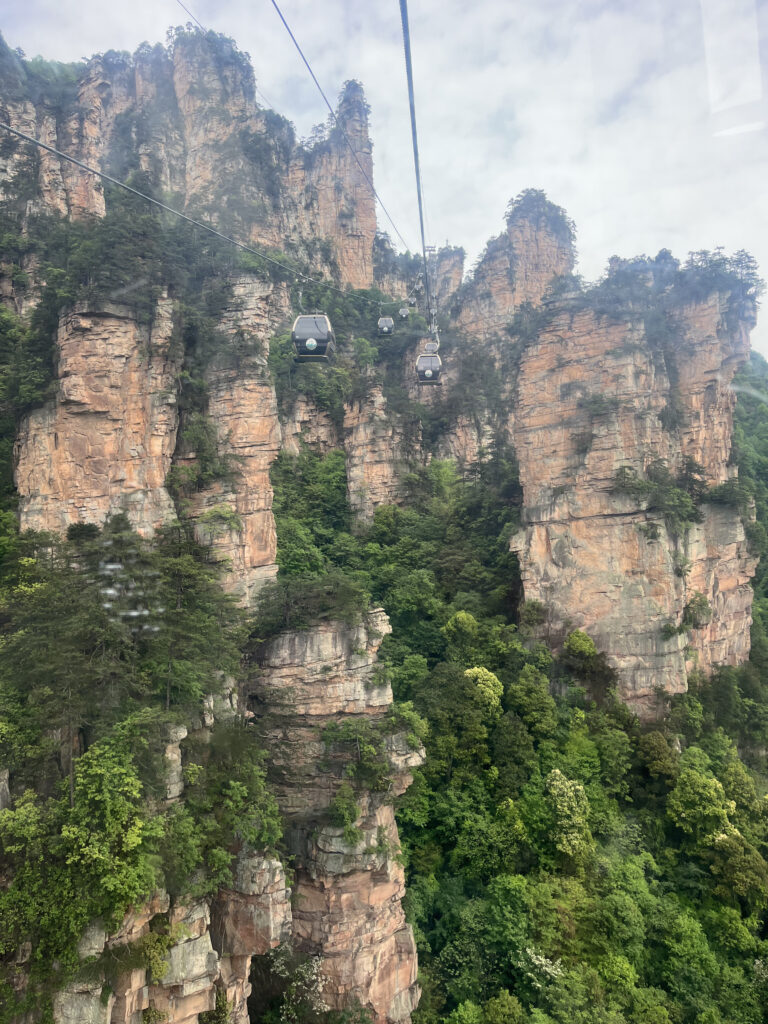
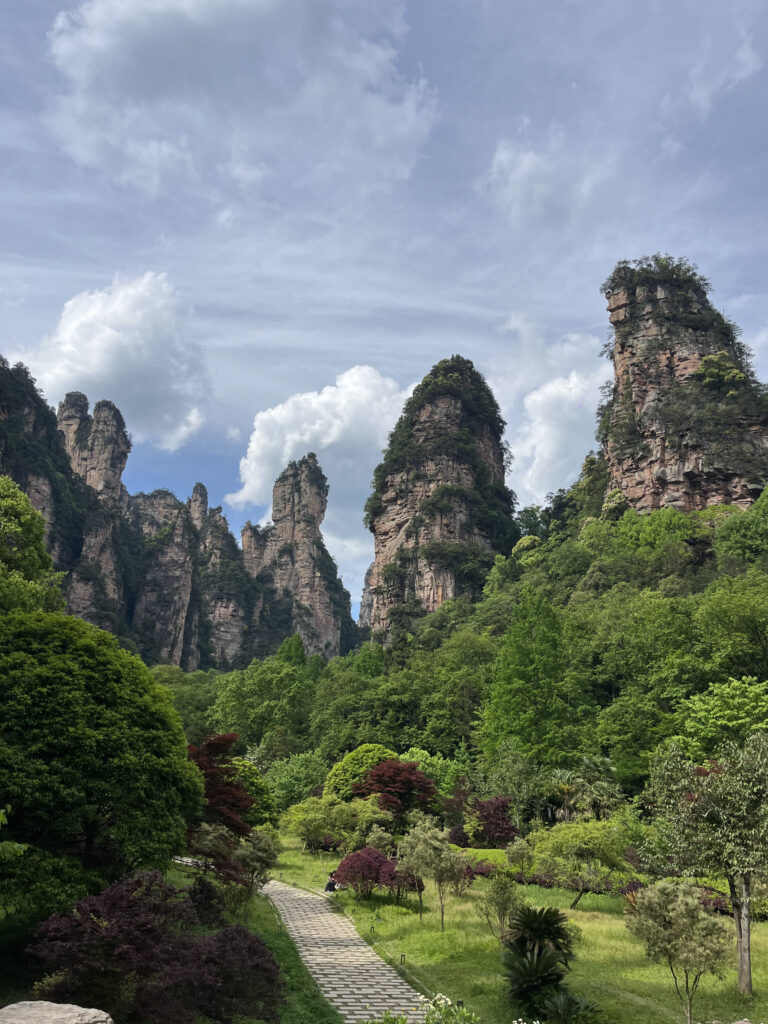
Because the park is so huge, it sometimes feels like you’re walking completely alone. There were a couple of locations where we did encounter massive crowds, though. So, we entered through the eastern entrance and immediately took a cable car. The views were breathtaking. We had to struggle with the map for a while before finally finding the actual Avatar Mountains.
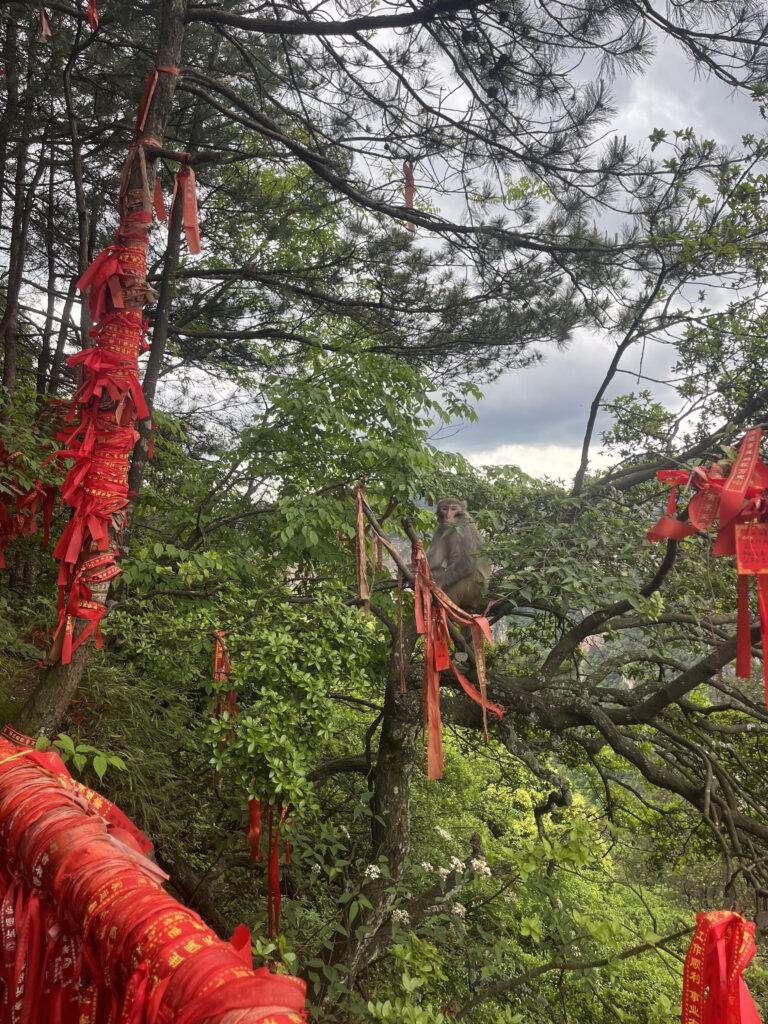
At first, we accidentally ended up at a location reached by a metal staircase disappearing high into the mountain. The staircase looked terrifying, and there was a very long queue leading to it. Thanks to the extremely disciplined Chinese visitors, however, the queue moved quickly. We decided to wait anyway, just in case, but honestly, we didn’t see anything particularly spectacular except this cute monkey.
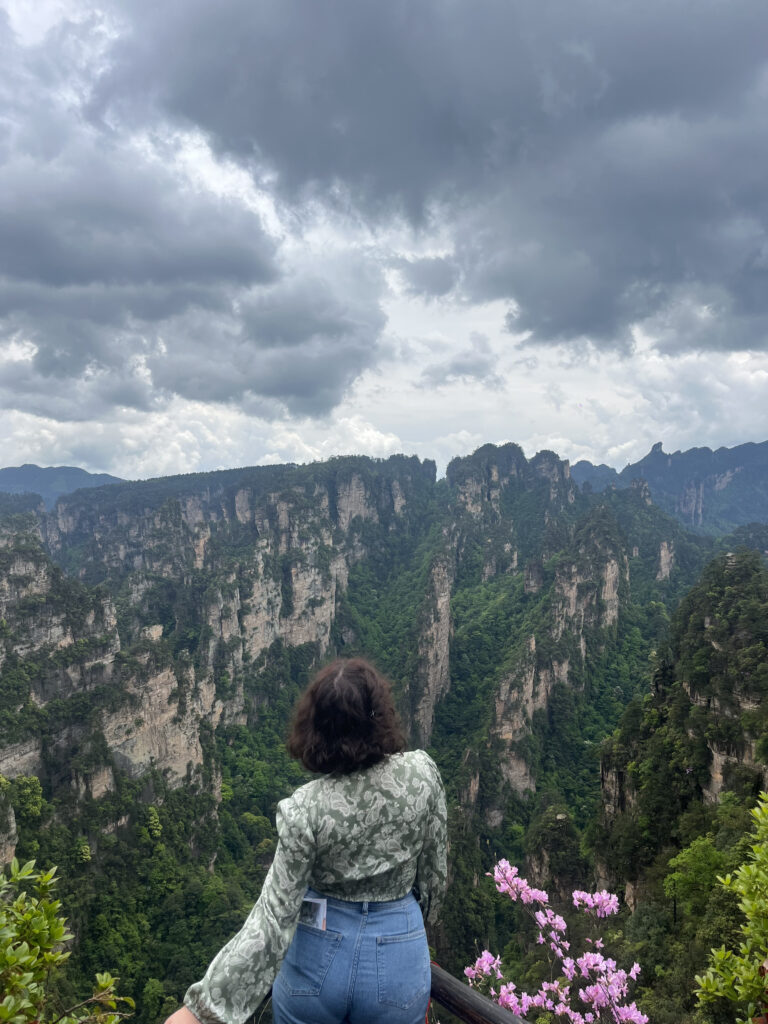
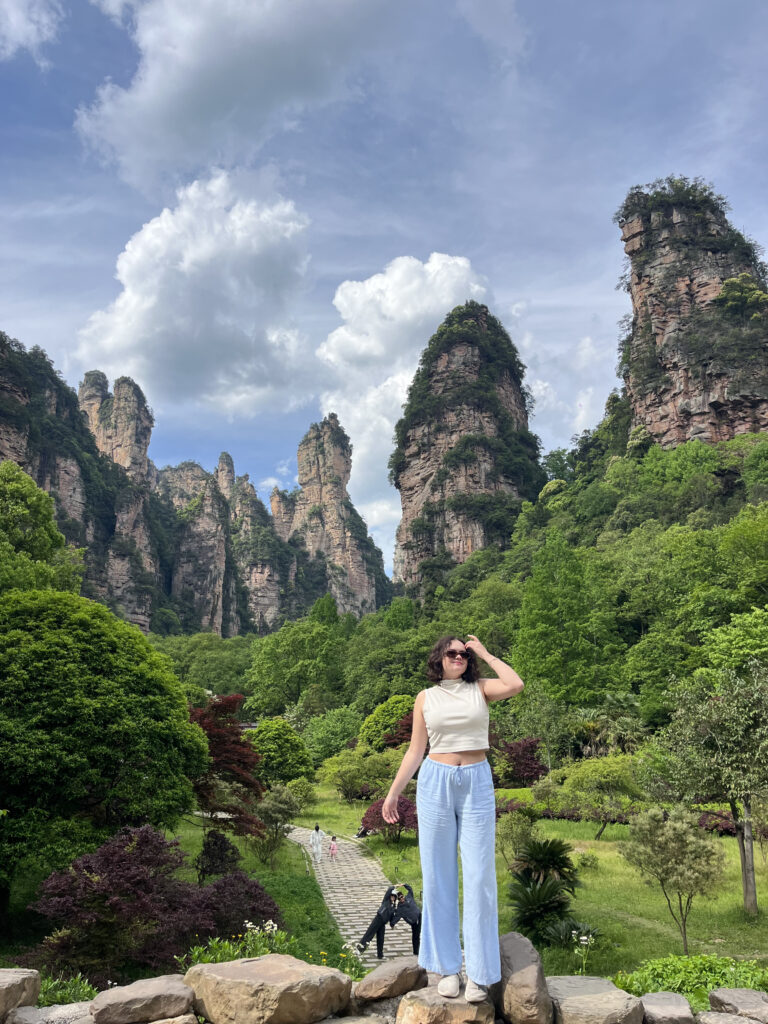
Then we finally reached the famous rock formations that inspired the creation of Pandora in Avatar. There is also a “natural bridge” nearby — a stone formation connecting two cliffs. While we were standing on it, we couldn’t understand why everyone was crowding around. But once we looked at the bridge from the other side, we realised that it really was a little miracle of nature.
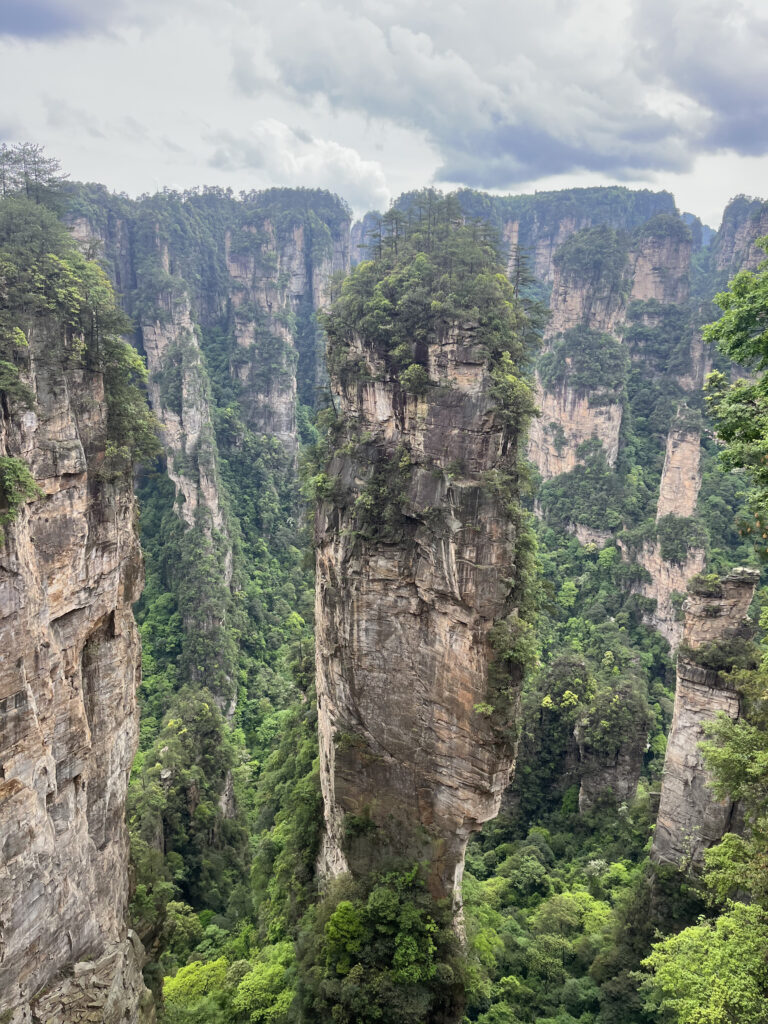
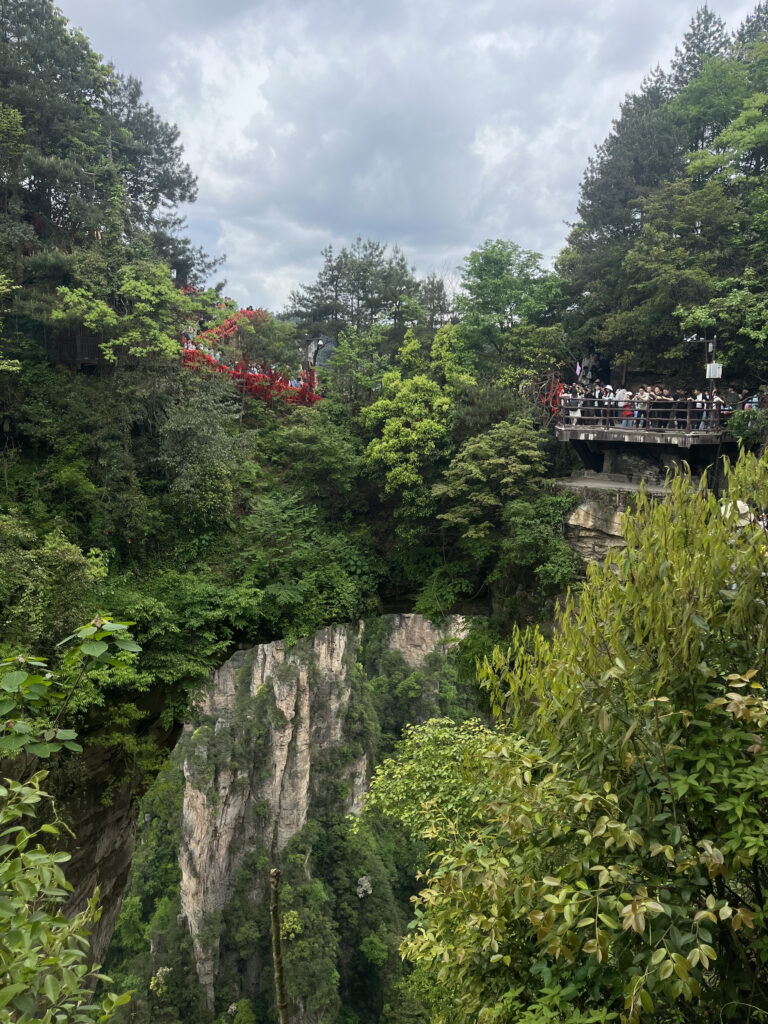
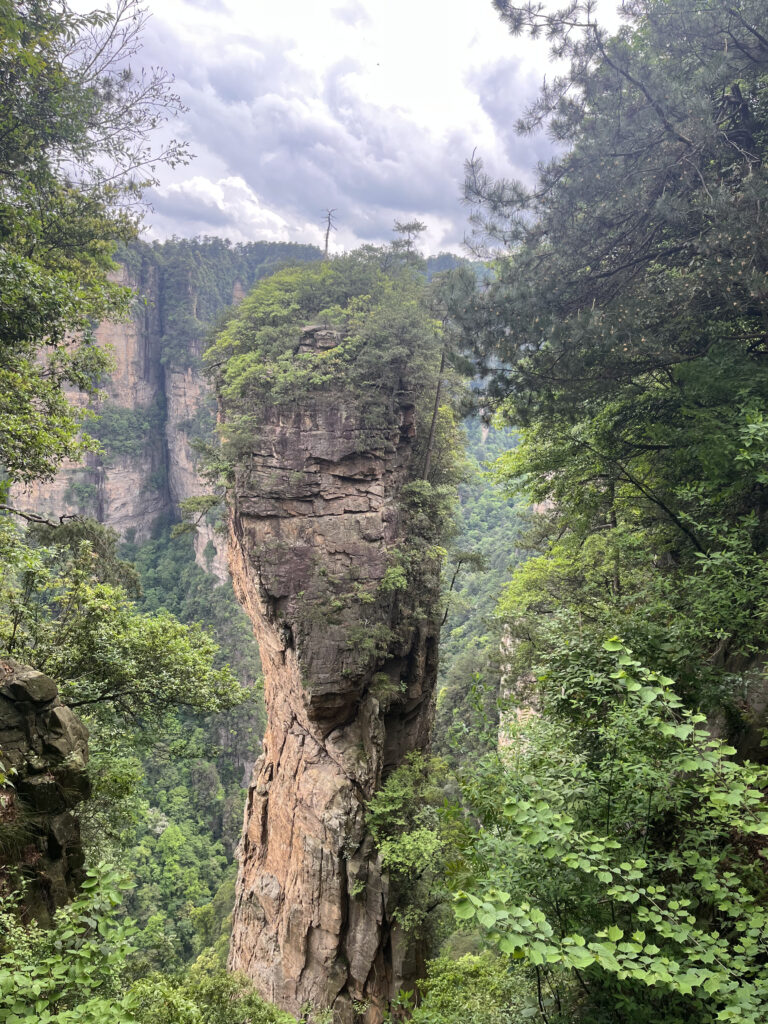
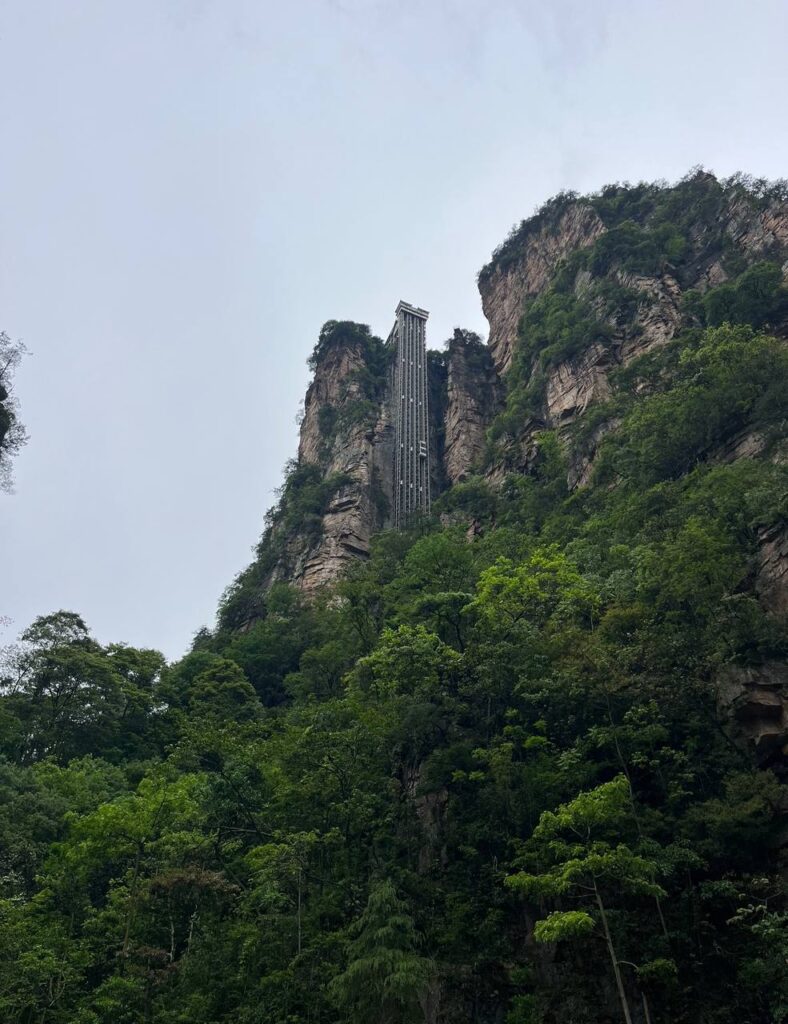
After lunch, we headed to the Bailong Elevator, built directly into the mountain. Keep in mind that there are two ways to get there: the upper and lower platforms, and they are accessed by two different routes. Somehow, we ended up at the upper platform. If you want the Instagrammable version of the elevator experience, you need the lower platform — the elevator slowly rises, revealing absolutely unreal views of the mountains. See my review here. Be warned: there are almost always huge queues for this elevator. The Chinese, by the way, are exceptionally good at dealing with queues.
We ended up at the upper platform. There were already tons of people, and some were watching an outdoor concert. Why on earth would anyone need a concert here, we wondered? It turned out to be much simpler: the concert was entertainment for people waiting in line! When our turn came, we were given little stools, music was turned on, and we were handed sweet ice treats. They were entertaining us like children so that we wouldn’t cry or complain! After about 20 minutes of waiting, we were taken to the elevators, where we waited another 20 minutes, slowly moving forward in a line. Finally, we were taken to the elevator itself. If you want to get a spot right next to the panoramic glass, you need to enter the elevator first.
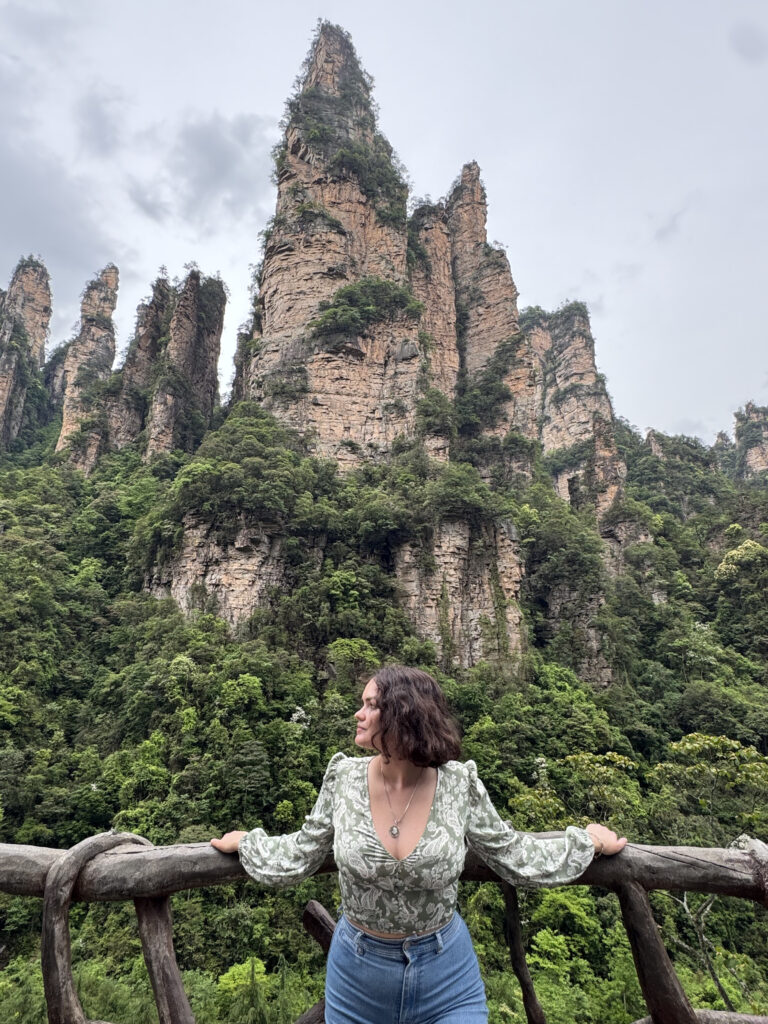
The next day, we went to another entrance, I think the southern one. It was quite far away, though — we took a taxi from our town and drove uphill into the mountains for a very long and expensive time, without being entirely sure that we were even going in the right direction.
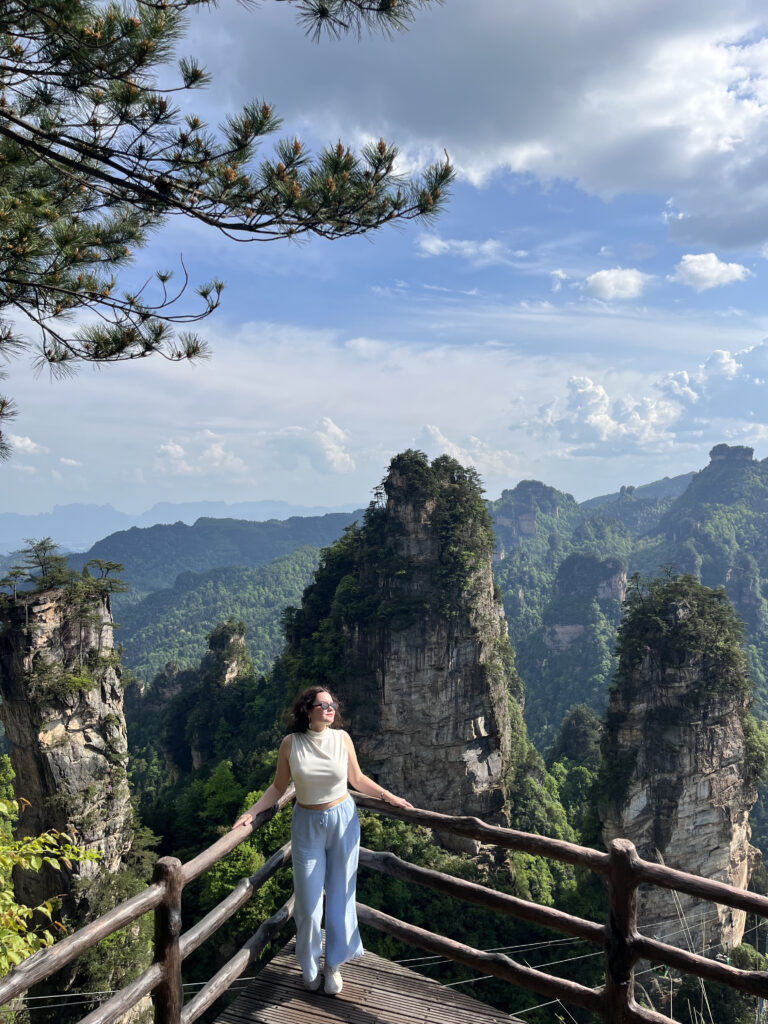
Luckily, we eventually arrived at the right place and found this beautiful viewpoint.
This entrance also has a very long and beautiful hiking trail, but we decided not to take it because we had to make it to the Glass Bridge. We did, however, manage to ride the two remaining cable cars and take a bus back to the eastern entrance.
From there, we headed to the Glass Bridge.
The Glass Bridge and the Grand Canyon
This location was relatively close to our town, and if you have enough time, buy a ticket — but not just for the bridge. Do it for the hiking trail along the river. That was the highlight of the whole place for me.
Our ticket included the bridge, zipline, all the glass elevators and boat rides. Plan to spend here half of the day.
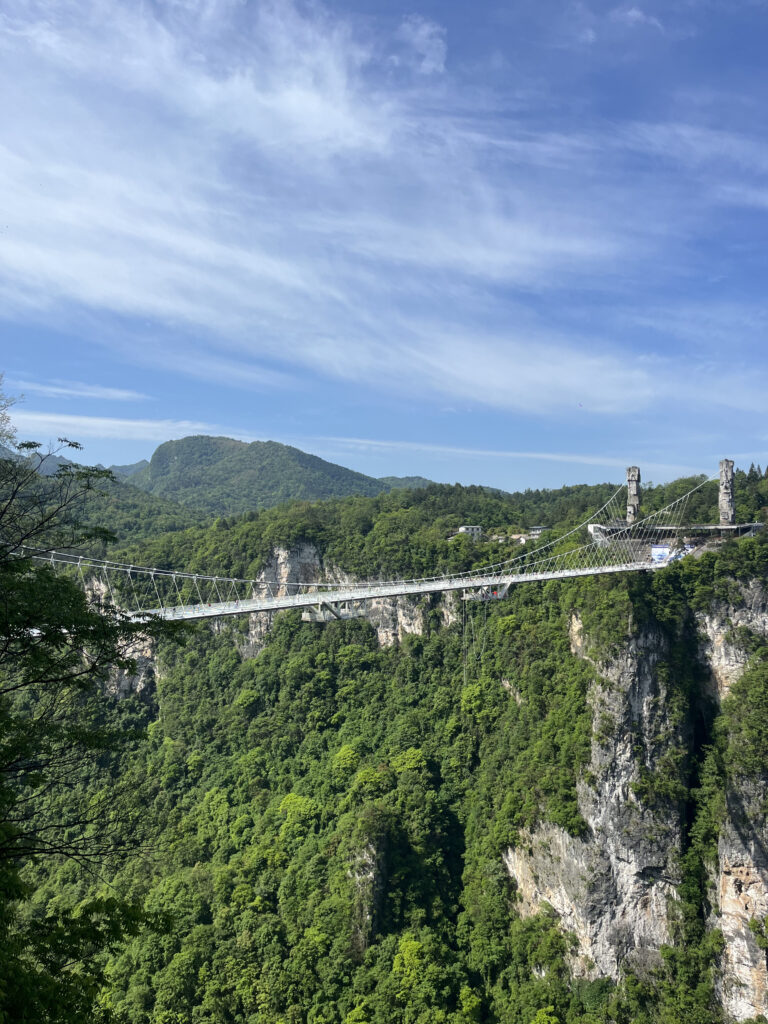
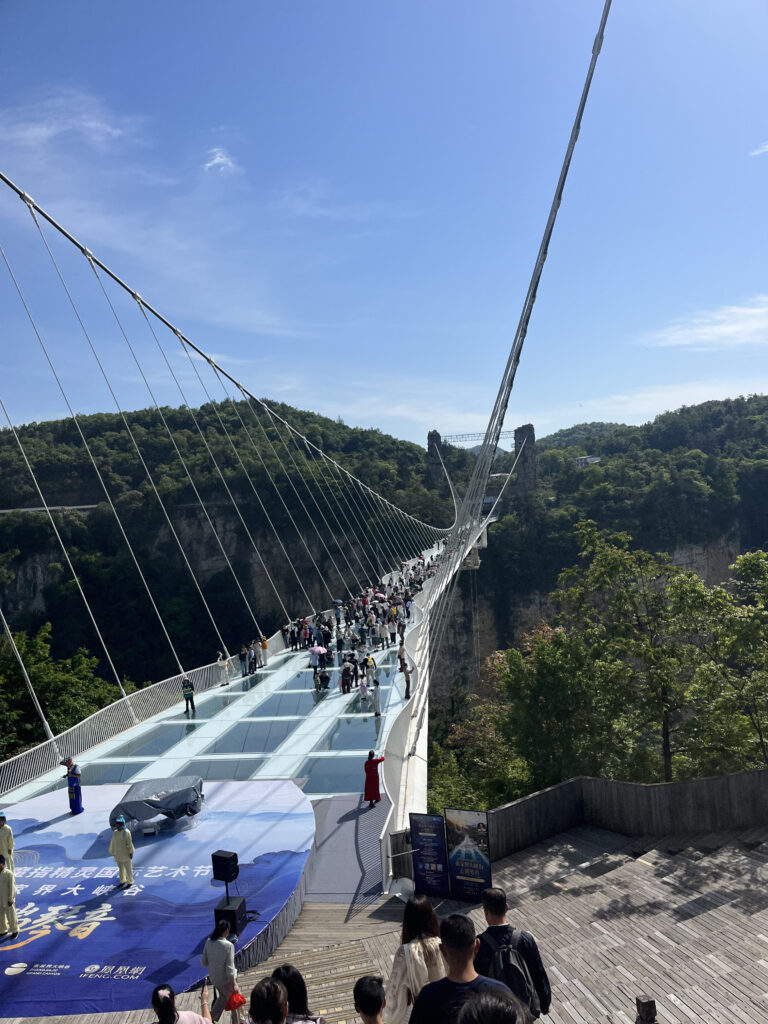
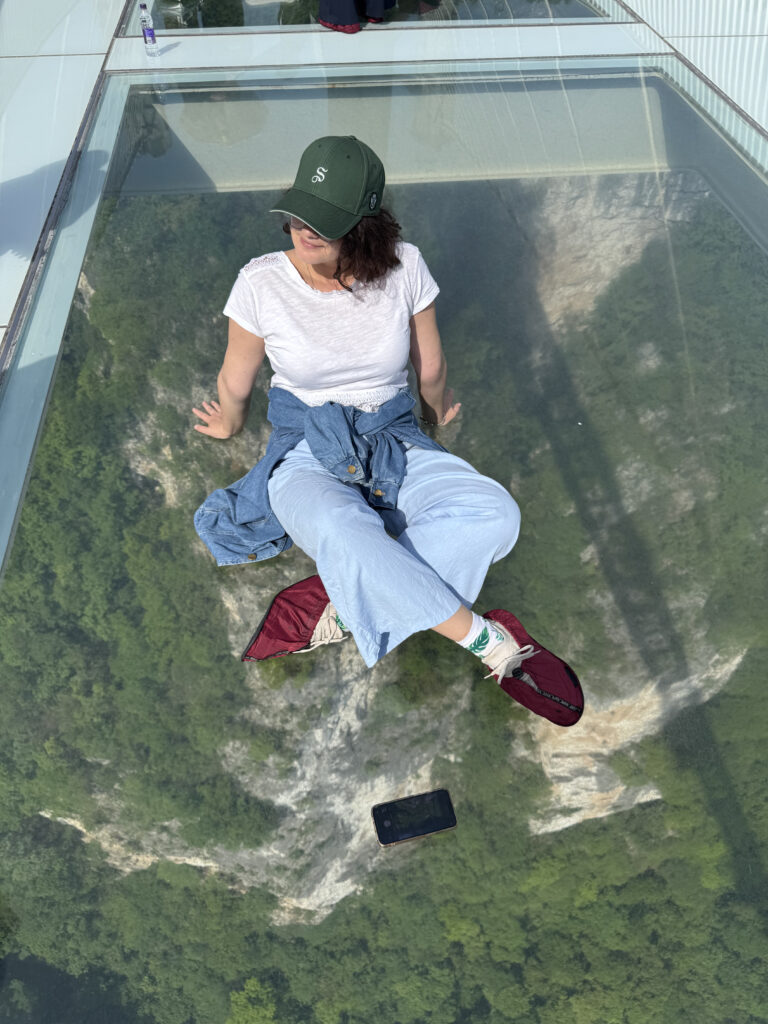
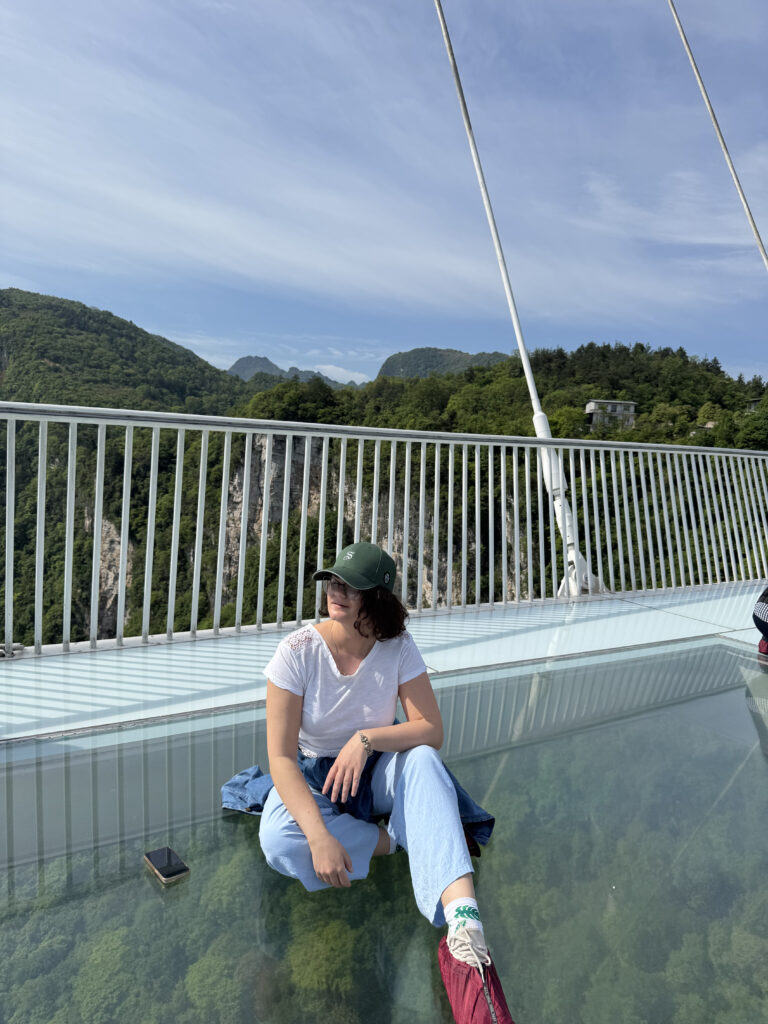
Let’s start with the bridge. This is the longest glass bridge in the world! At the entrance, you’ll be given little fabric shoe covers so you don’t ruin the glass with your shoes. Honestly, the bridge wasn’t scary at all. If you’re looking for some actual adrenaline, you can book a bungee jump from the bridge. After crossing the bridge, we entered a room with VR headsets — also included in our ticket. In the animation, we “flew” through the canyon in a hot-air balloon. You should come early in the morning to avoid the queues for the zipline. The waiting time can reach two hours. The zipline itself is not scary either.
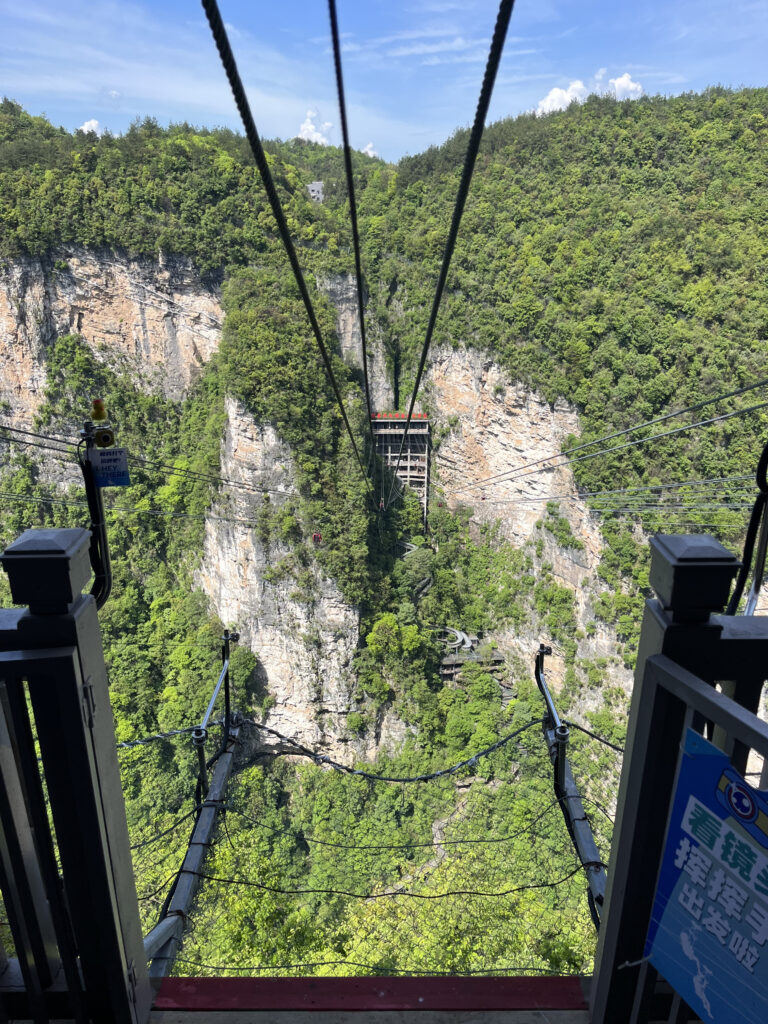
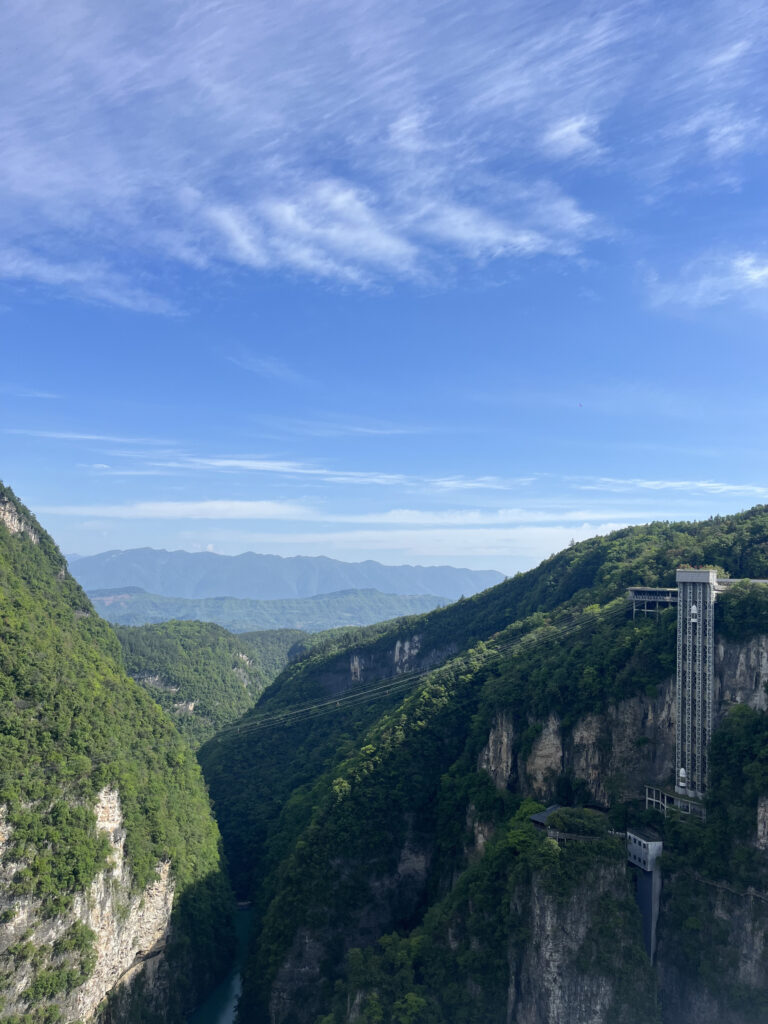
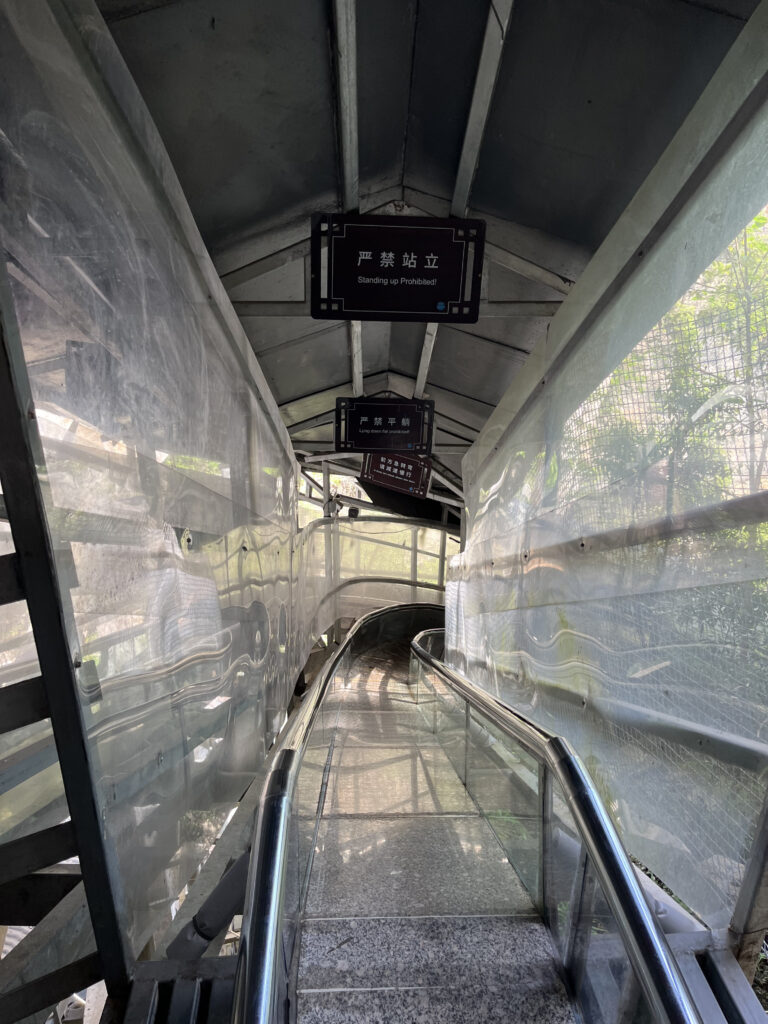
The zipline takes you back to the opposite side of the canyon, where you can either walk along the cliffs in full safety gear or slide down through a stone tunnel. This activity is not for everyone — many people get stuck in the tunnel and have to brake or help themselves along with their feet.
After this attraction, you cross the bridge again to the other side, take a glass elevator down to the platform and begin your journey along the river.
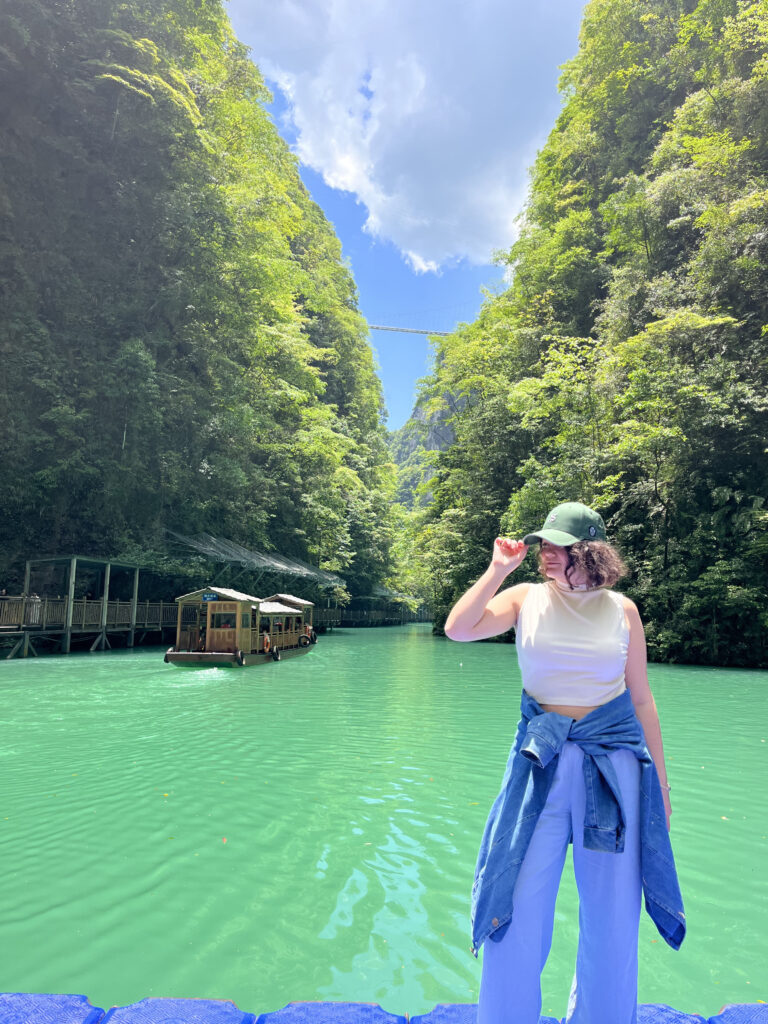
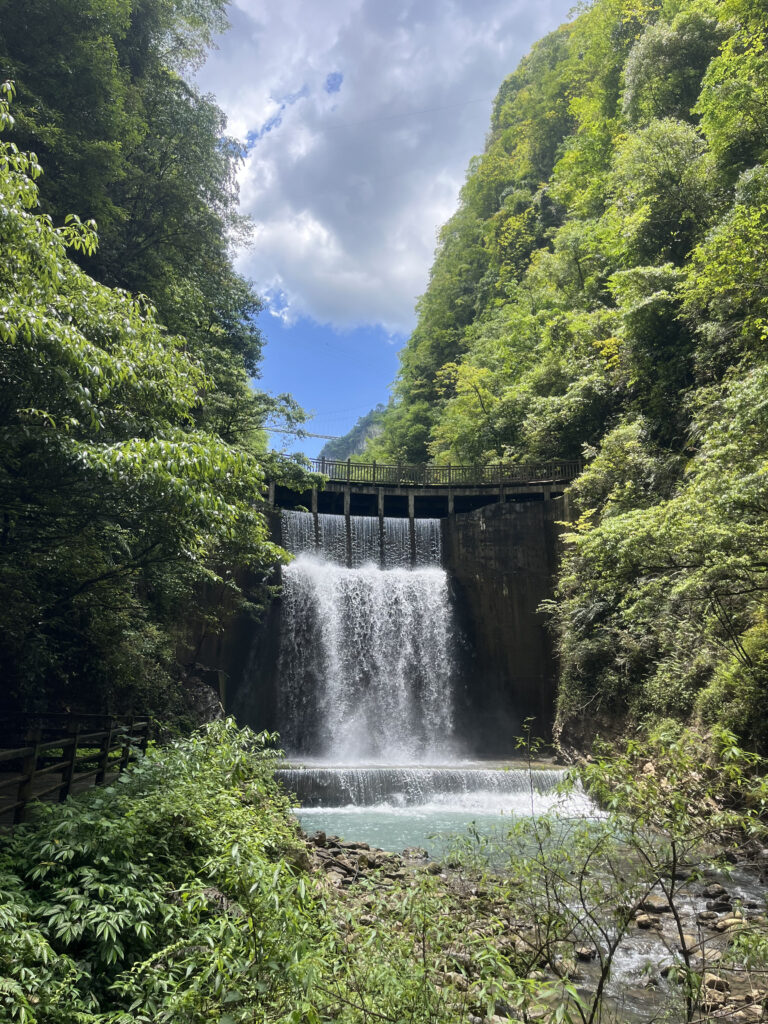
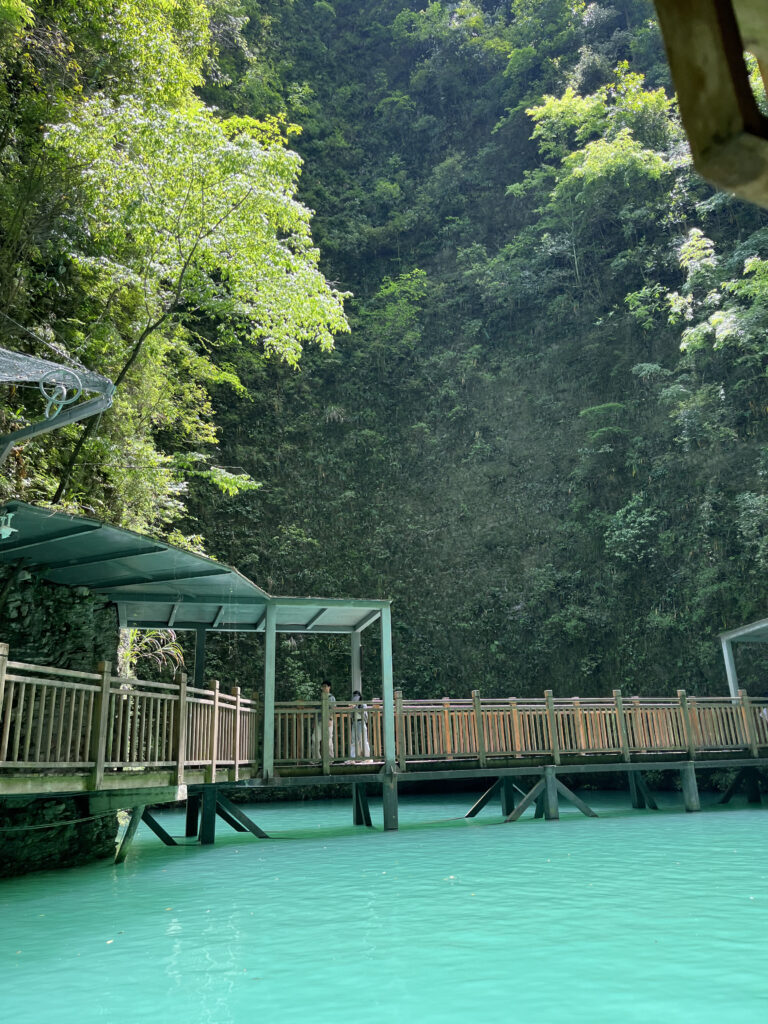
You can take a Chinese-style boat — although the ride is very short — walk for a little while, and then get on another boat that takes you to the beginning of the main trail.
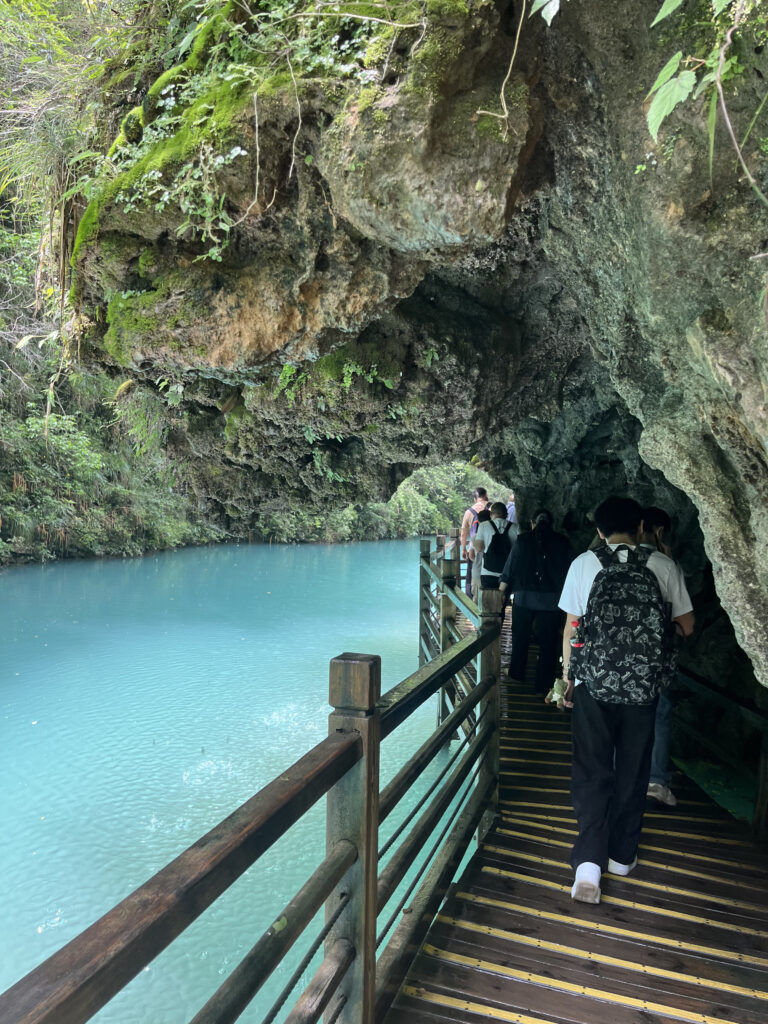
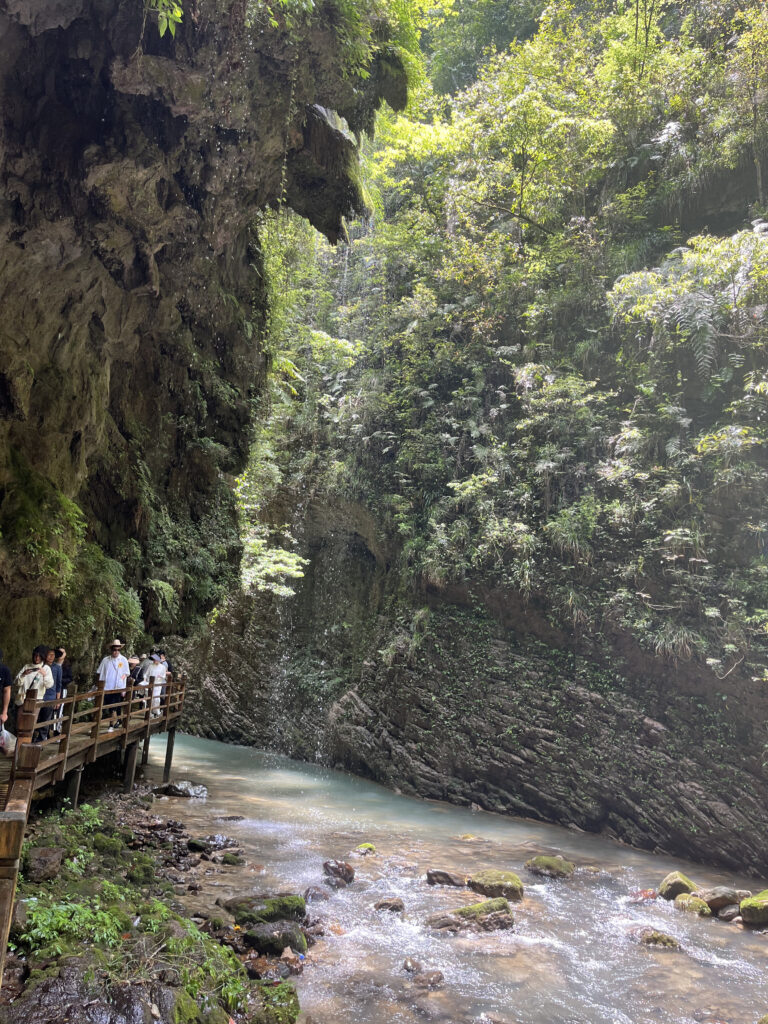
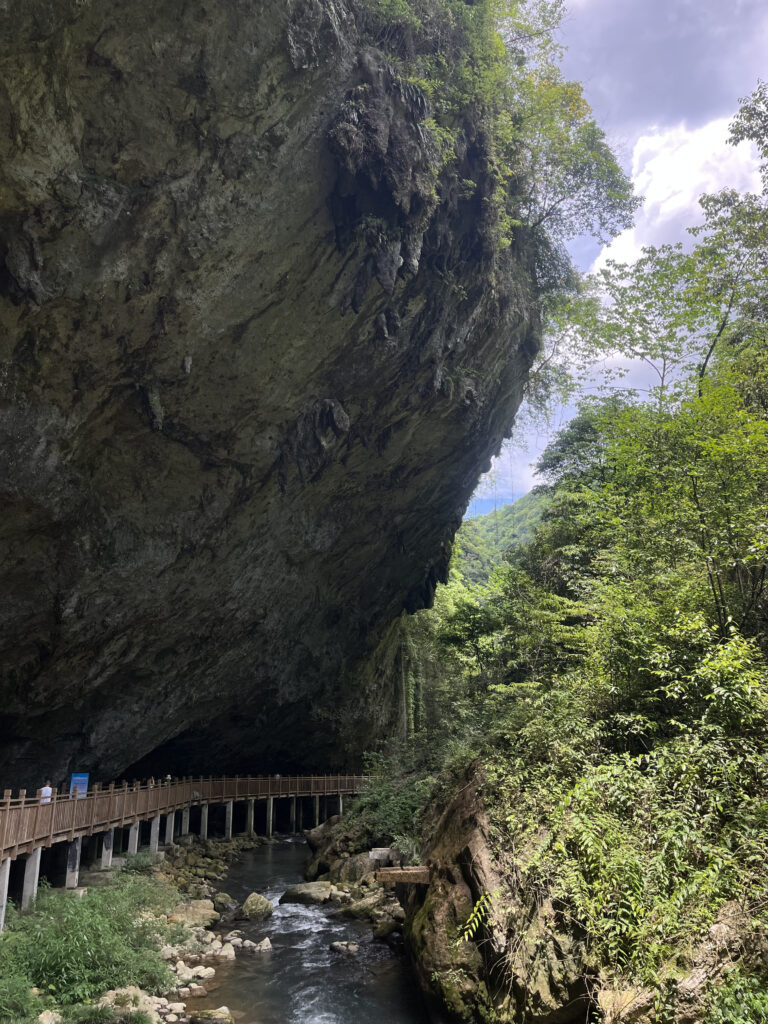
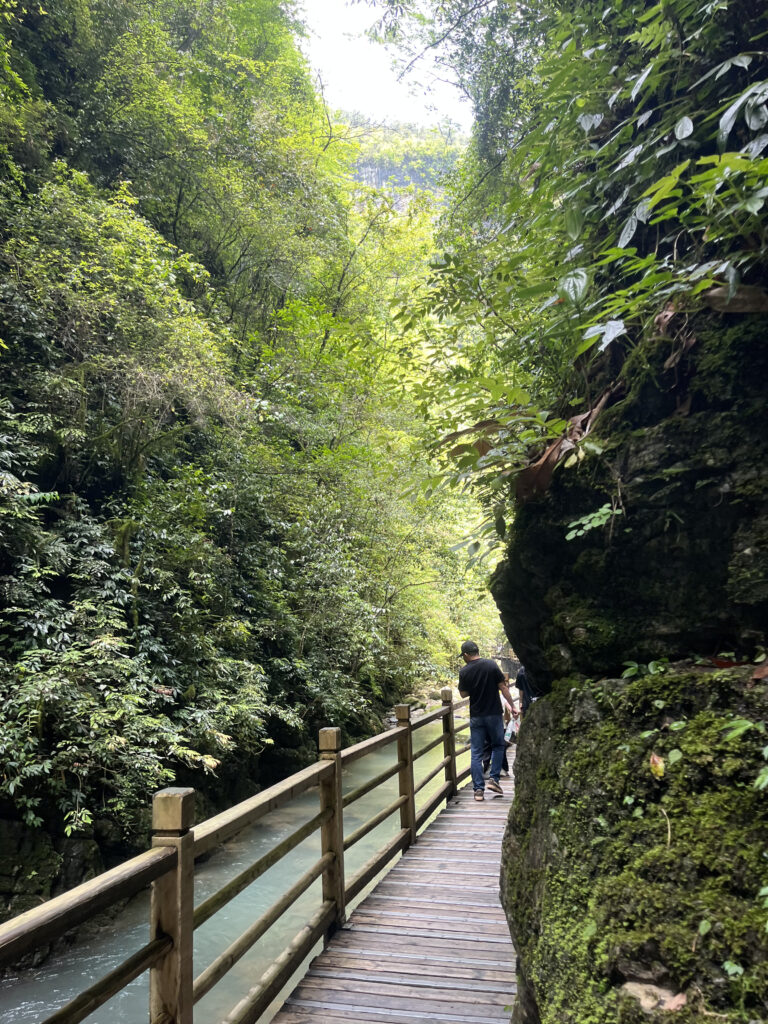
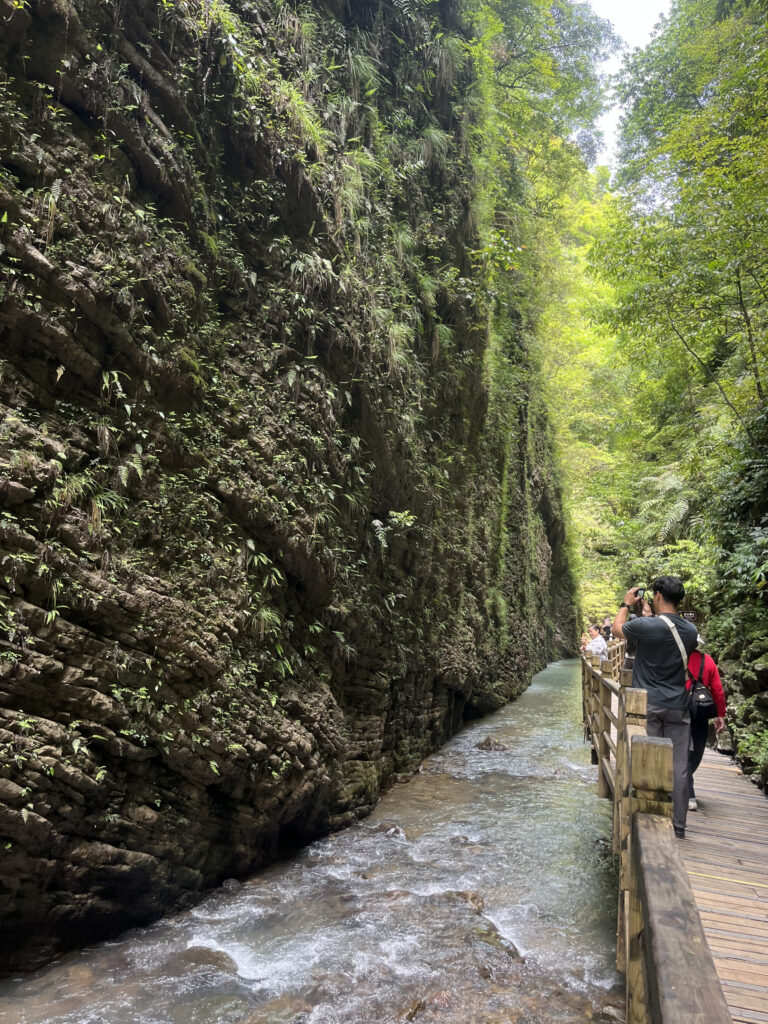
This was my favourite part: a slow walk along well-maintained paths next to the river, waterfalls, little streams, turquoise water and almost no people.
Complete peace and tranquillity.
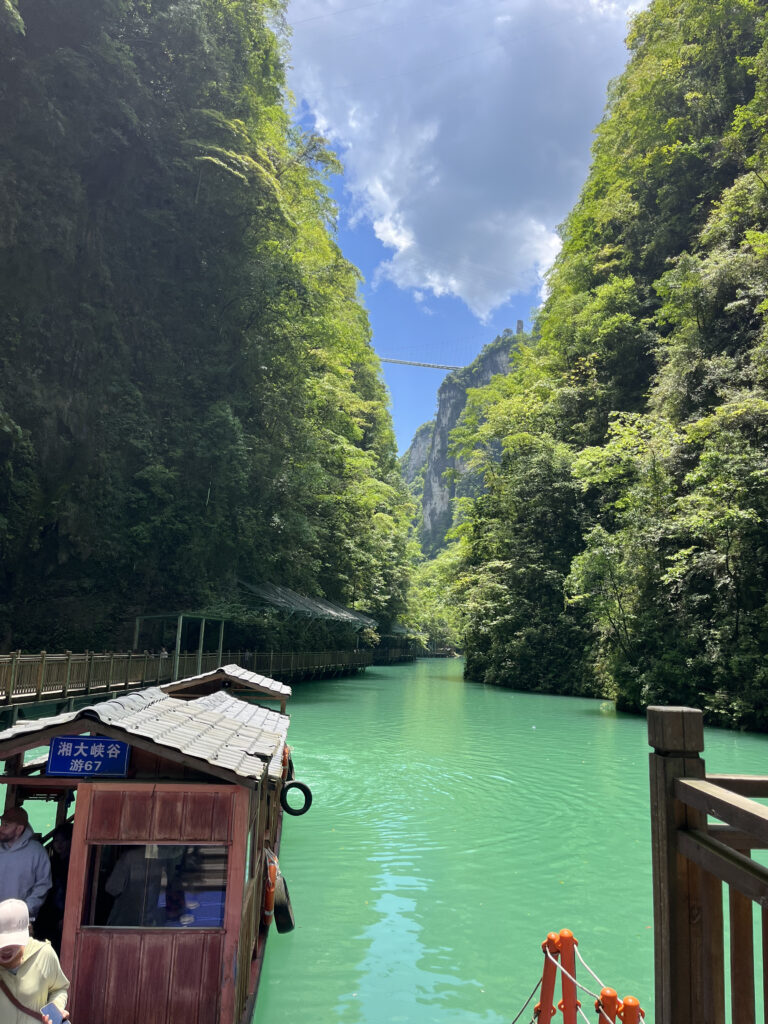
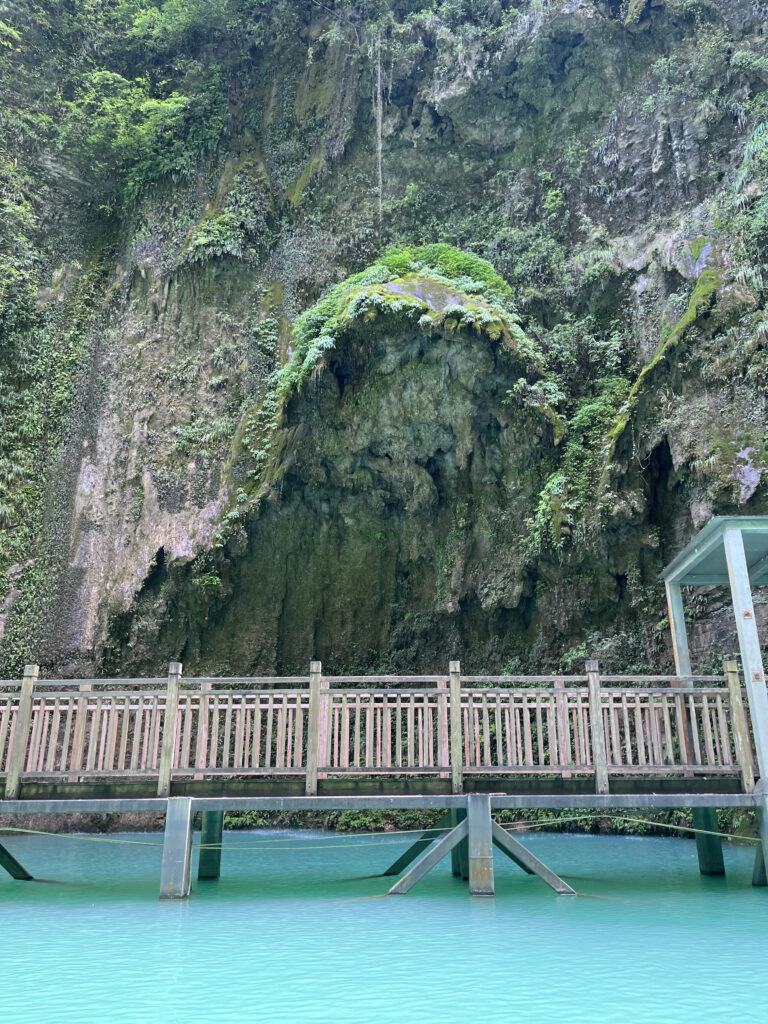
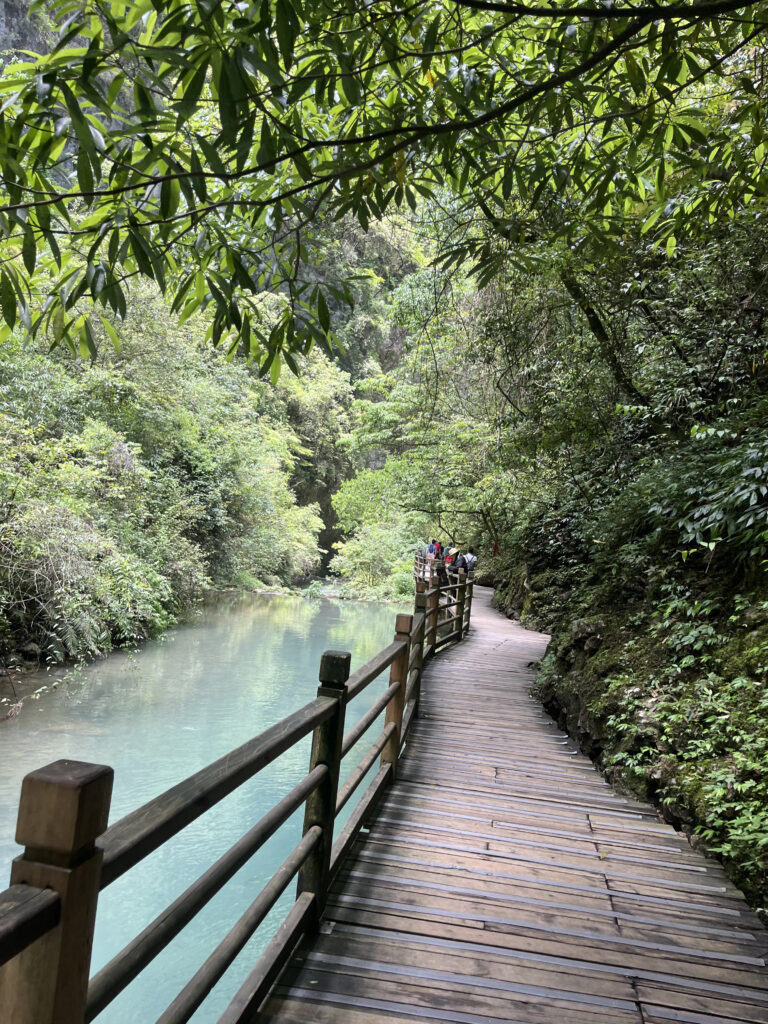
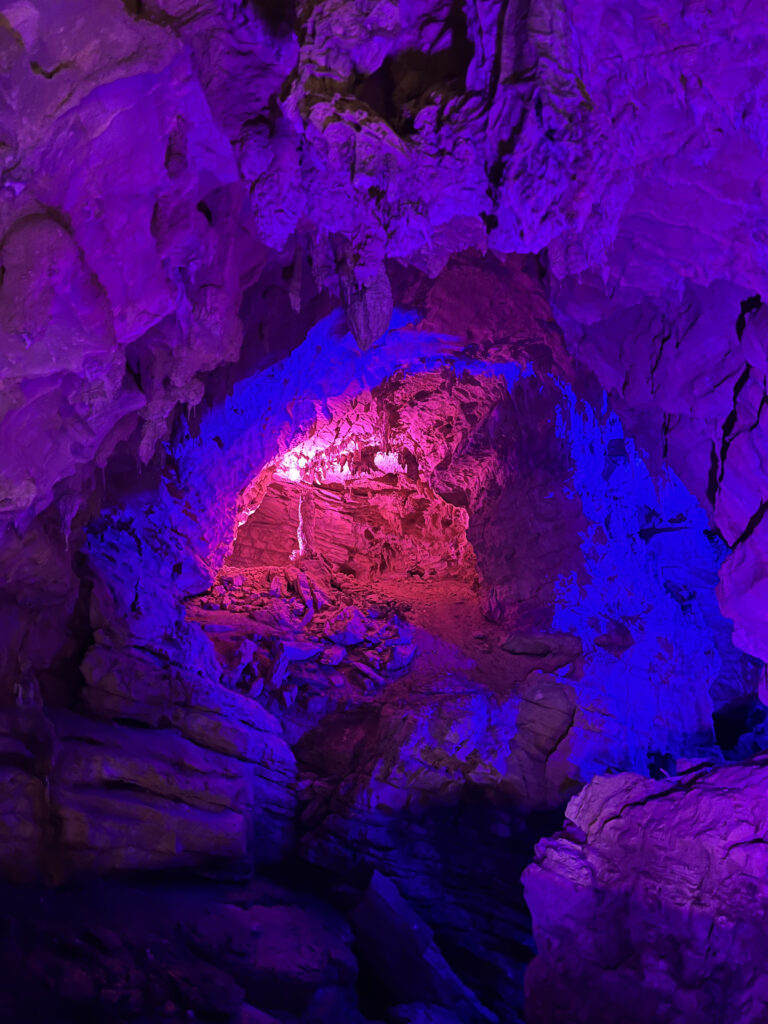
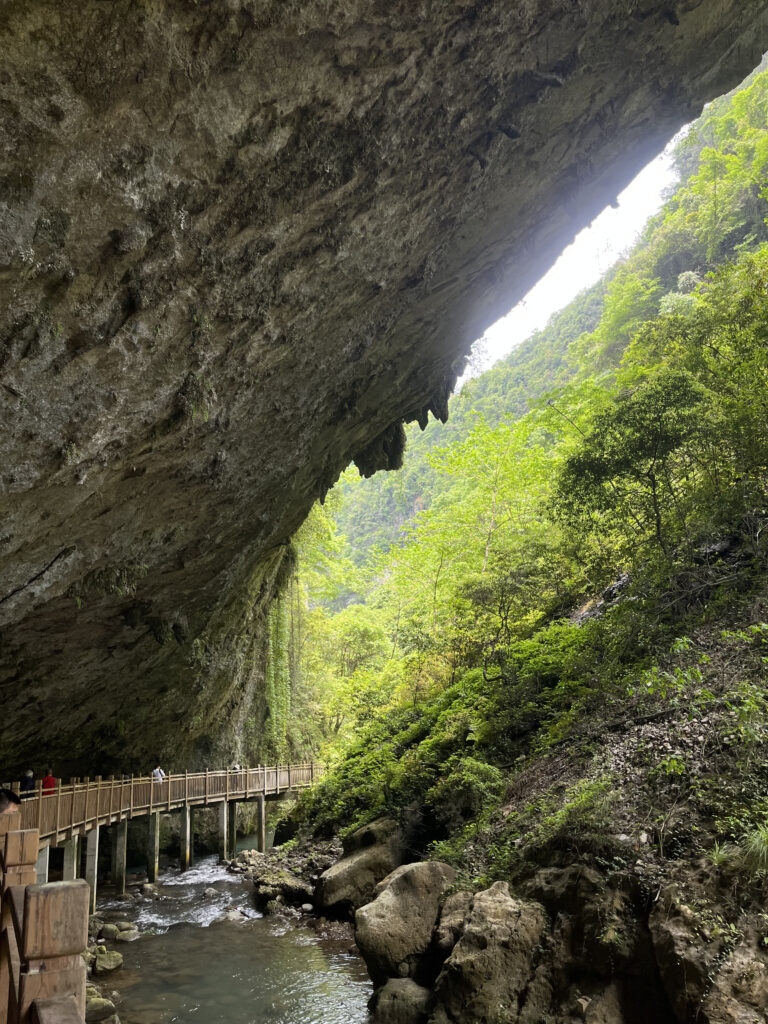
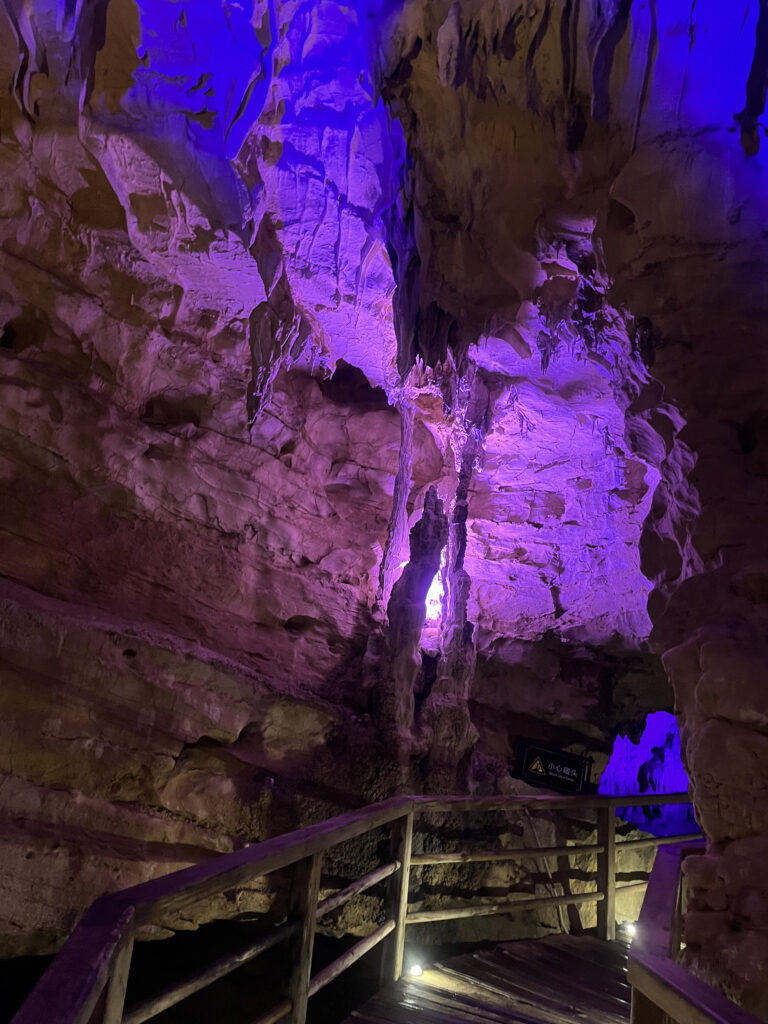
The walk is easy, with no significant climbs. Along the way, there are food stands and toilets — everything you need for a comfortable walk. The trail also passes through a cave with lighting. At the end of the walkway, another Chinese boat will take you to the park exit. Watch my review of the hiking trail here.
And that’s how you can spend two days exploring the “Avatar Mountains” — but this is not everything Hunan Province has to offer. Follow me to a little town with more than two thousand years of history and spectacular waterfalls!
More on China and dream destinations
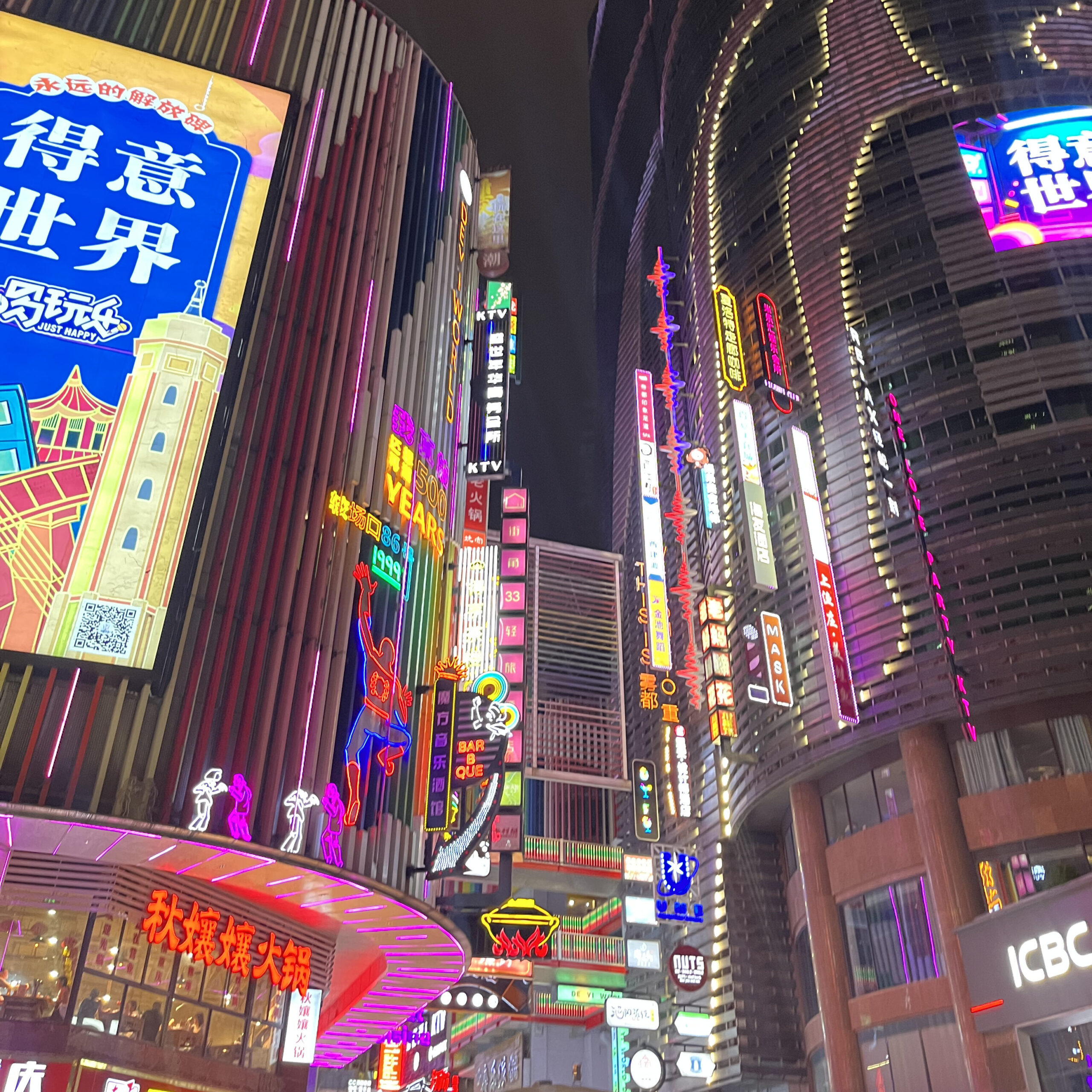
What to Know Before Travelling to China
China is a country where tradition and innovation blend. Here, millennia-old history and culture intertwine with cutting-edge technology. But despite all this progress, China is an authoritarian country with strict controls, so travelers need to be thoroughly prepared. This article explains what you need to know before your trip.
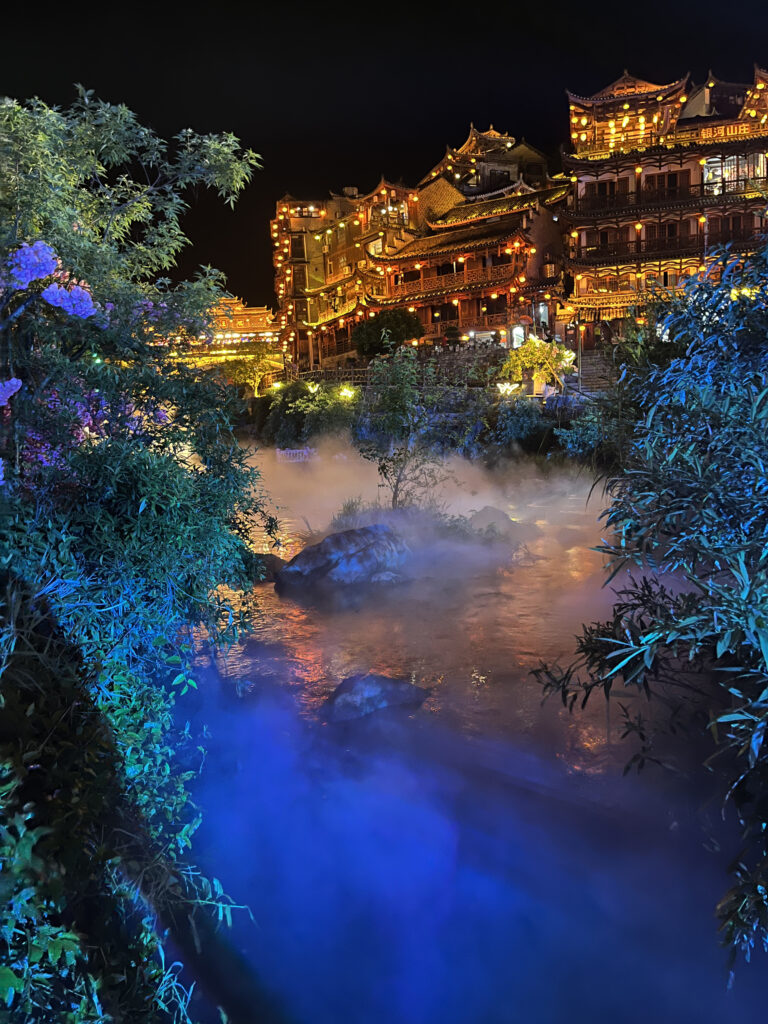
What to See in China in 10 Days
China is huge. You won’t be able to see everything in one go, so you’ll have to prioritize: what’s more important to you – history or cyberpunk? Megacities or nature? I’ll give you a detailed guide on how to plan your 10-day trip from Shanghai to Avatar Mountains to Furong to Chongqing.
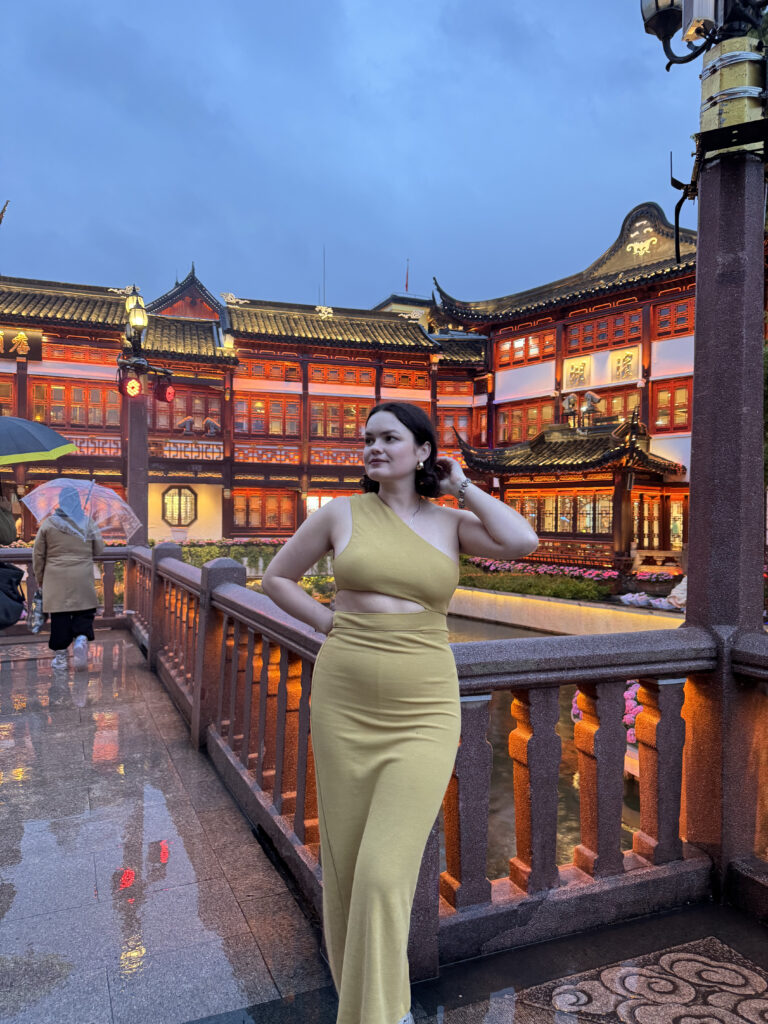
The Most Instagrammable Places in Shanghai
It’s safe to say that Shanghai is one big Instagram location – a green, technologically advanced city, with colonial architecture occasionally visible among the skyscrapers. In this article, I’ll highlight the most beautiful places to visit in Shanghai, all of which, incidentally, are also the city’s main attractions: traditional and art districts, boutique streets, and observation decks.
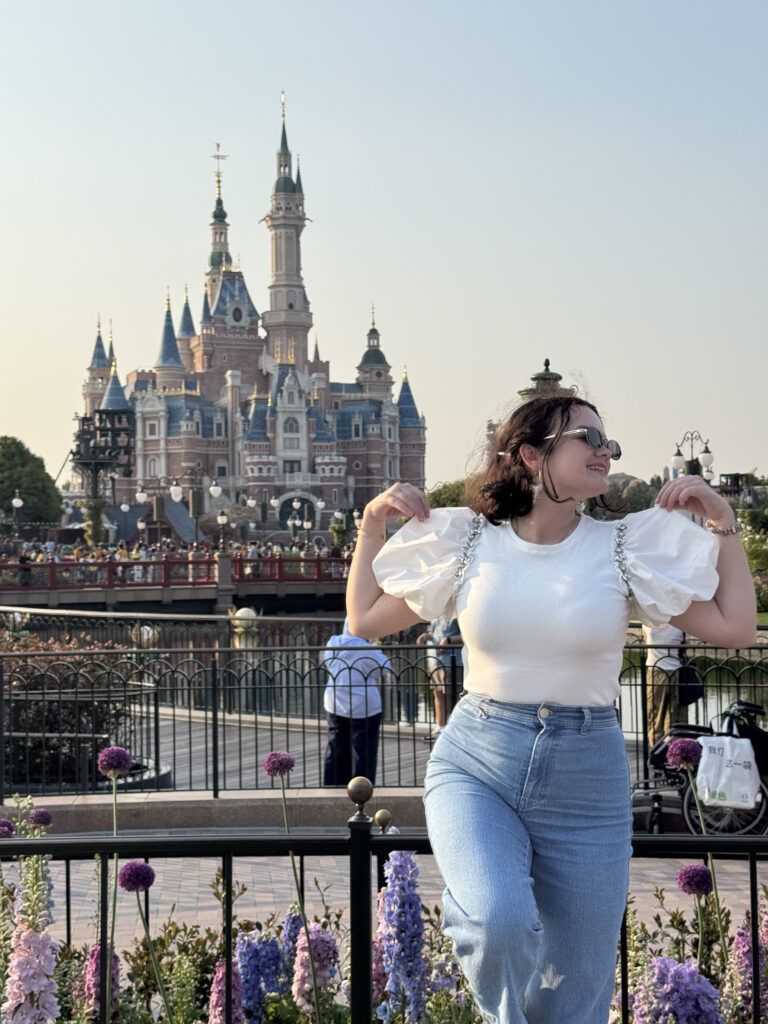
Shanghai Disneyland Guide
Shanghai Disneyland isn’t for the weak. But is it worth it? Absolutely! Incidentally, it’s the only Disneyland in the world with a Zootopia section. In this article, I’ll tell you about Shanghai Disneyland, how to hit all the rides (and are they worth it?), see all the shows, and visit all the locations without the stress and long waits.
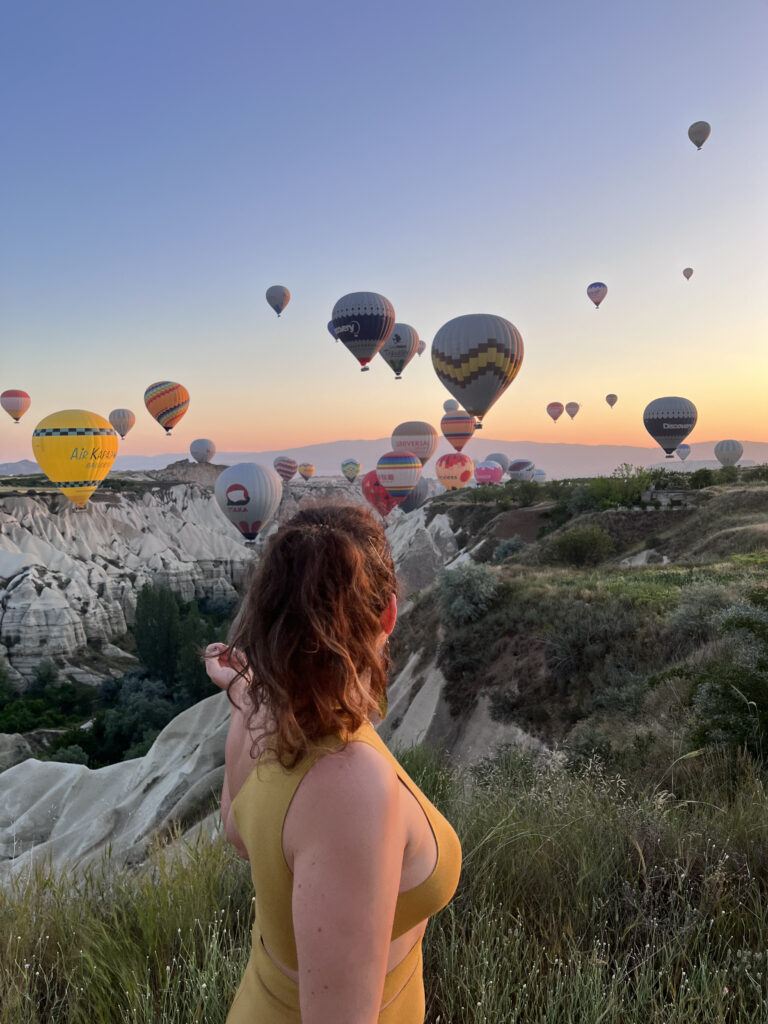
Cappadocia Travel Guide
Cappadocia is one of the most unusual places I’ve ever visited. We originally came here for one reason only — to see the famous hot air balloons.
Instead, we discovered a place that feels straight out of a fairy tale, with a surprisingly fascinating history.
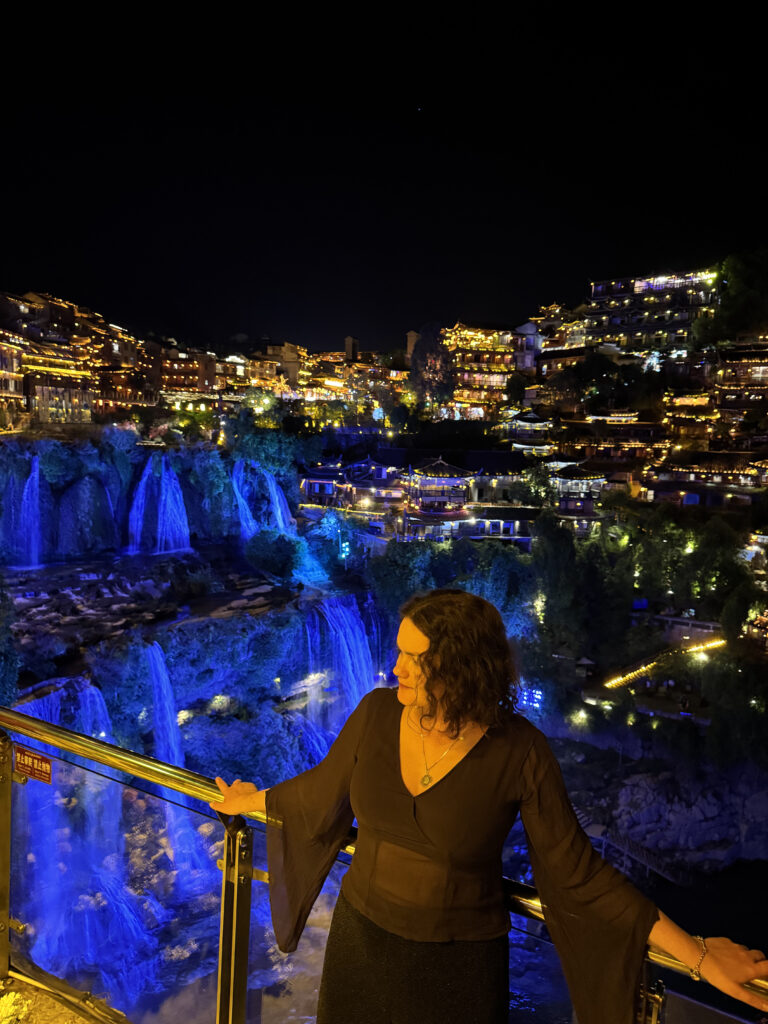
The magical village of Furong near the waterfalls
Hunan Province is famous not only for Zhangjiajie National Park but also for the ancient Chinese town of Furong, built around a waterfall. We learned about it thanks to viral Instagram videos and decided to see if it’s really that beautiful. In this article, I’ll tell you how to get there, where to stay, and what else to do besides admiring the waterfalls.
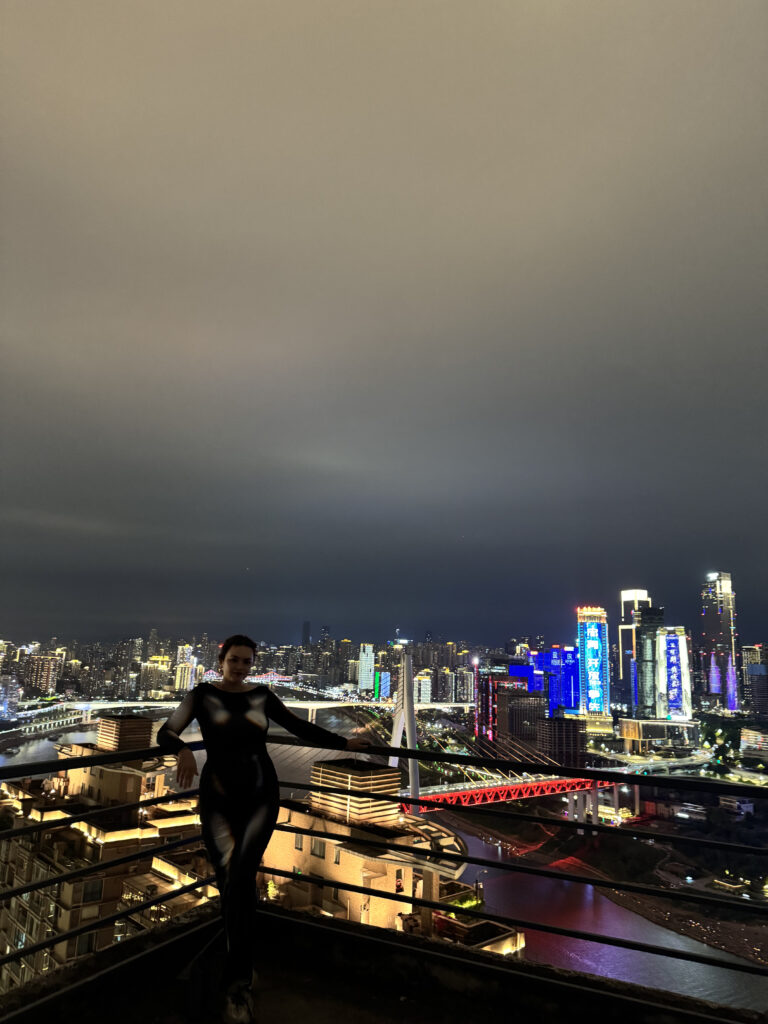
Chongqing Guide
Chongqing is a cyberpunk city, an urbanist’s nightmare, a multi-level metropolis with 8D architecture (what? Yeah!). It’s considered the largest metropolis in the world, with an area comparable to Austria and a population of approximately 32 million. It’s not for everyone. Read on and decide.