



What to Know Before Travelling to China
China is a country where ancient traditions meet futuristic technology. Thousands of years of history exist alongside cashless payments, high-speed trains, and cities that look like they’re straight out of a sci-fi movie. At the same time, China is also a tightly controlled country with heavy internet restrictions, so a bit of preparation will save you a lot of stress. Here’s everything you need to know before your first trip to China.
Mobile connection and Internet
Everyone knows that Google is blocked in China, but it’s much worse than that. Google Search, Google Maps, Gmail, WhatsApp, Instagram, Facebook, Telegram, YouTube—even TikTok (yes, the Chinese app!)—are unavailable. So internet access should be your number one priority.
Option 1: Chinese SIM card + VPN Download a VPN before arriving in China (make sure people confirm it actually works there) and buy a local Chinese SIM card. This gives you local mobile service plus internet access through the VPN. My friend tested this option.
Pros: You get a Chinese phone number. You can receive calls and SMS. Cons: Buying a SIM card at the airport isn’t always easy—you’ll probably have to find one in the city first. Data packages are expensive. VPNs don’t always work reliably, and some apps (WhatsApp and Instagram in our case) still refused to cooperate.
Option 2: eSIM with a built-in VPN. This is the option I chose, and I’d definitely do it again. I bought my eSIM through Trip.com, installed it before flying, and activated it at the airport using the airport Wi-Fi. Thankfully, Trip.com isn’t blocked in China. The plans are customizable—you choose how many days, how much data per day, and so on. I initially bought 500 MB per day, which turned out to be far too little. My guess is that the built-in VPN used extra traffic. Unfortunately, you can’t simply upgrade your plan—you have to purchase another eSIM, which is exactly what I ended up doing. Still, I had stable internet throughout the trip and never had to worry about blocked apps. You can also buy e-sim through verified websites like AirAlo or Yessim.

Apps You Should Download
Alipay. This is by far the most important app you’ll need. With Alipay, you can pay almost everywhere using QR codes—even at street markets. I barely touched my physical bank card during the entire trip and didn’t use cash at all. Just connect your bank card before travelling. And Alipay does much more than payments. You can: pay for public transport; order food delivery; book taxis through the built-in DiDi service. I highly recommend setting up metro payments inside Alipay before your trip. My foreign bank cards didn’t work at metro ticket machines, so we had to buy paper tickets until we figured out how to activate public transport payments.
WeChat. WeChat is another all-in-one app that also supports QR payments. Unlike Alipay, it’s primarily China’s messaging app, so many hotels, guides, and restaurants prefer communicating through it. Personally, I managed perfectly well with Alipay alone.
Amap. Google Maps technically works through a VPN, but it’s often inaccurate and missing lots of places. Instead, download Amap—China’s version of Google Maps (or 2GIS, if you’ve used that before). It’s far more accurate and includes public transport routes. Honestly, it made navigating China incredibly easy.
Translator app. Hardly anyone speaks English in China. A translation app will save your life. You’ll need it for: translationg menus; street signs; asking basic questions. Don’t skip this one.
Hotels and Getting Around
Not every hotel in China is licensed to accommodate foreign guests. To avoid unpleasant surprises, book through reliable platforms like Booking.com or Trip.com.
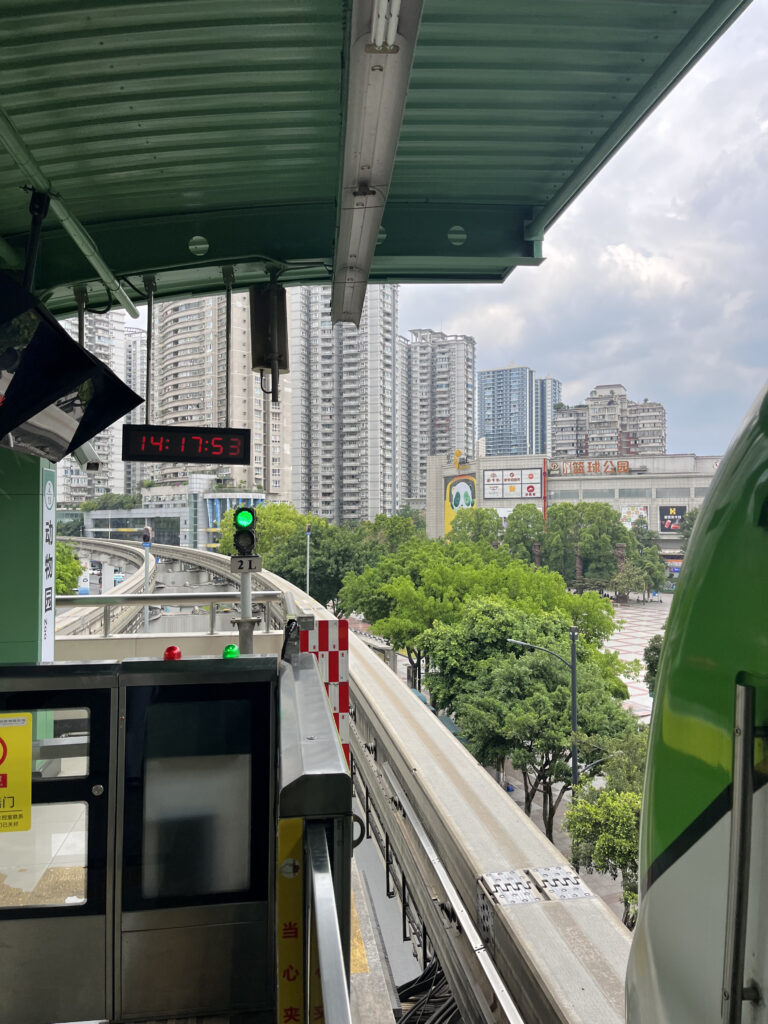
As for transport… Taxis are: relatively expensive; sometimes driven by… let’s just say interesting personalities; frequently stuck in traffic. I’m a lifelong public transport enthusiast, so naturally that’s what I’m recommending here too. China has one of the best metro systems I’ve ever used. You can get almost anywhere—from the airport to Disneyland—by metro. It’s clean, efficient, well-organized, and surprisingly easy to navigate. Just use Amap, and you’ll be fine.
In my opinion, traveling around China is more convenient by high-speed train. Tickets are cheaper, the ride is more comfortable, and if you miss your train, you can get on the next one for free! We bought all our train tickets on trip.com—they have great customer support and a booking system. Even if there are no tickets available, they put you in a queue, and if tickets become available, they are automatically purchased. This was very convenient—we managed to get a train to Furong during the height of the May holidays, when tickets are hard to come by.
An important point about restrooms: this is very important for all girls. I’ll pleasantly surprise you: everywhere, in every public place, including natural parks, there are plenty of clean, free public restrooms! This is simply the height of tourist happiness.

When to Visit
I’d avoid travelling during the summer. It’s hot, humid, and crowded. But here’s the really important part: Never travel during major Chinese holidays. I’m serious. The biggest ones are Chinese New Year and the May holidays. During these periods, hundreds of millions of people travel across the country. Train tickets disappear. Flights sell out. Hotels fill up. Even attraction tickets become difficult to get. By pure coincidence, our vacation overlapped with the May holidays. Luckily, we’d planned ahead and escaped to a remote part of China, far from the crowds. I’ll tell you more about that itinerary here.
Read all articles about China and other Asian countries here.

What to Know Before Travelling to China
China is a country where tradition and innovation blend. Here, millennia-old history and culture intertwine with cutting-edge technology. But despite all this progress, China is an authoritarian country with strict controls, so travelers need to be thoroughly prepared. This article explains what you need to know before your trip.

What to See in China in 10 Days
China is huge. You won’t be able to see everything in one go, so you’ll have to prioritize: what’s more important to you – history or cyberpunk? Megacities or nature? I’ll give you a detailed guide on how to plan your 10-day trip from Shanghai to Avatar Mountains to Furong to Chongqing.

The Most Instagrammable Places in Shanghai
It’s safe to say that Shanghai is one big Instagram location – a green, technologically advanced city, with colonial architecture occasionally visible among the skyscrapers. In this article, I’ll highlight the most beautiful places to visit in Shanghai, all of which, incidentally, are also the city’s main attractions: traditional and art districts, boutique streets, and observation decks.

Shanghai Disneyland Guide
Shanghai Disneyland isn’t for the weak. But is it worth it? Absolutely! Incidentally, it’s the only Disneyland in the world with a Zootopia section. In this article, I’ll tell you about Shanghai Disneyland, how to hit all the rides (and are they worth it?), see all the shows, and visit all the locations without the stress and long waits.

Zhangjiajie National Park and the Grand Canyon Glass Bridge
The famous park that inspired the creators of “Avatar” looks like one of the modern wonders of the world. This article explains how to buy tickets, where to stay, and what to see besides the mountains.

The magical village of Furong near the waterfalls
Hunan Province is famous not only for Zhangjiajie National Park but also for the ancient Chinese town of Furong, built around a waterfall. We learned about it thanks to viral Instagram videos and decided to see if it’s really that beautiful. In this article, I’ll tell you how to get there, where to stay, and what else to do besides admiring the waterfalls.
Chongqing Guide
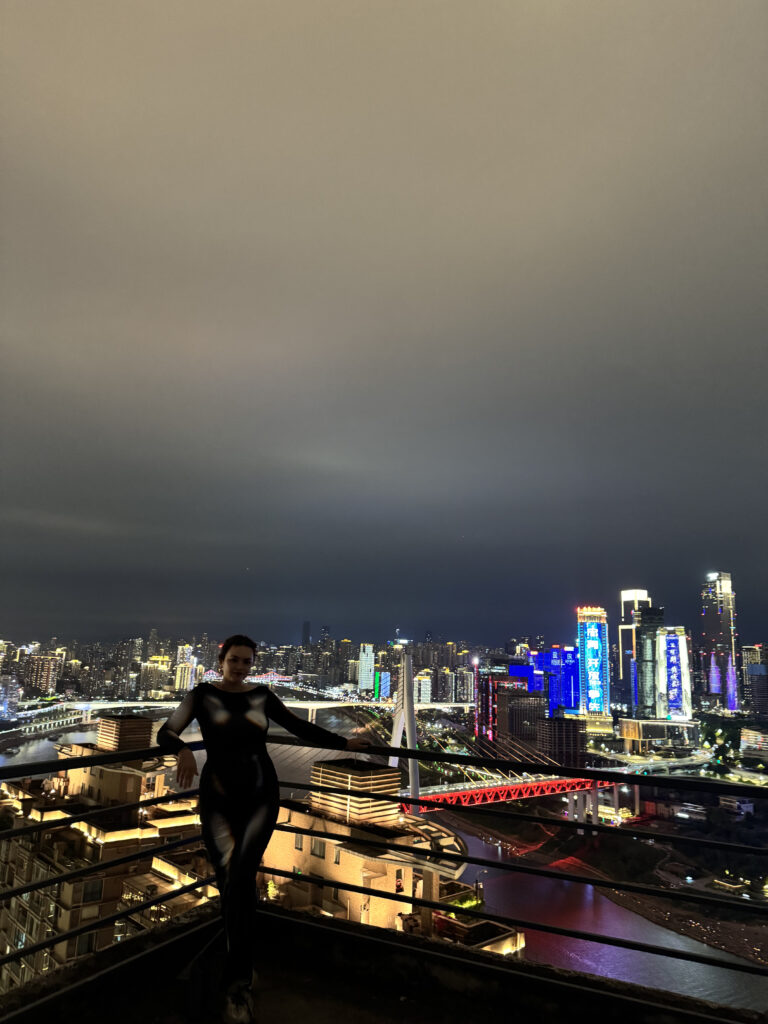
Chongqing is a cyberpunk city, an urbanist’s nightmare, a multi-level metropolis with 8D architecture (what? Yeah!). It’s considered the largest metropolis in the world, with an area comparable to Austria and a population of approximately 32 million. It’s not for everyone. Read on and decide.