


Kolfest 2026: A Festival of Music, Art and Bohemian Chaos on Issyk-Kul
Kolfest is an annual music and art festival held on the southern shore of Lake Issyk-Kul in Kyrgyzstan. I attended the festival in 2022 and again in 2026, and I can confidently say that its scale and quality have grown significantly!
A quick introduction to the festival
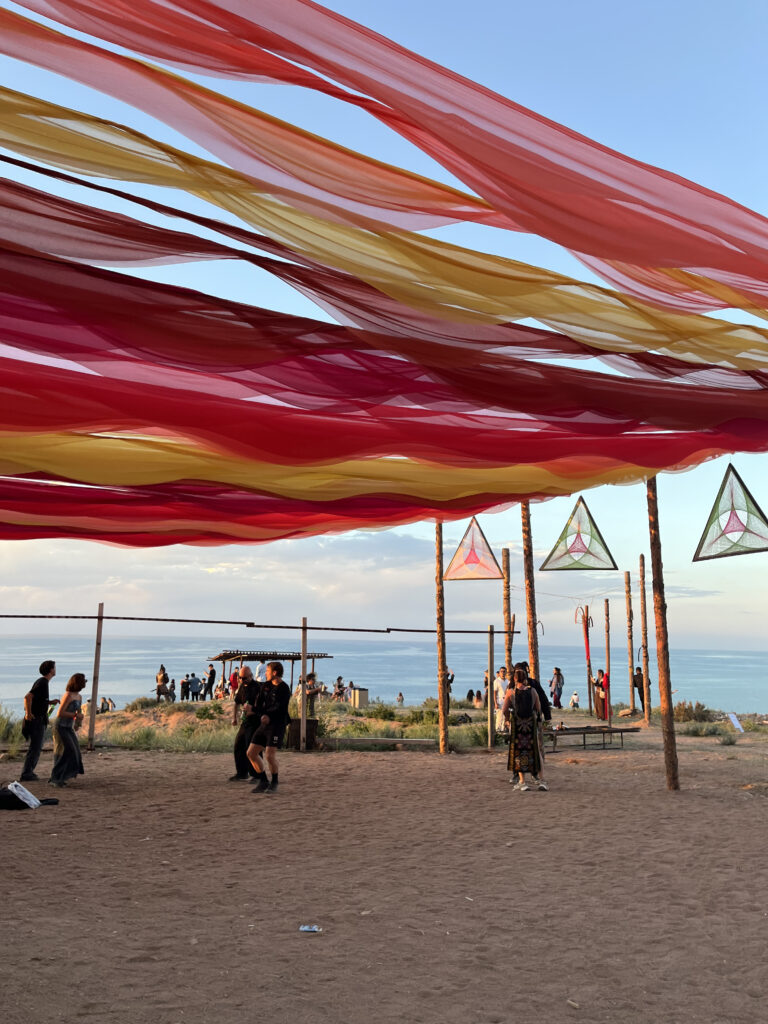
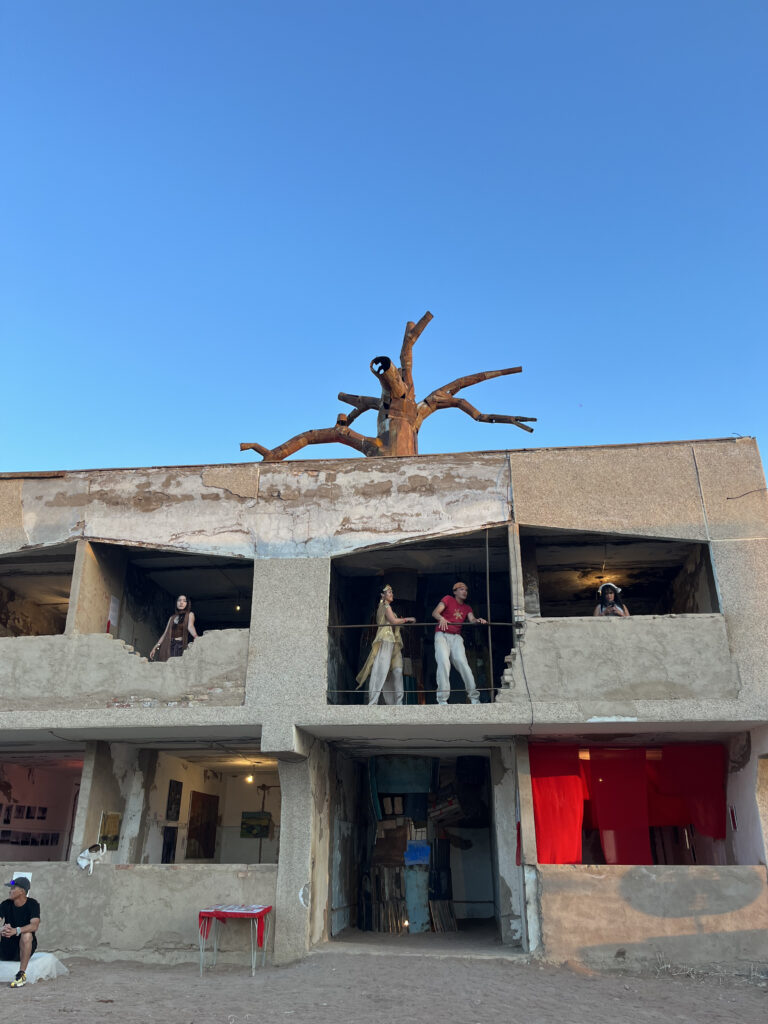
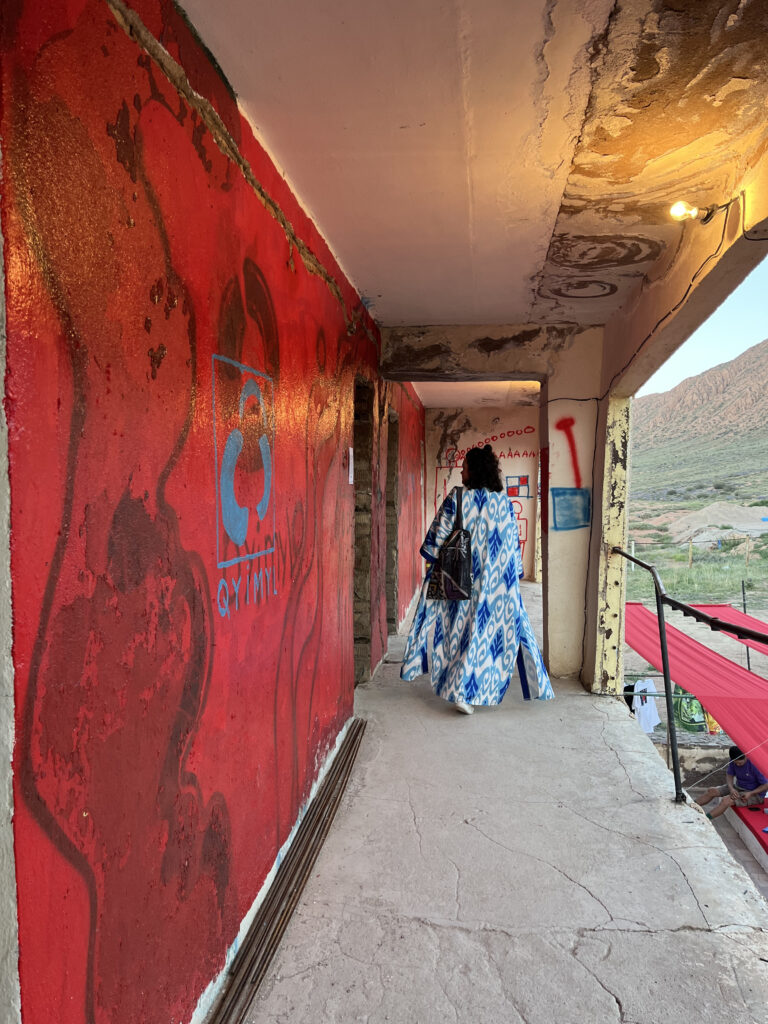
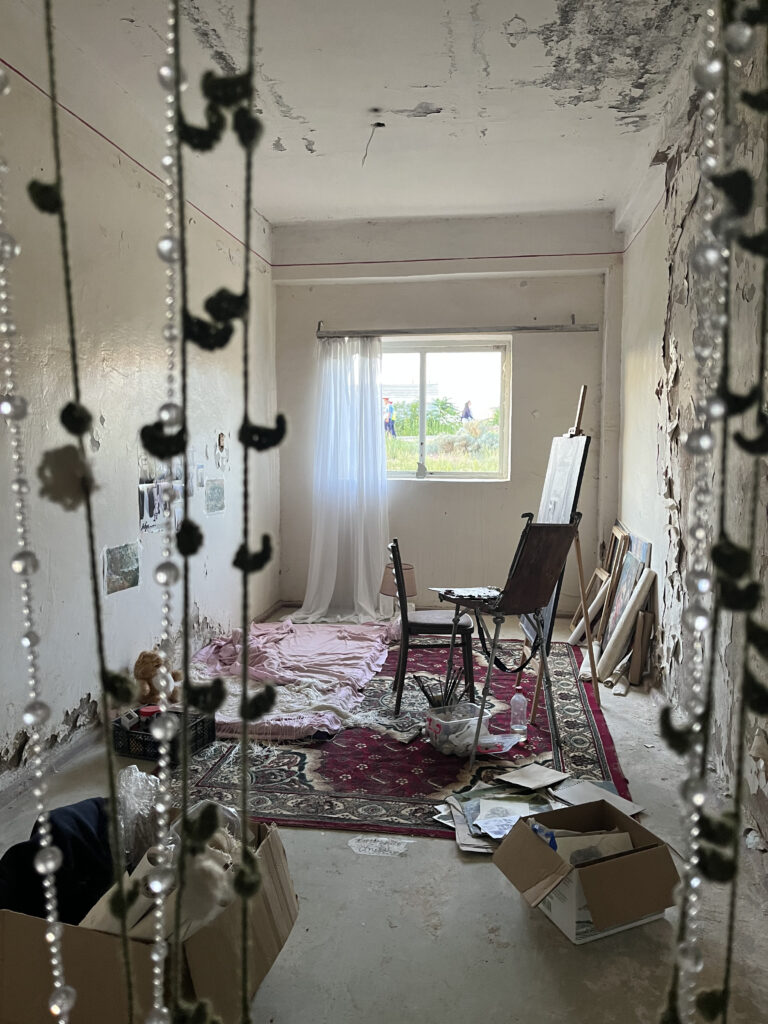
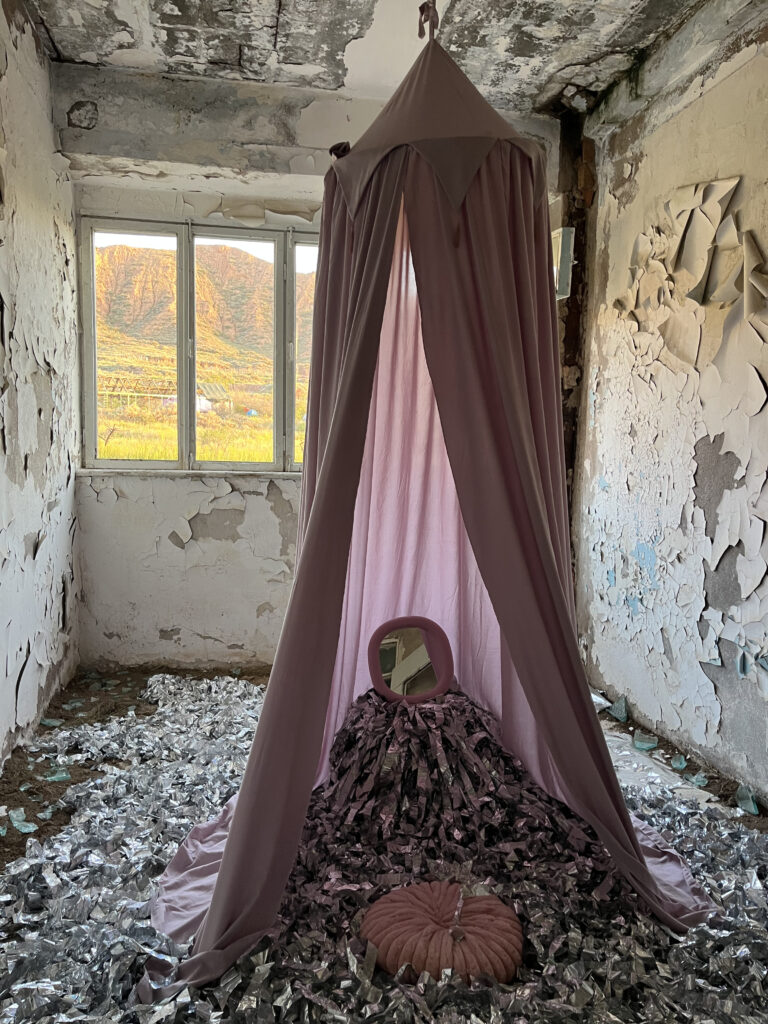
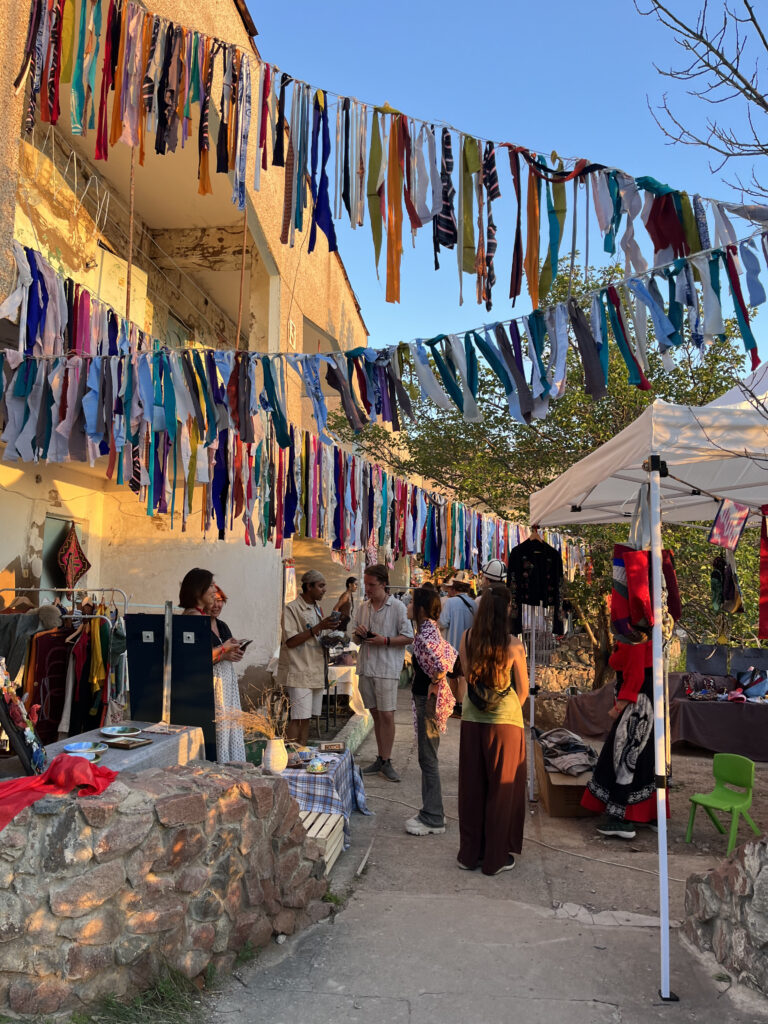
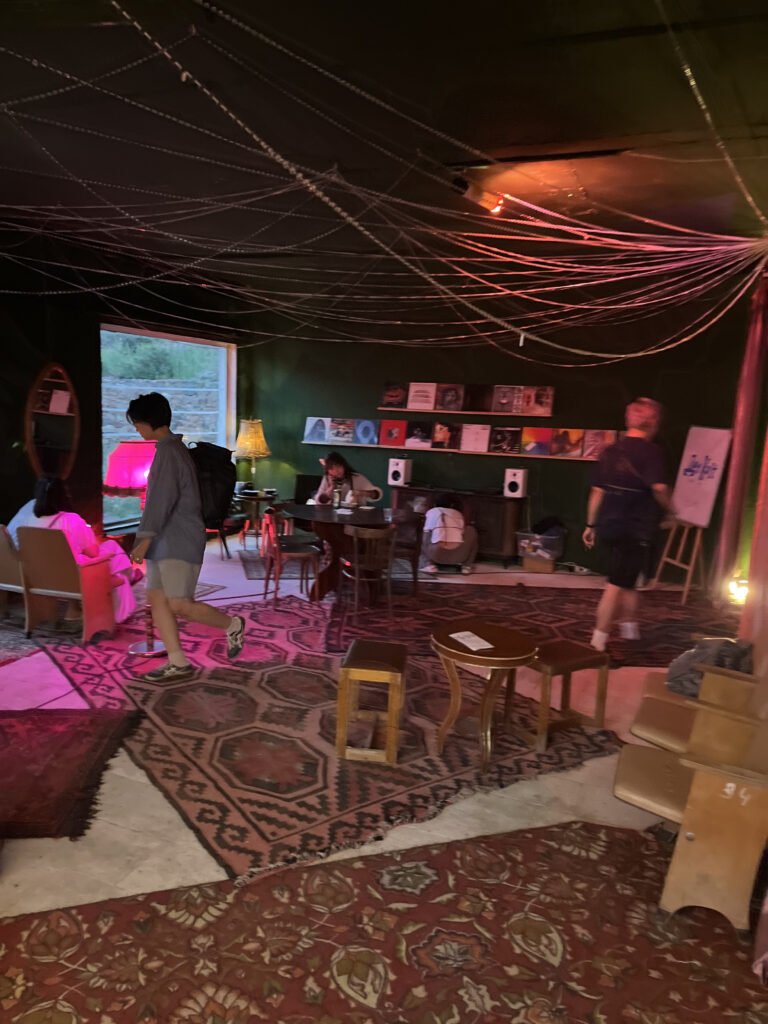
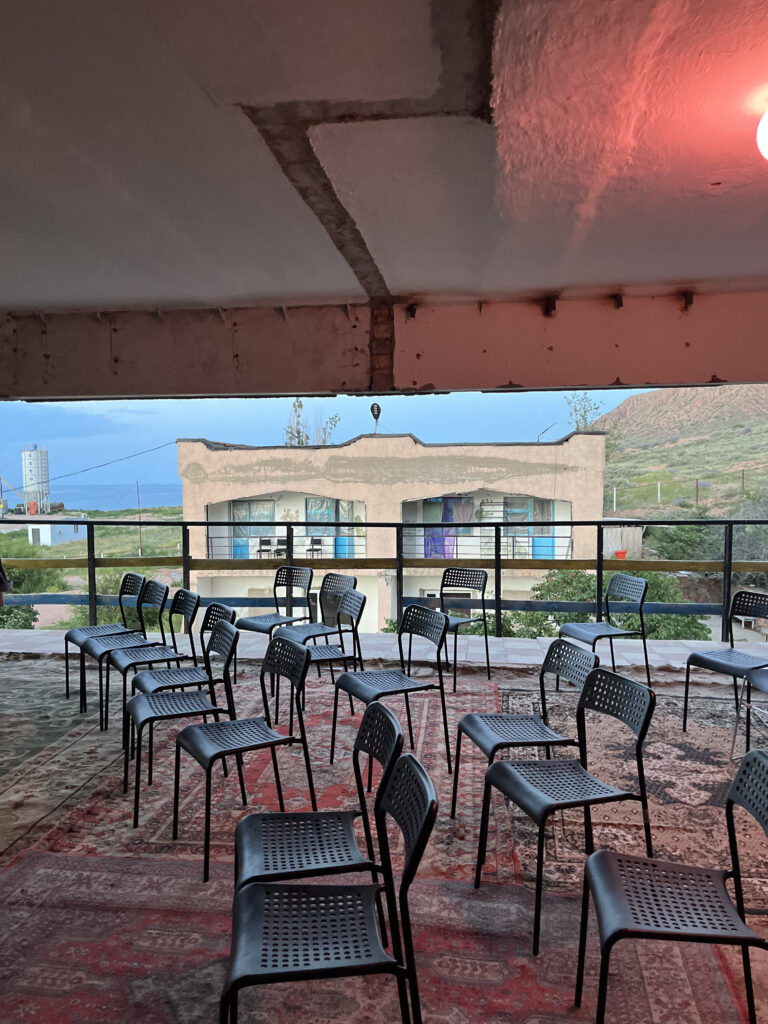
Every July, from Friday to Sunday (the exact dates change every year), the territory of an abandoned Soviet-era resort on the southern shore of Issyk-Kul comes back to life. One of the things I love about this festival is how the organisers manage to transform ruins into a dreamy bohemian space that makes you want to photograph literally everything. Sometimes all it takes is throwing an old Soviet carpet on the floor and adding the right lighting to turn a forgotten building into an art installation.
Here is my little overview of the Kolfest 2026 vibe
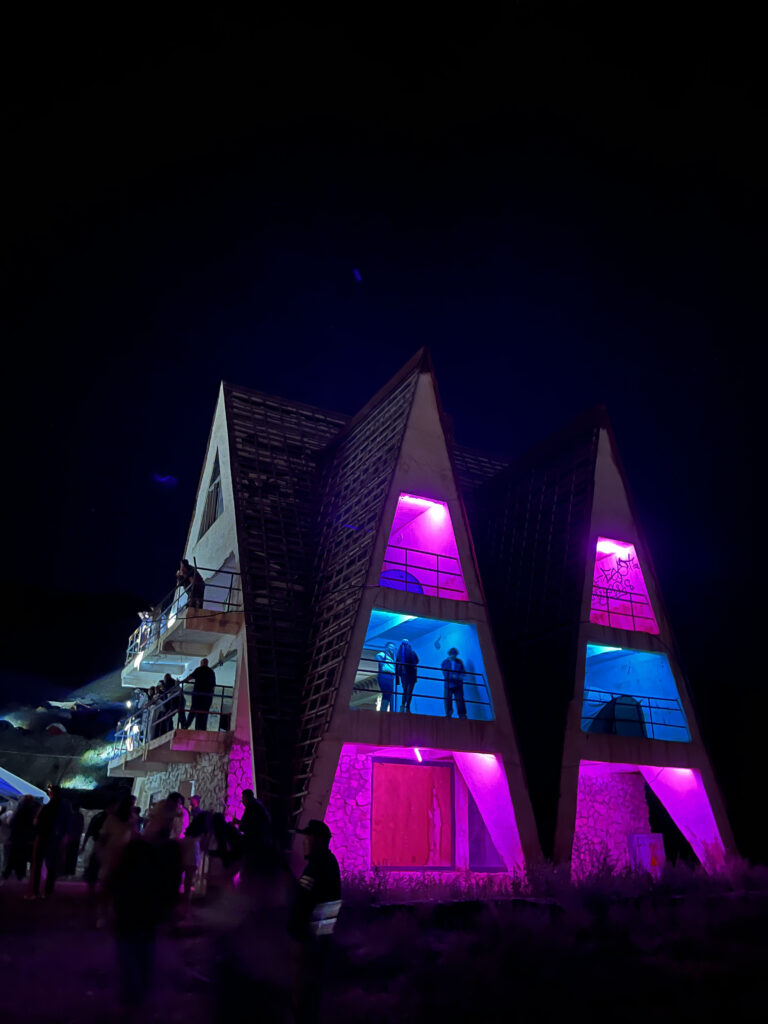
The Kolfest audience is definitely not your typical city-day crowd. These are creative, artistic, and colourful people who know how to dance for hours to trance, house, and rave beats — and who are also perfectly happy living in tents for several days. Compared to all the amazing costumes, outfits, and festival looks around us, we obviously looked like the ultimate “normies”. But it’s never too late to discover your inner artist.
The location
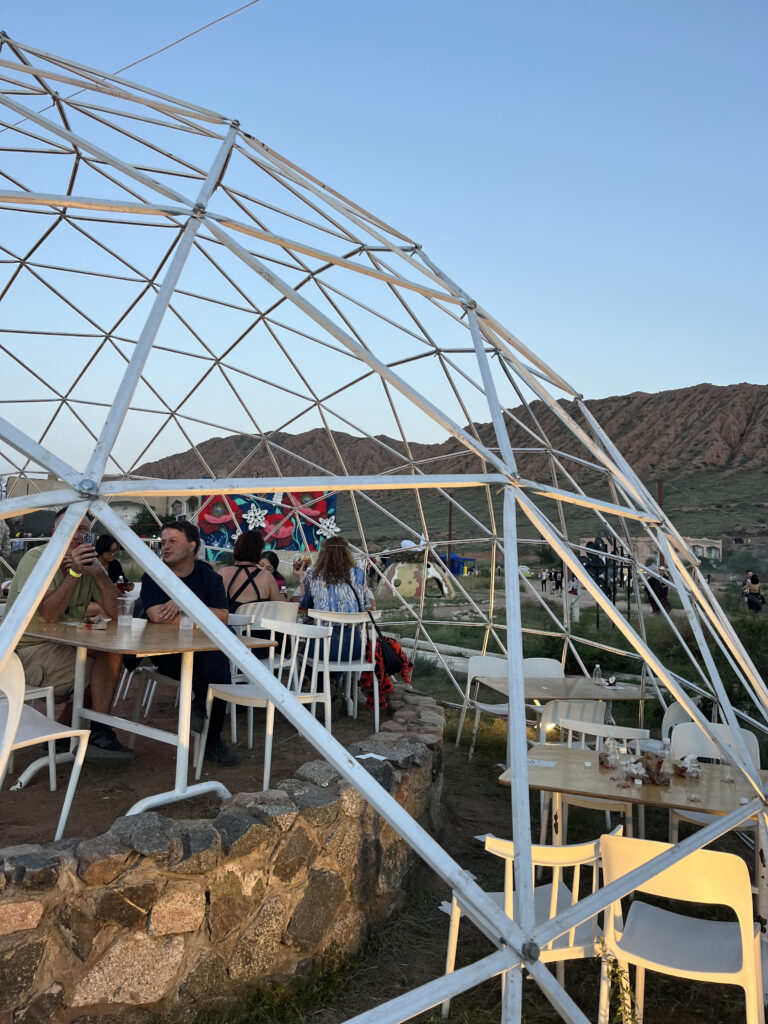
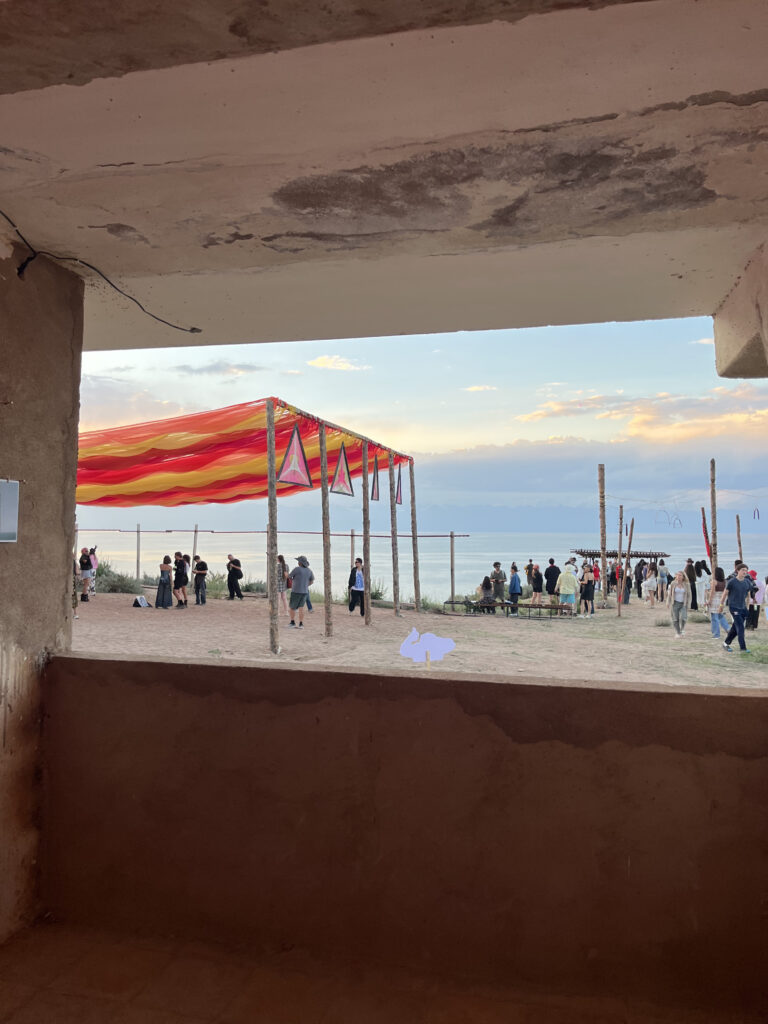
As far as I know, the festival used to move between different locations, but now it takes place in the village of Kaji-Say, on a cliff overlooking Issyk-Kul. During Soviet times, there was some kind of sanatorium or children’s camp here — although we will probably never know the full story. Getting to the southern shore of Issyk-Kul without your own transport is not always easy, and this is where the organisers help out by arranging transfers. The festival grounds are huge — almost like a small temporary city.
Logistics
A three-day Kolfest ticket in 2026 cost 6,000 KGS for Kyrgyz citizens and 7,000 KGS for foreigners. Moments like this make you appreciate having a Kyrgyz passport. For us, three full days felt like a bit too much, so luckily you can also buy a one-day ticket for 4,000 KGS or a two-day ticket for 5,000 KGS at the entrance. And yes, it is expensive.
The organisers provide transfers from Bishkek to the festival on Friday and back to Bishkek on Sunday, but these come at an additional cost.
Where to stay? In a tent! But don’t worry — that’s not the only option. The festival has a camping area where you can rent a spot for your own tent or even rent a tent itself. You can also stay in guesthouses nearby. The organisers offer accommodation options there, although the prices can be quite high. Alternatively, you can simply book a guesthouse in Kaji-Say yourself — usually for a much more reasonable price.
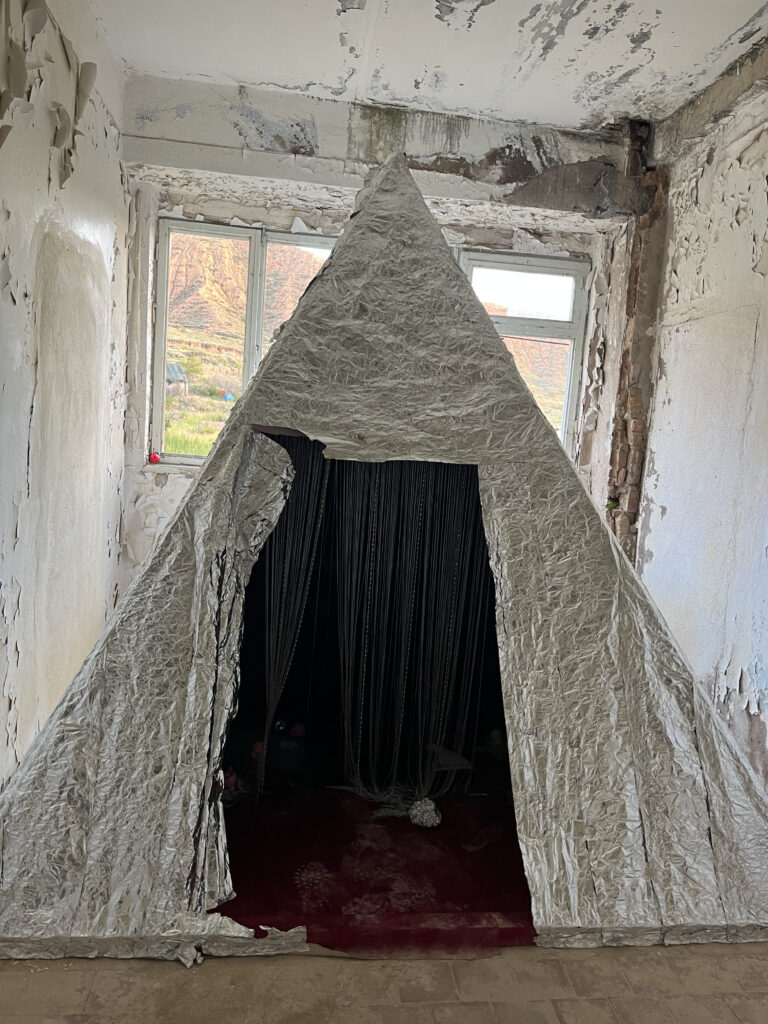
And don’t worry about safety — there is a strong police presence throughout the festival area. As for facilities, there are toilets and washing stations available on site.
What can you find at Kolfest?
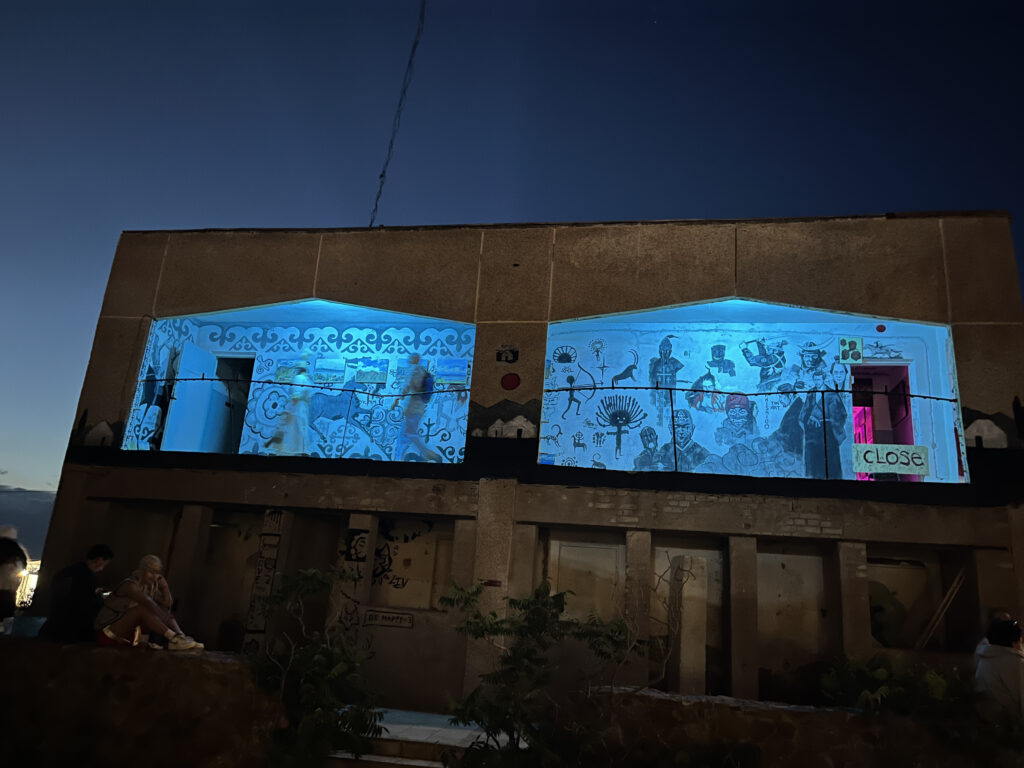
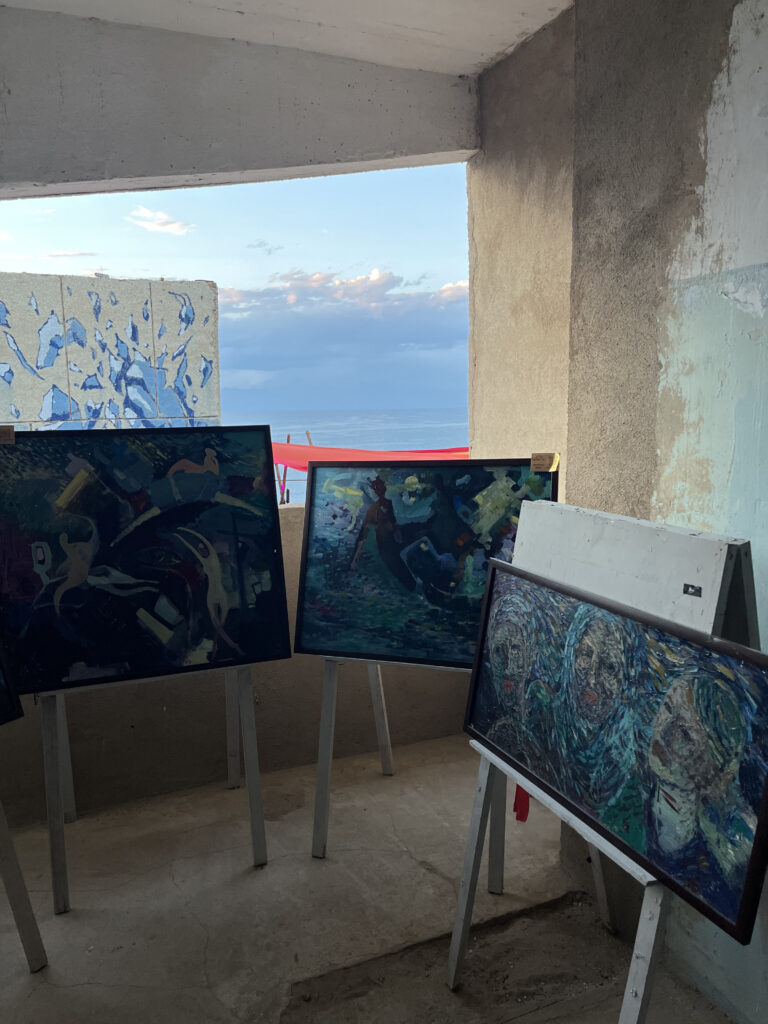
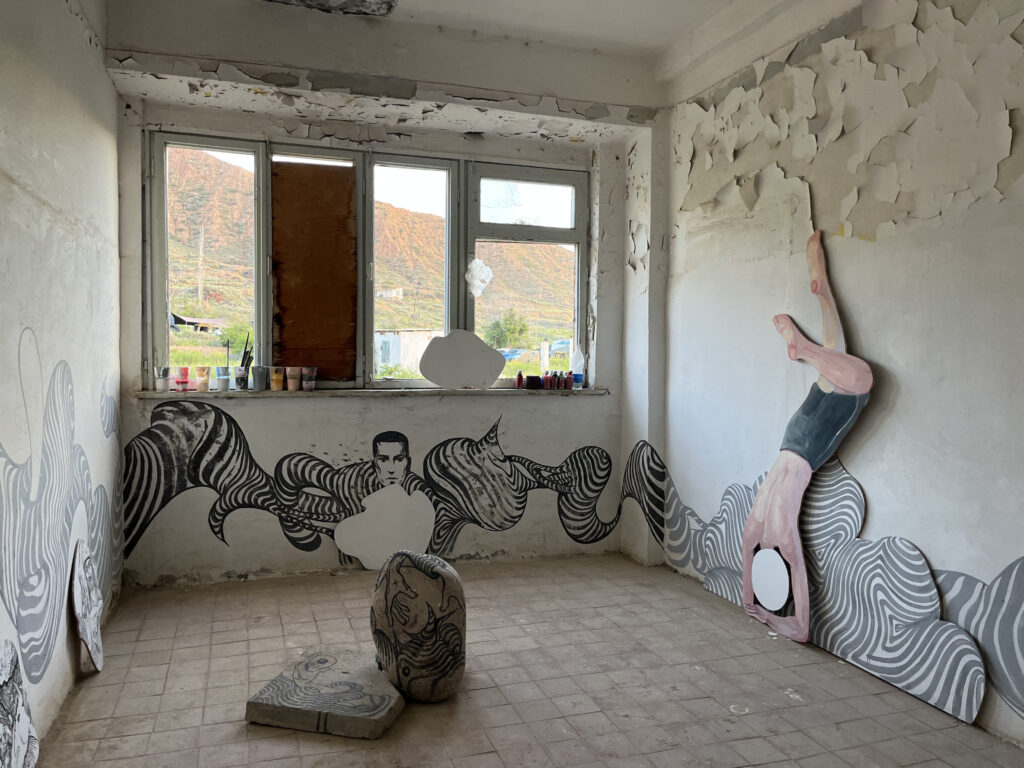
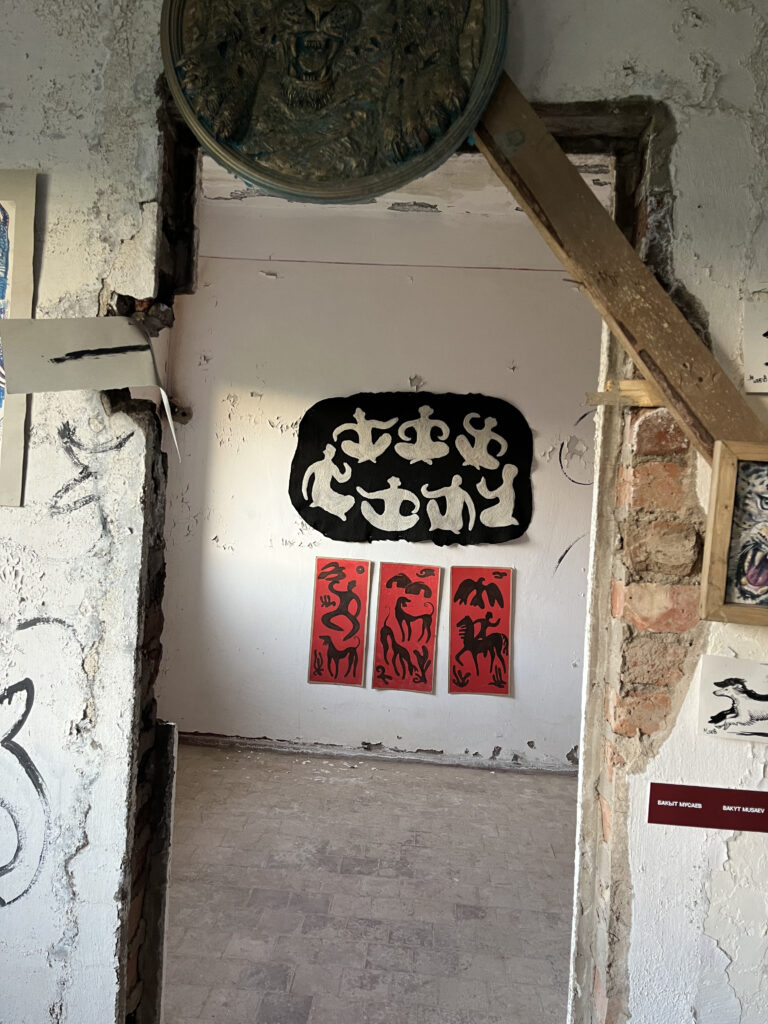
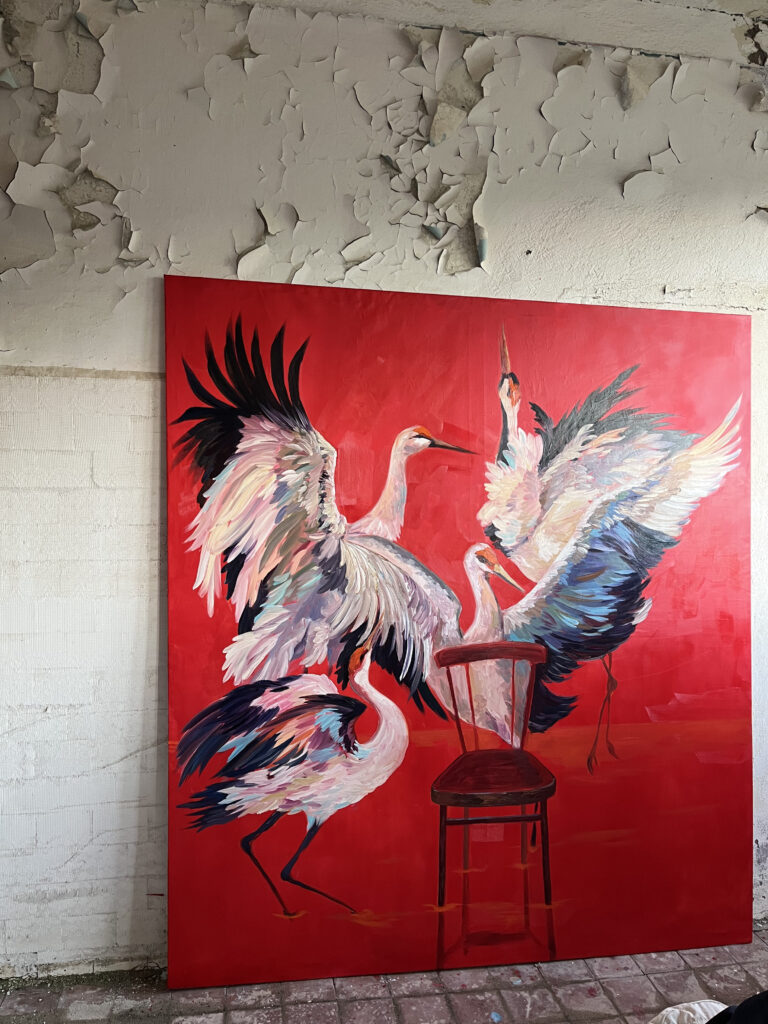
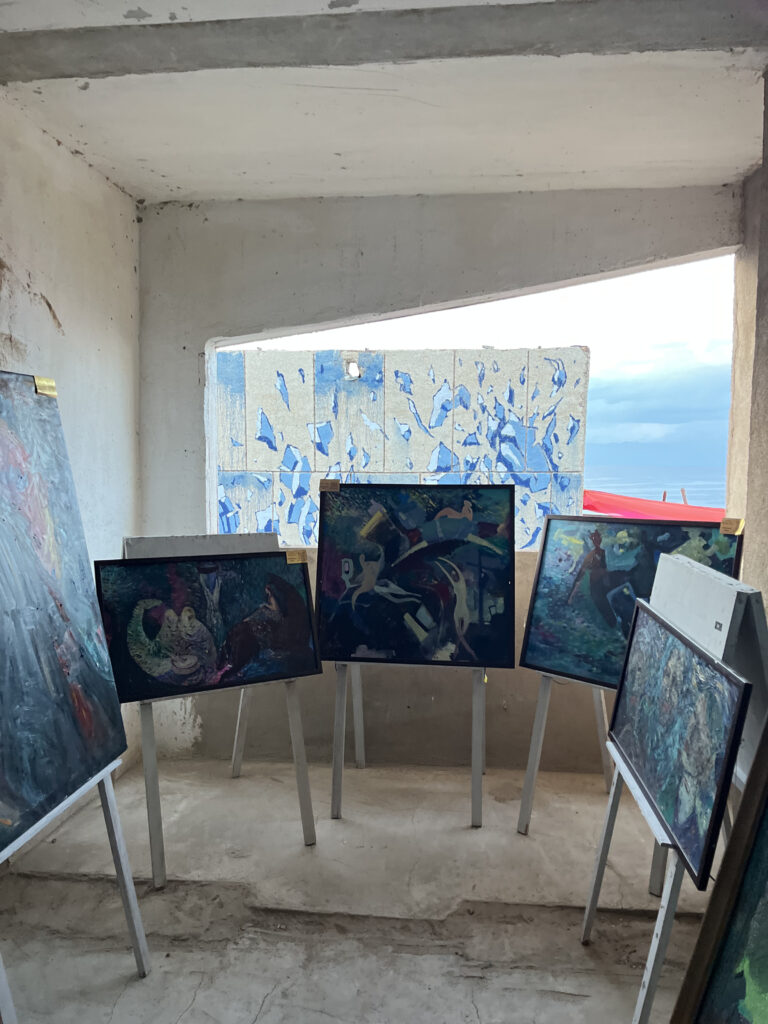
Art. The festival brings together artists and creators from Central Asia and beyond, who display their works in “galleries” located inside abandoned buildings. To be honest, the building itself is already part of the exhibition. The cracked walls, old structures, and traces of the past add a certain feeling of decadence and bohemian atmosphere (and I mean that in the best possible way). The gallery is not the only place where artists express themselves — their works literally form the “skeleton” of the festival, scattered throughout the entire Kolfest territory.
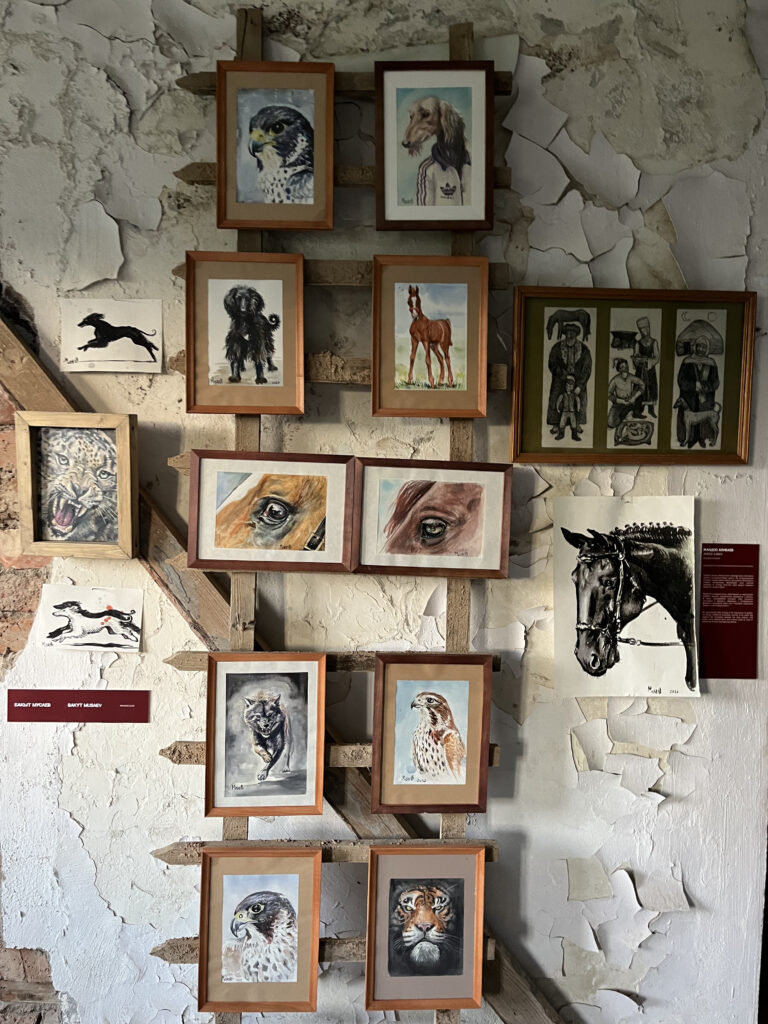
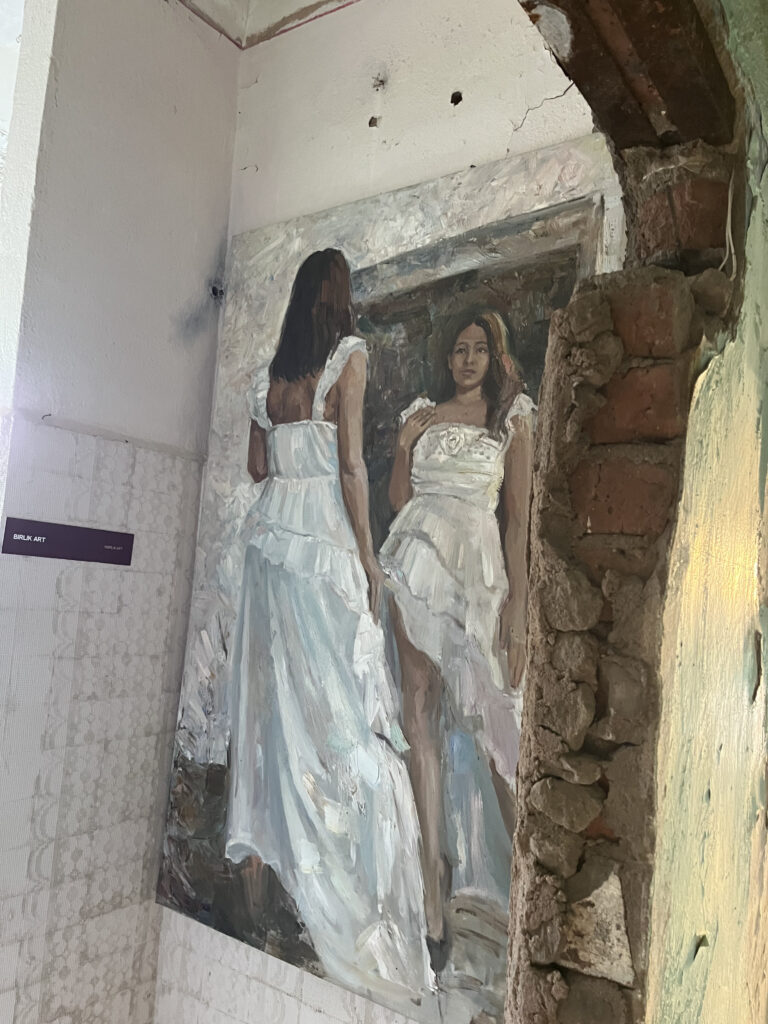
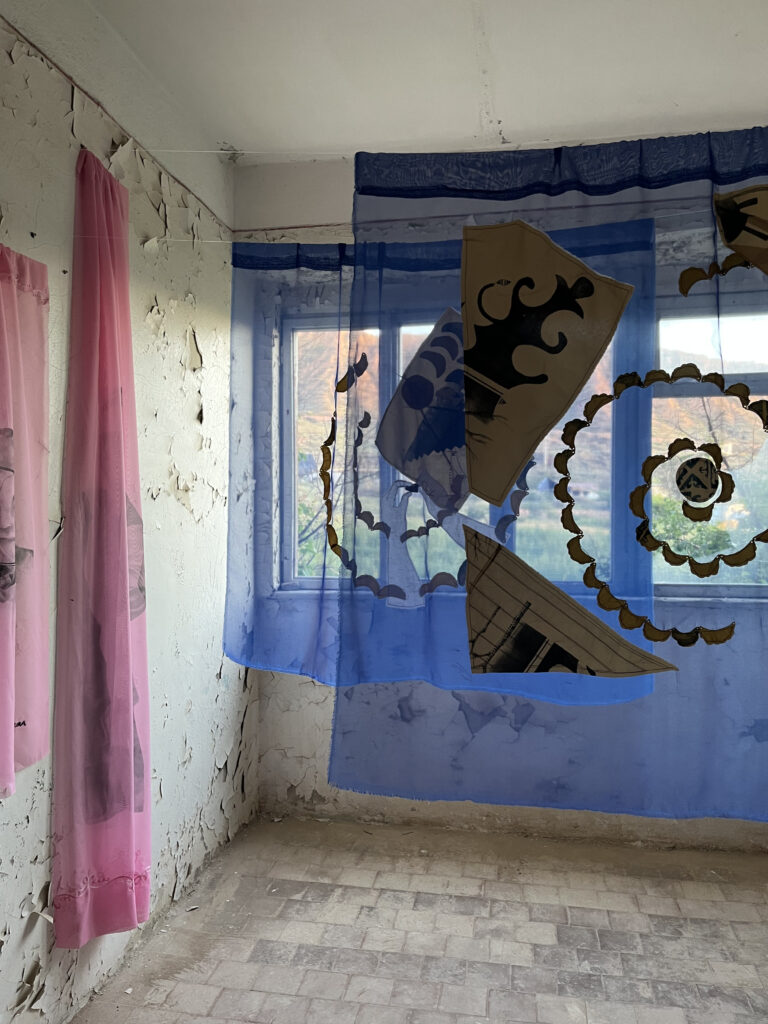
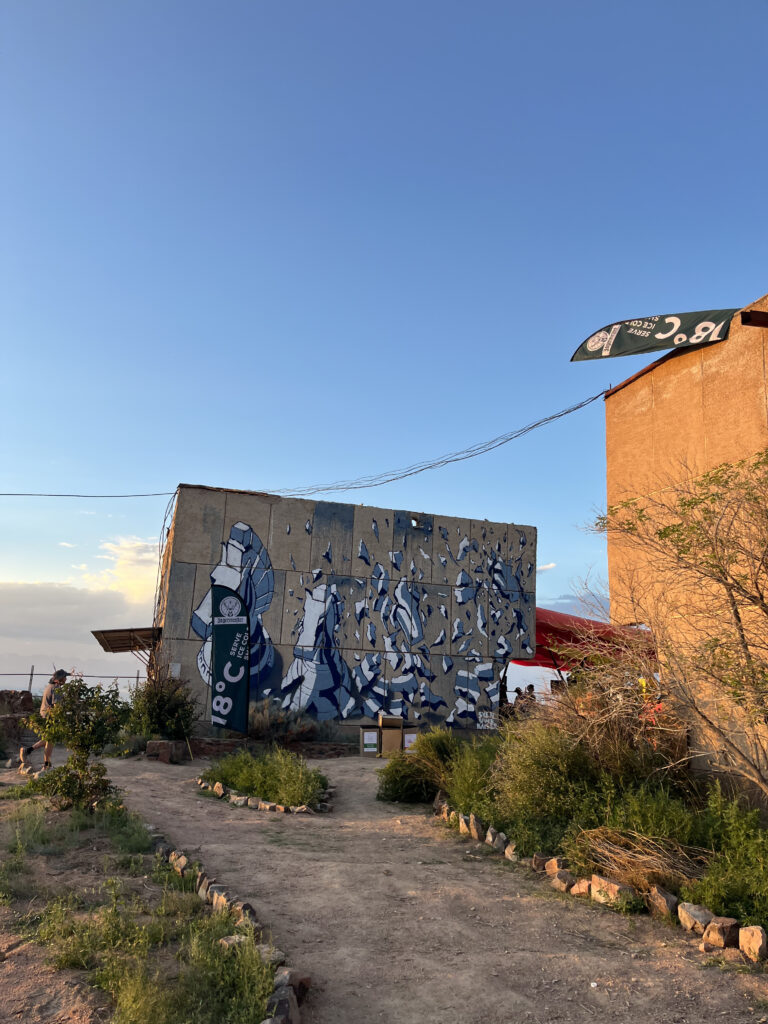
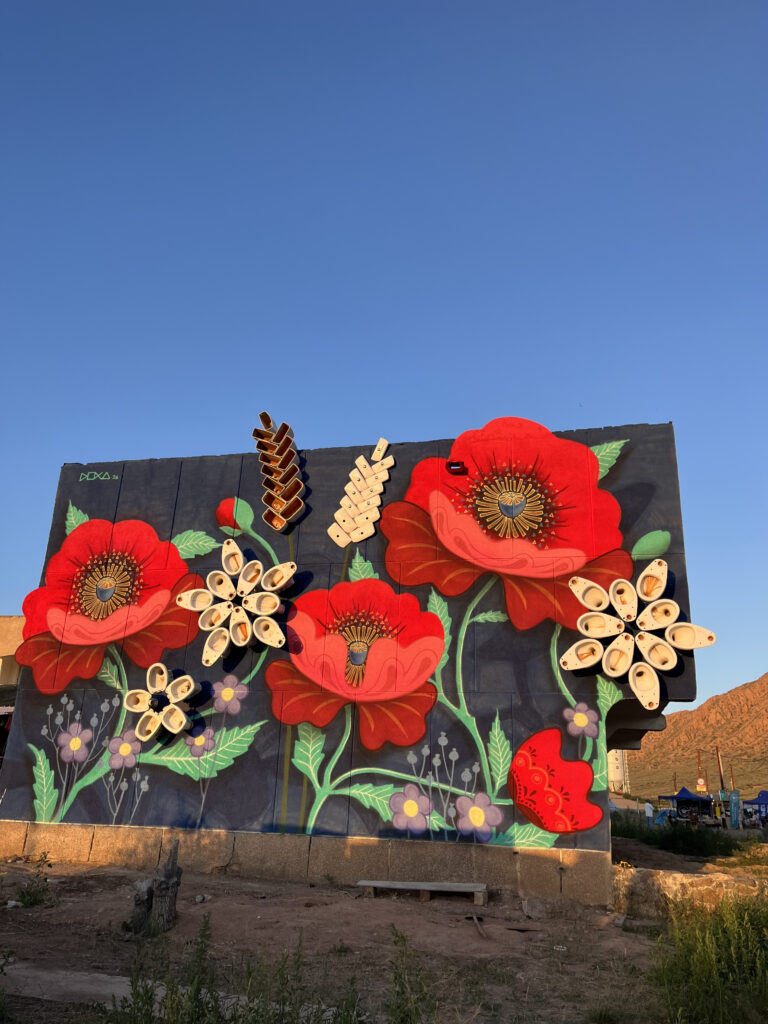
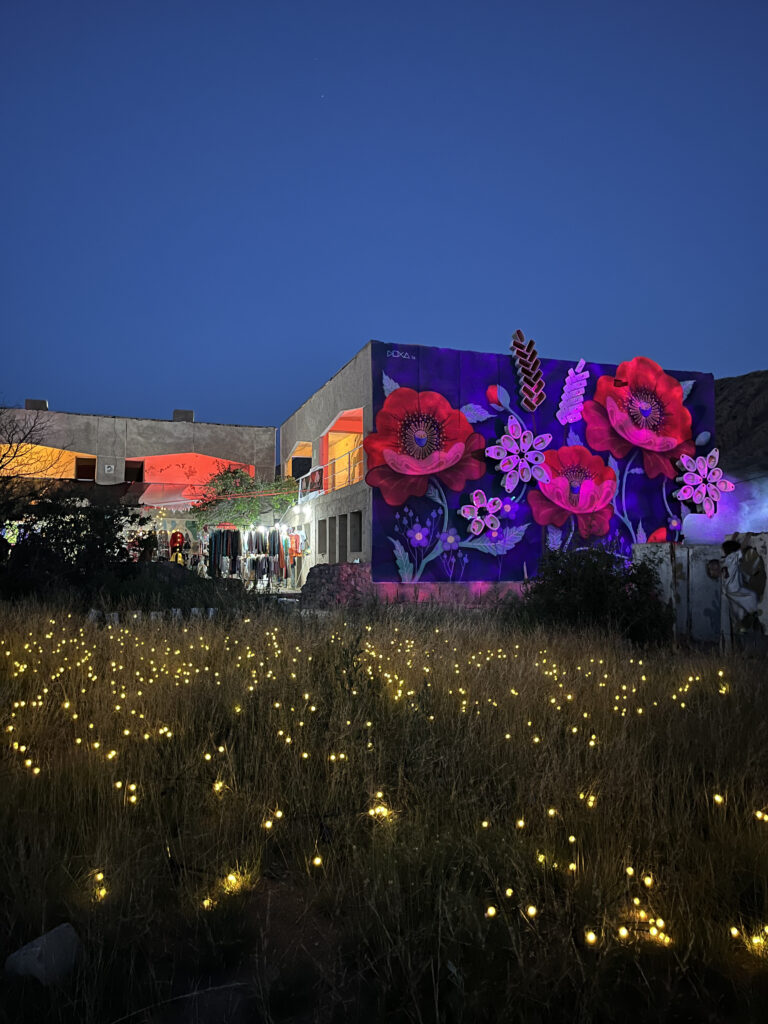
My personal favourite was the mural on the outside wall of one of the buildings, created by Doxa Studio. First of all, it is bright and beautiful (which, I know, might sound like a terrible compliment in the world of contemporary art).
But secondly — it took me three attempts to realise that the edelweiss flower in the mural was made from… toilets. Yes, actual toilets found around the festival grounds. If this is not the peak of contemporary art, then what is?
Music. Don’t expect pop covers here. Expect electronic music, house, trance, and everything else that makes you feel like dancing — or maybe standing and questioning your life choices, depending on your personal taste. DJs and musicians come from all over the world to perform their sets at the festival. There are also local artists bringing traditional sounds and ethnic influences into their performances. Several music stages operate at the same time, so the overall soundscape is quite diverse.
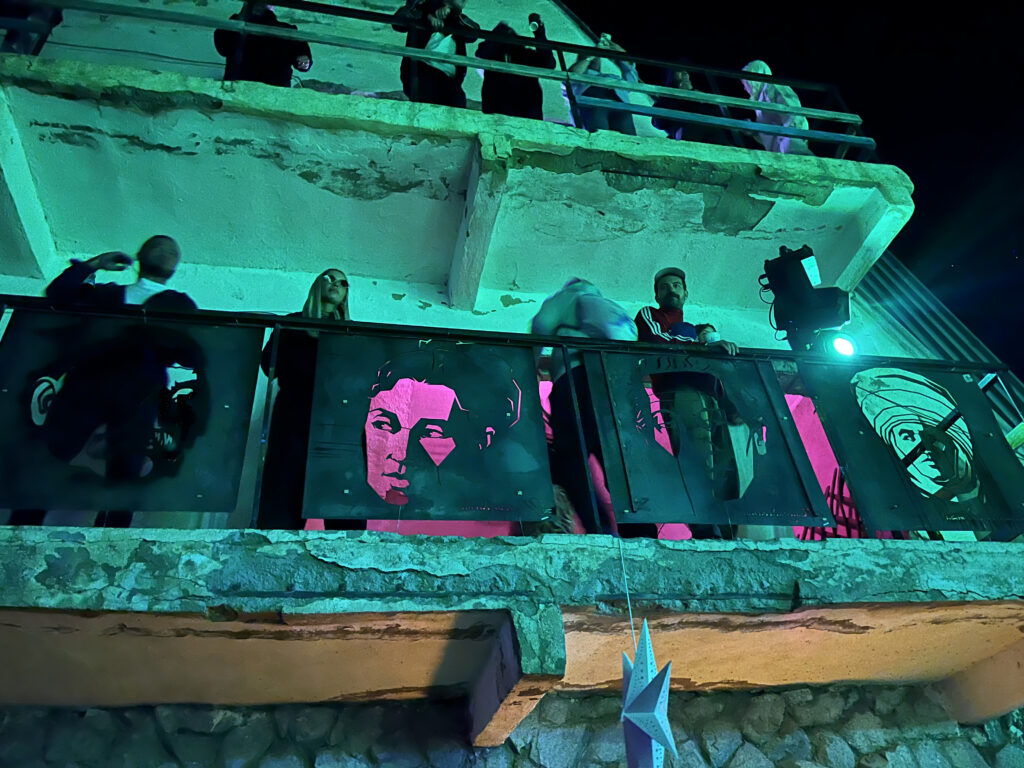
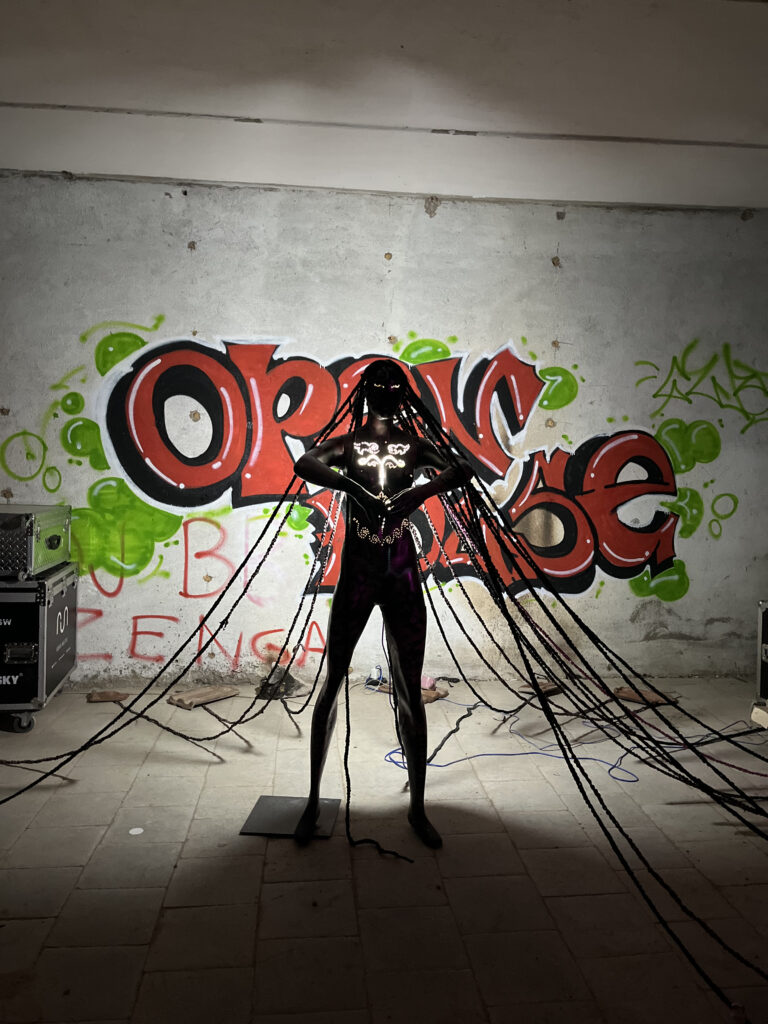
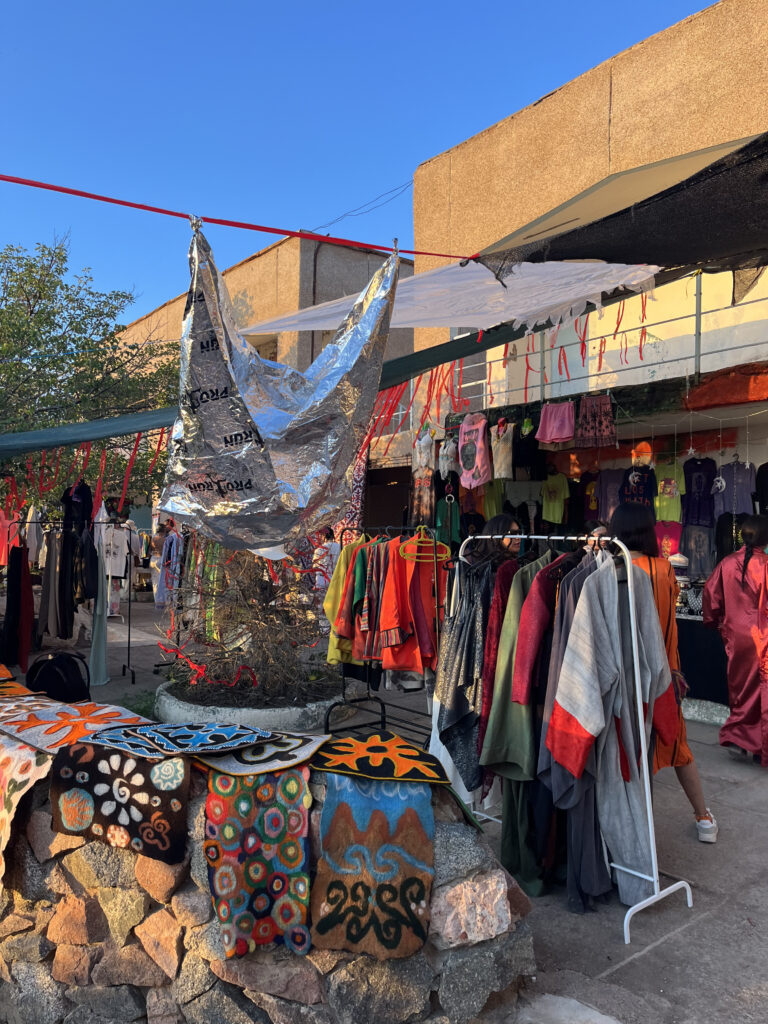
Culture and activities. So what happens during the day when the raves stop? The programme is full of creative activities: art workshops, yoga classes (because of course there is yoga at a festival like this), talks, performances, and various other experiences. There is even an ethno-fashion show and a small Oriental market with traditional accessories, clothing, and souvenirs, where you can literally build your festival outfit from scratch.
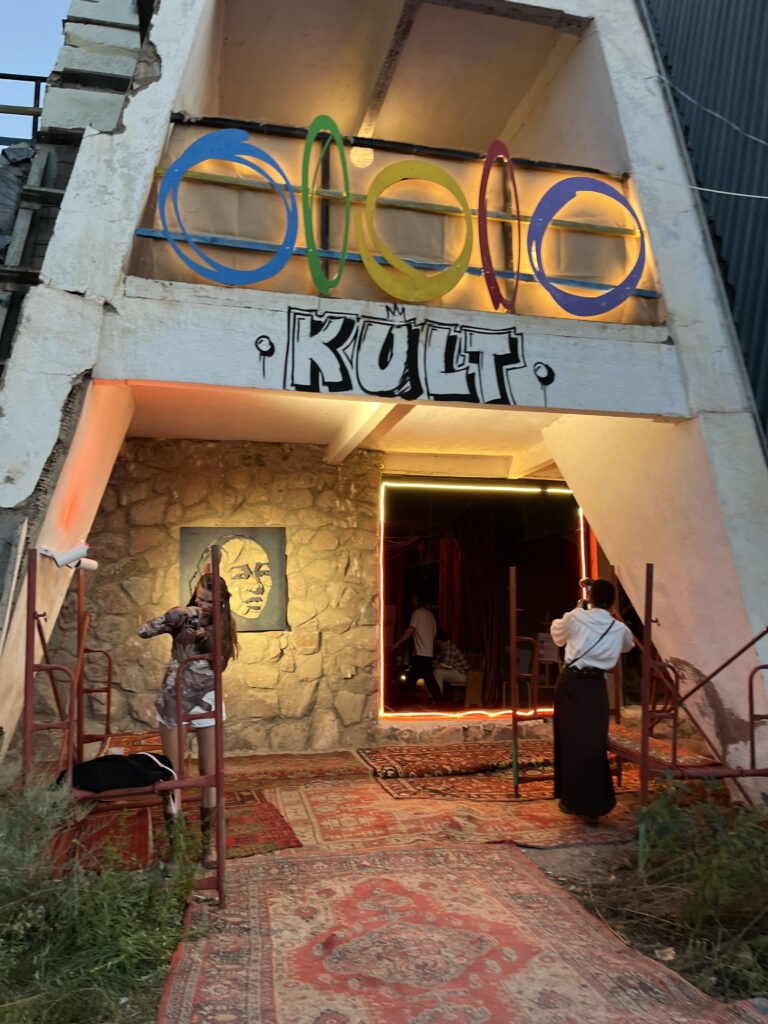
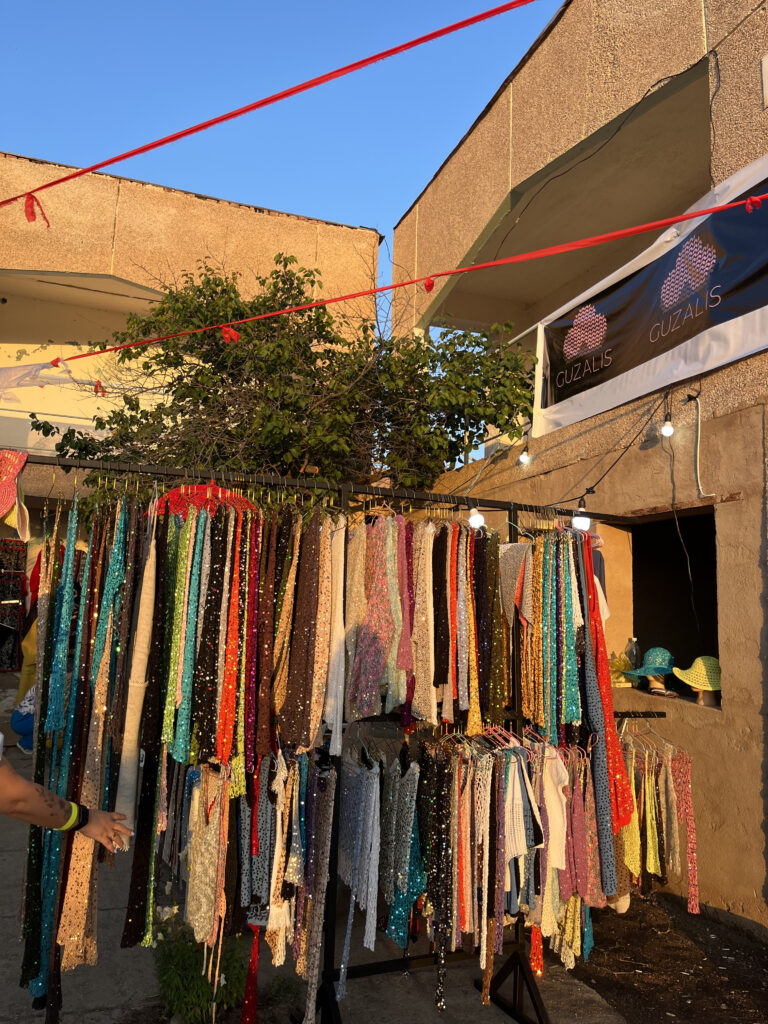
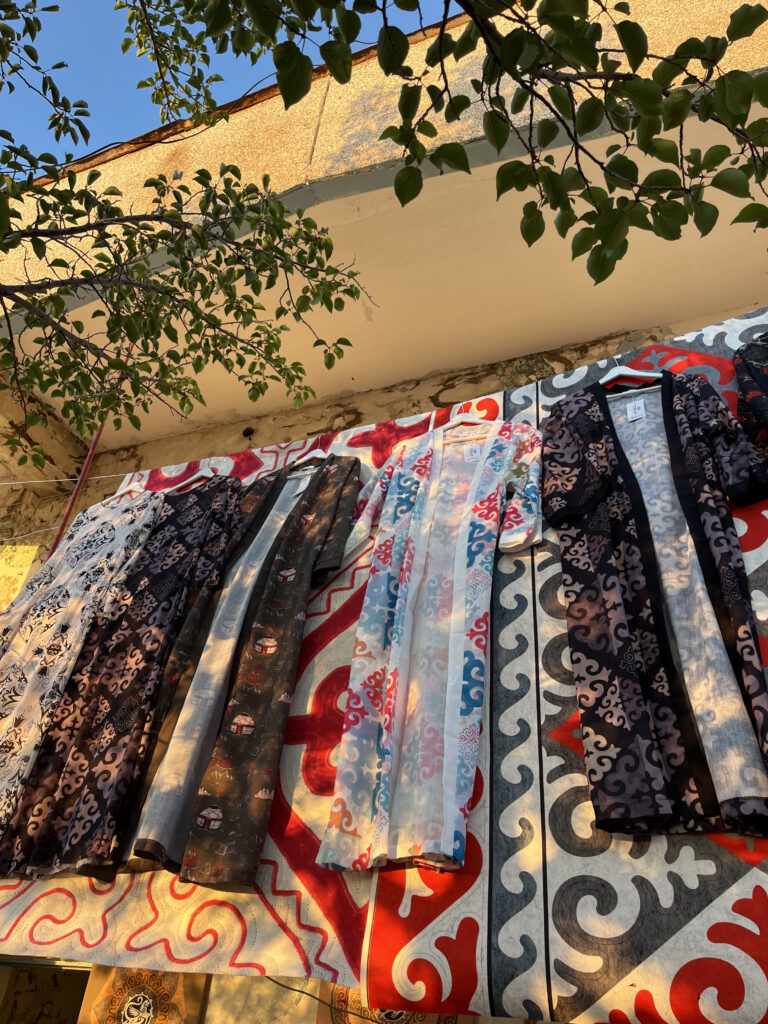
But what about the more… worldly pleasures?
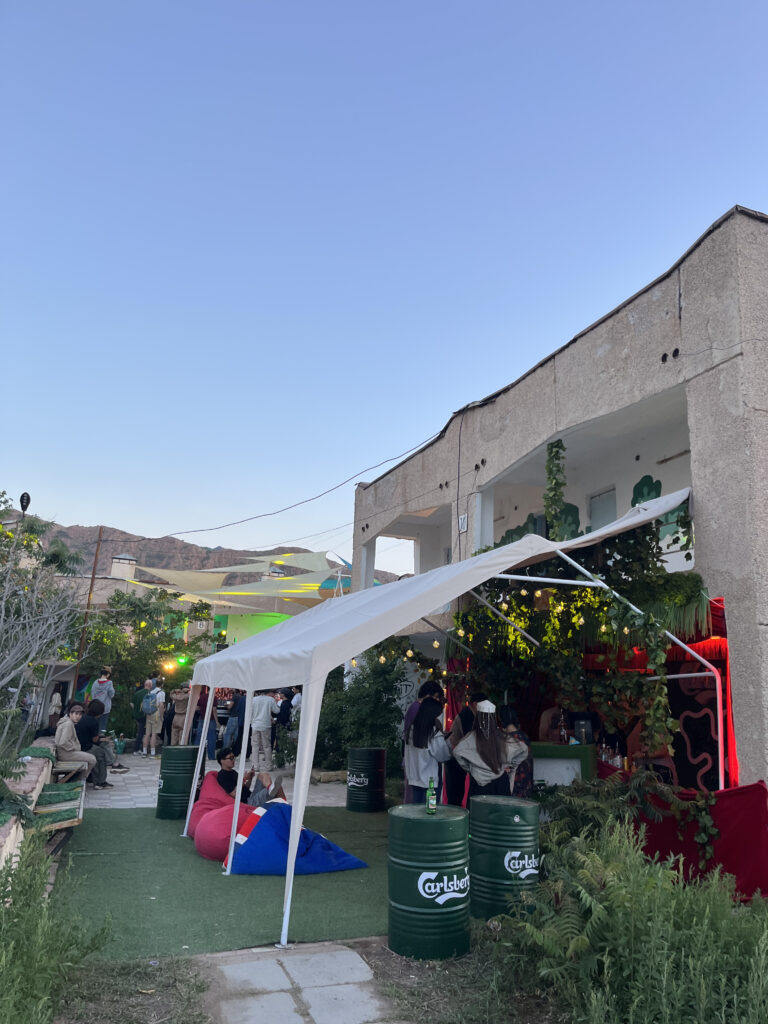
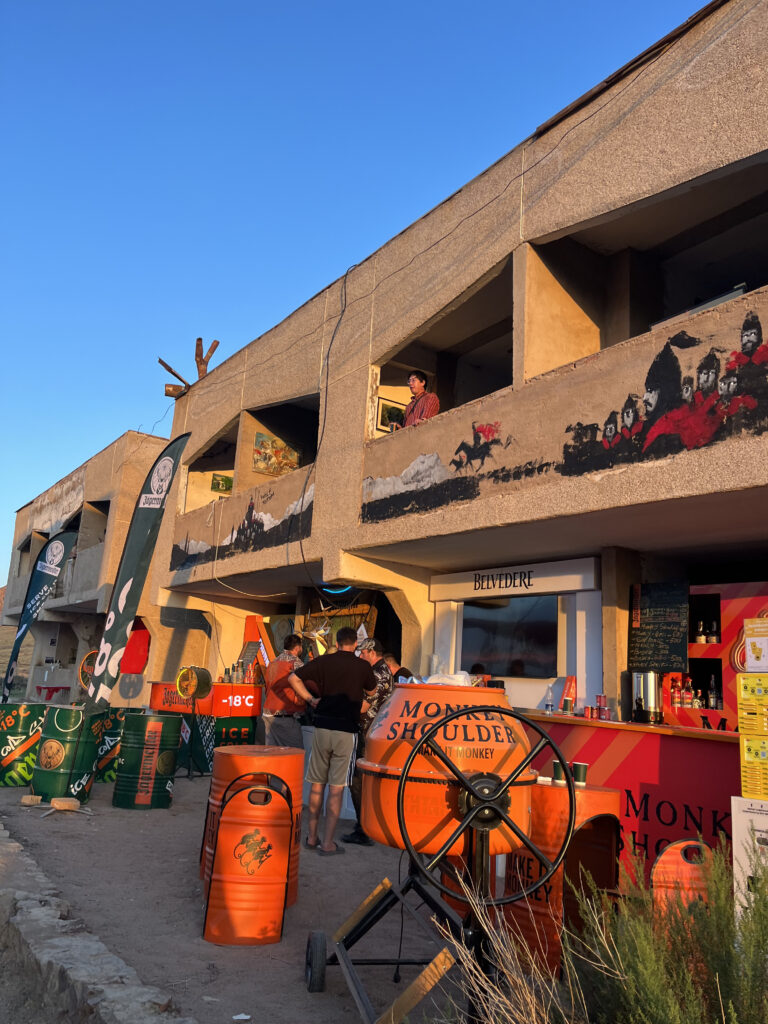
Of course, festivals like this do not happen on an empty stomach or a completely sober mind. The festival grounds are full of pop-up versions of popular bars, restaurants, and alcohol brands offering food and drinks. Just don’t expect budget prices! If you’re tired of enjoying electronic music, you can go to the tent and smoke hookah while listening to some good old pop hits. That’s what we did.
Final thoughts
Is it expensive to go to Kolfest? YES. Is it interesting? ALSO YES. The programme, decorations, and atmosphere change every year, so I wouldn’t expect boring repetition. Between the raves, workshops, and art installations, make sure to take breaks and visit the beach — and the festival days will fly by. Will I go again next year? Who knows…
Read also:
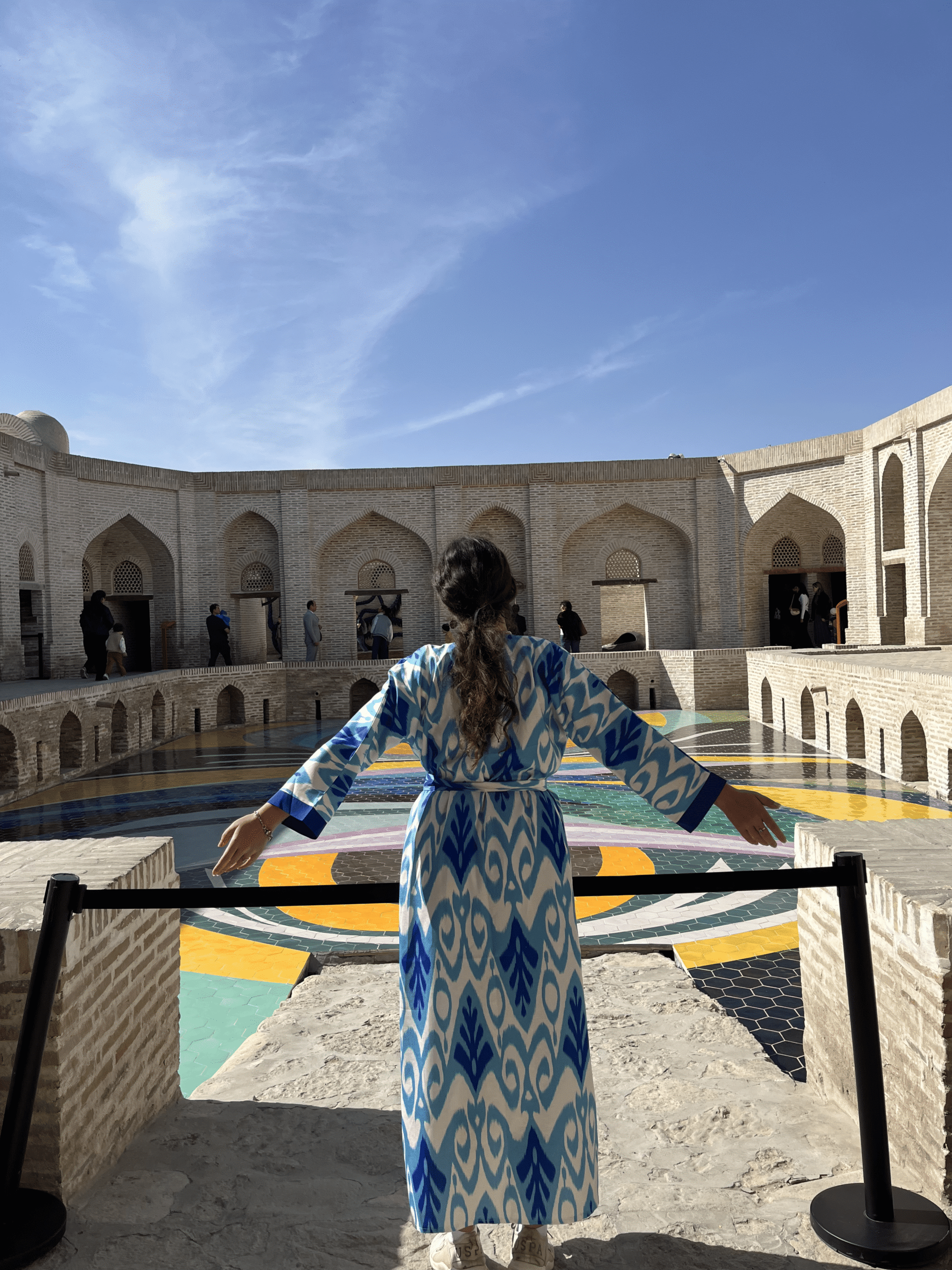
Bukhara Biennale
The Bukhara Biennale transformed the entire historic centre of Bukhara into an exhibition space. The locations and artworks were placed directly inside cultural and historical monuments. Artists and creators from around the world participated, displaying their works in some of the city’s most iconic historic spaces.
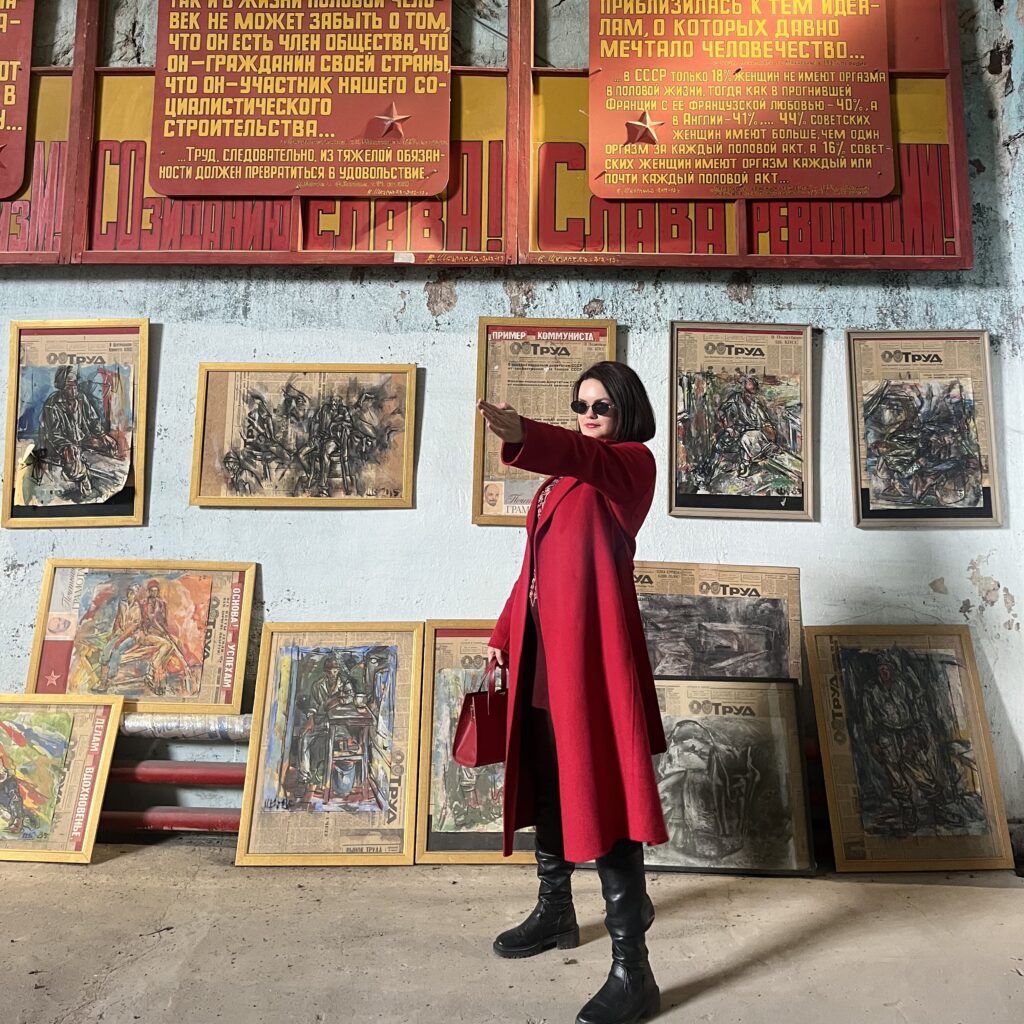
Art Spaces in Bishkek
Bishkek is not usually the first city that comes to mind when thinking about Central Asian art, but the city actually has plenty of unique creative spaces. In this guide, I collected places where you can discover exhibitions, attend art events, take unusual photos, and — at least for a little while — feel like a cultured person..
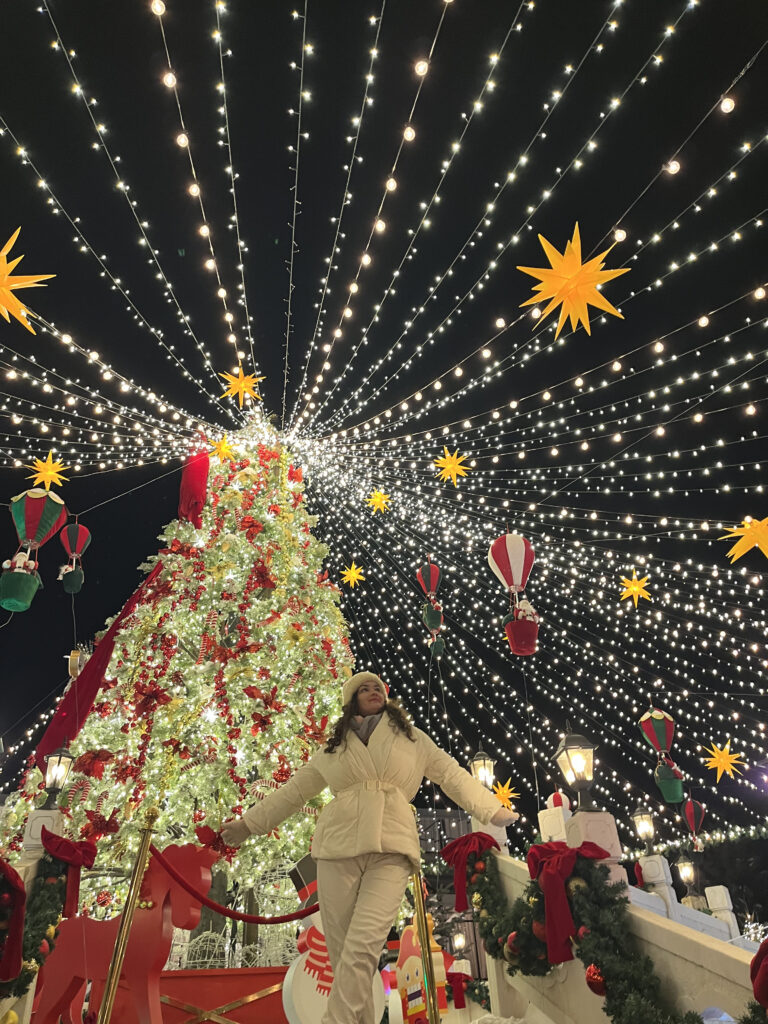
The Most Instagrammable Places in Bishkek
I like pretty places. Bishkek isn’t exactly a Pinterest-style city, but it does have a surprising number of beautiful spots, both within the city and just outside it.